Who are the Allies of the Chinese Communist Party (CCP)? Neologisms, Netizens, and Nationalisms 

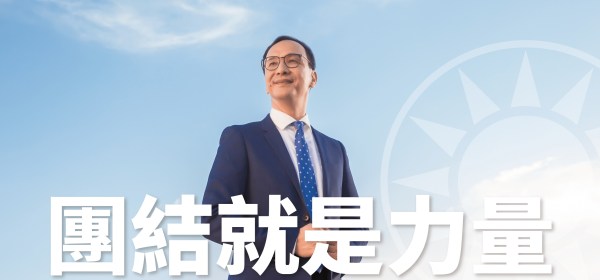
Written by Hsin-I Sydney Yueh. Recently, Taiwan’s Ministry of National Defense rejected a Japanese news report suggesting a widespread tendency among retired Taiwanese military officials to “sell out” their country. Wu Sz-Huai, a retired lieutenant general and incumbent opposition KMT party legislator, was among those who denounced this allegation.  

“Are we Chinese spies (共諜)?” Wu angrily asked this rhetorical question during a session of the National Defense Committee at Taiwan’s Legislative Yuan on March 2, 2023. While Wu denied being a Chinese spy, Taiwanese netizens teased him by sharing a photo of Wu and other retired Taiwanese military officials attending a CCP-hosted event, where they had sat attentively and listened respectfully to China’s leader Xi Jinping in 2016. Wu’s use of the term “Chinese spies” reminds us of another similar expression in Mandarin Chinese: “allies of the CCP” (中共同路人). This expression has recently gone viral in Taiwan’s online communities, used for self-mockery and as an attacking label.

Chu Yun-han: Influential Political Scientist, Promoter of Taiwan Studies and Sinology in Europe

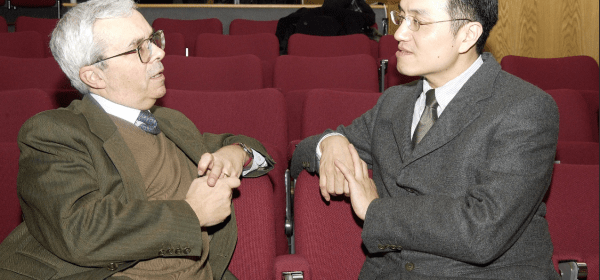
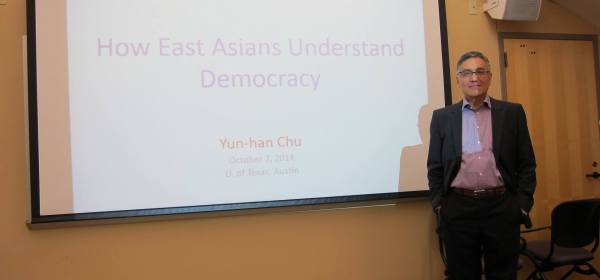
Written by Dafydd Fell and Robert Ash. It was with the greatest sadness that we heard of the passing of the influential Taiwanese political scientist Chu Yun-han. He died at home on 5 February 2023 – just two days after his 67th birthday. His loss is irreparable: through his own academic research and his tireless efforts as Executive Director of the Chiang Ching-kuo Foundation, he exerted an enormous influence on East Asian Studies throughout Europe, as well as in many other parts of the world.

“Kind and Gentle Soul”(「謙謙君子,溫潤如玉」): Remembering My Dear Friend Yun-han Chu (1956-2023)

Written by Tse-min Lin. The news came as a total shock. I had arrived in Taiwan just five days earlier to visit the new Taipei School of Economics and Political Science that Yun-han had helped establish. I knew he was ill and had been hoping to visit him after being unable to do so for five years. That is never going to happen now. Yun-han was a dear friend for 40 years. His passing is a heart-breaking personal loss.

Chu Yun-han (67), An Eminent Scholar and President of Taiwan’s CCK Foundation, Died on February 5th, 2023

Written by Gunter Schubert. It was a spring day in 2007 when I entered the commercial building at Tun Hua North Road, where the headquarters of the Chiang Ching Kuo Foundation (CCKF) were located on one of the upper floors. I came to meet Chu Yun-han in his capacity as CCKF president and introduce to him my idea to establish a Taiwan research centre at the University of Tübingen. I had prepared a detailed presentation and pondered every detail that could jeopardise my proposal’s consistency.

In Memoriam: Missing Yun-Han

Written by Yu-Shan Wu. Gone is Yun-han, a true friend. We were colleagues at National Taiwan University and Academia Sinica for over half a century. He is a world-class political scientist, a gentle junzi in the finest Confucian sense of the term, a deep thinker who cares about the fate of the country and the world, and a master of delicate tastes in life. These are the four integral aspects of Yun-han’s personality that I am sure Yun-han would like us to keep in mind when thinking of him.

Xi’s 2022-2023 Remarks Deepen Internal Division in Taiwan

Written by Wei-Hsiu Huang. To sum up, based on the address to the 20th National Congress of CPC and the 2023 Lunar New Year Greetings by Xi Jinping, it is explicit that the Chinese mainland will exercise even more robust sharp power and attempt to break up Taiwan from within. Moreover, the Chinese Mainland, which is always wary of foreign powers interfering in Taiwan’s affairs, could use the same sharp power against democratic states such as the US and Japan. This is because many countries, not just Japan, already have developed strong economic interdependencies with the Chinese mainland, creating routes for China’s sharp power. It is an important issue for democracies: how to prevent dictatorships from using sharp power to exploit freedom of speech and collapse democracies from within.

The 2022 Elections in Review: How Taiwan Failed to Adapt Voting for a Pandemic

Written by Kharis Templeman. With its colourful and fiercely contested campaigns, efficient electoral administration, and universal acceptance of the results, Taiwan’s recent local elections were, in most ways, a sign of a vibrant and healthy democracy. But one aspect failed to live up to basic democratic standards: thousands of people were denied the right to vote because they were trapped in mandatory COVID quarantine. After nearly three years of dealing with a global pandemic, Taiwan’s leaders should have been able to find some way to accommodate these citizens, as many other countries around the world have managed to do under much more difficult circumstances. Instead, they ignored the issue, and many Taiwanese were denied the right to vote. Taiwan’s democracy has received much recognition recently for its impressive vitality and resilience. But on voting rights, it is now a laggard. It can and must do better.

‘Ditching the DPP’, ‘Resisting China and Preserving Taiwan’, and Democracy: Interpreting the Results of Local Elections in 2022

Written by Mei-chuan Wei. The election results led many to conclude that Taiwan voters are more concerned about the ruling DPP’s inability to deliver on its promise to create a more just society and less worried about situations in the Taiwan Straits. However, this is misleading if we consider the results of local councils. The seats of local councillors of DPP have increased, while the KMTs have decreased. How, then to interpret the signals sent by the voters as embodied in the election results from the perspective of democracy in Taiwan?

Can g0v Be Replicated Abroad?

Written by Sam Robbins. The best answer is thus that g0v could be replicated abroad, but it should not be. G0v is unique in the specific ways it approaches problems but thoroughly un-unique in being a group of activists dedicated to solving problems. We cannot forget the second part of this when we reflect on the first part. How activists come together to work towards a common goal depends deeply on political contexts. Tech and civil society can collide in a range of different forms. A look at the Association for Progressive Communication (APC) members, a global network of civil society groups promoting equality through information and communications technology, also reveals that many groups are already engaging with digital technology as a liberating tool.

Pelosi Baloney or Distractions versus Realities

Written by Ian Inkster. So, China warned of ‘resolute and strong measures,’ and Speaker Nancy Pelosi left Taiwan without incident on her way to the rest of East Asia. She may well have infuriated parts of the Chinese regime when she said: ‘Make no mistake: America remains unwavering in our commitment to the people of Taiwan – now and for decades to come.’ Nevertheless, there is still no hint of any change in US policy, which will not recognise Taiwan as an independent entity, never mind a nation. No pathway has been opened. Indeed, the Western media made more noise than Taiwan itself.

1 3 4 5 6 7 11