Graduation Trip: From Bland Bureaucrat to Madame Liberty

Written by Chieh-Ting Yeh. In 2011, a relatively unknown politician in Taiwan named Tsai Ing-wen became the presidential candidate for the Democratic Progressive Party, which was at the time the opposition. She was a capable bureaucrat that was most notable for her blandness; she had close to zero personal charisma to speak of.  

Ironically, this was also her strength. The last DPP president, Chen Shui-bian, was seen by American policymakers as an unpredictable populist. He used his charisma to play to his base’s anti-China stance. As a result, when the US was trying to engage China, Chen and the DPP were seen as “troublemakers”, raising “tensions.”

Chinese Military Drills After Tsai-McCarthy Meeting Will Be Used for Political Ammo by Both Camps

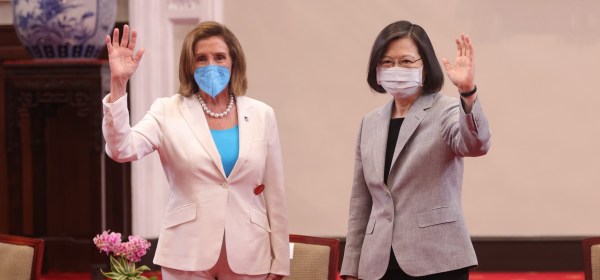
Written by Brian Hioe. One of the striking effects of Pelosi’s visit to Taiwan last August was to what extent it highlighted the perception gap within Taiwan as compared to outside Taiwan.  

At the time, much international discourse acted as though the Pelosi visit could be a prelude to World War III. Drama ensued from the visit’s onset, with the flight that Pelosi took to Taiwan followed by over 700,000 users on flight tracking website FlightRadar24–setting new records. Op-eds in international media outlets such as the New York Times framed Pelosi’s visit as unnecessarily provoking China.

President Tsai Ing-wen’s successful travels, in spite of a Chinese headwind: Solidifying Central American and US relations

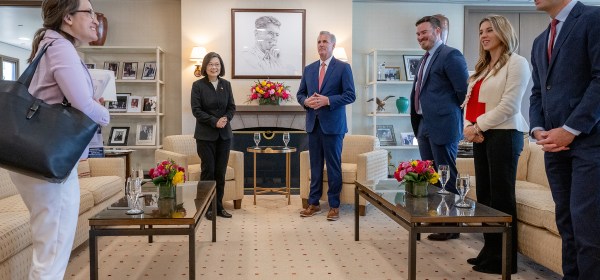
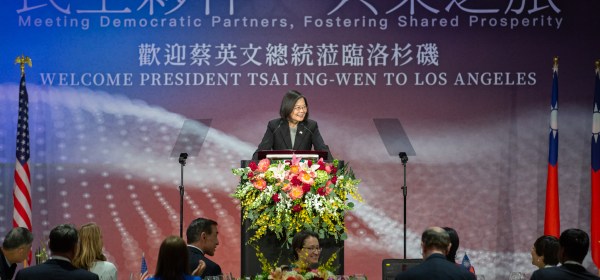
Written by Gerrit van der Wees. From late March through early April 2023, Taiwan’s President Tsai Ing-wen made her seventh foreign trip since becoming President in May 2016. The destinations were the Central American countries Guatemala and Belize, with stopovers in New York (on the way out) and Los Angeles (on the way back). The 10-day trip was her first foreign travel after Covid-19 made it sheer impossible to make such trips during the period 2020 – 2022. This trip became headline news because the CCP government in Beijing voiced major objections, particularly against a planned meeting with US House of Representatives Speaker Kevin McCarthy in Los Angeles. The objections are a continuation of the protests by Beijing against the August 2022 visit to Taiwan by McCarthy’s Democratic predecessor, Nancy Pelosi.

Opportunities abound to ram up UK-Taiwan relations

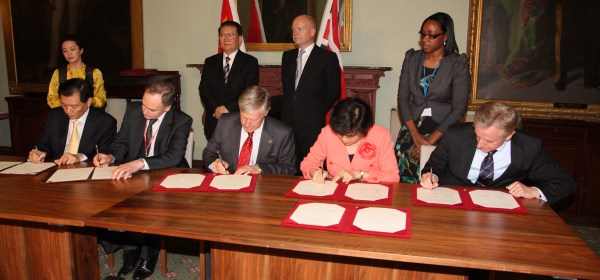
Written by Huynh Tam Sang and Phan Van Tim. By and large, there are ample opportunities for the UK and Taiwan to deepen their relationship, given Taiwan’s geopolitical importance and rising prominence as a robust democracy and resilient economy. Moreover, should London genuinely devote its time and energy to pushing its “Indo-Pacific Tilt”, engaging with Taiwan would benefit London as it helps the great power establish a firm footprint in the area while demonstrating the country as a responsible stakeholder in the region.

For the UK, Taiwan Could Provide an Alternative to Confucius Institutes

Written by Adrienne Wu and Marshall Reid. For the United Kingdom, 2022 was a year of significant change, particularly in its approach to the People’s Republic of China (PRC). Following years of relatively cordial UK-PRC relations, London followed the example of many other European states by shifting to a far more sceptical, confrontational policy toward Beijing. While this transformation was the product of various factors—from growing concerns regarding China’s human rights abuses to rising awareness of the PRC’s coercive economic policies—it was heavily influenced by domestic political manoeuvring. Nowhere was this more evident than in the competition between Liz Truss and Rishi Sunak to succeed Boris Johnson as prime minister, in which both candidates sought to frame themselves as the most tough-on-China. In a move emblematic of this game of China-sceptic one-upmanship, Sunak made the bold claim that he would close all of the UK’s remaining Confucius Institutes, the PRC’s international Mandarin language learning centres.

Chu Yun-han (67), An Eminent Scholar and President of Taiwan’s CCK Foundation, Died on February 5th, 2023

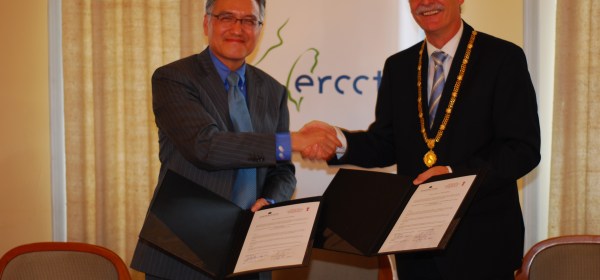
Written by Gunter Schubert. It was a spring day in 2007 when I entered the commercial building at Tun Hua North Road, where the headquarters of the Chiang Ching Kuo Foundation (CCKF) were located on one of the upper floors. I came to meet Chu Yun-han in his capacity as CCKF president and introduce to him my idea to establish a Taiwan research centre at the University of Tübingen. I had prepared a detailed presentation and pondered every detail that could jeopardise my proposal’s consistency.

Taiwan’s Relationship with its Last Remaining African Ally – Eswatini

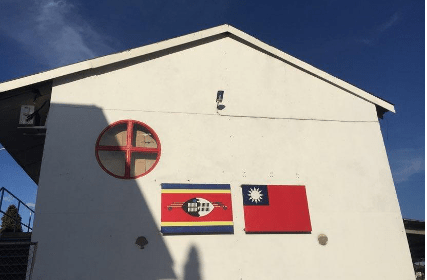
Written by Kristina Kironsk. Taiwan did not always have such a limited presence in Africa as it does now. Its official relations with the countries on the continent began in 1949, shortly after the Nationalists were driven out of China by the Communists during the Chinese Civil War. Altogether 30 African countries at one time or another maintained formal relations with Taiwan, but today the country is a politically marginalised actor with a minuscule presence mostly confined to the pursuit of economic interests.

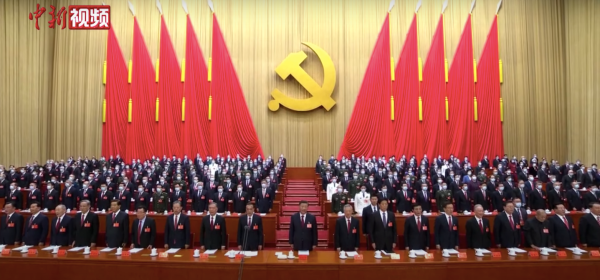
After China’s 20th Party Congress, How Could Cross-Strait Relations Go?

Written by Huynh Tam Sang and Shaoyun Lin. After the controversial visit of U.S. House Speaker Nancy Pelosi to Taipei in August, the relationship between Taiwan and China went downhill to a political deadlock. Dialogues and negotiations have been absent, and the possibility of breaking the ice in the stalemate is uncertain. Following the 20th National Congress of the Chinese Communist Party (CCP), which marked a milestone for Xi Jinping’s third term as China’s most powerful leader, the forthcoming trajectory of China-Taiwan relations should be read with a thorough assessment.

Is Taiwan Ready to Defend Itself against China’s Invasion?

Written by Daniel Jia. Since Tsai Ing-wen of the Democratic Progressive Party (DPP) took office as President of Taiwan in 2016, China is becoming more hostile than ever toward the self-ruled democratic island. As China sees its chance of “reunification” with Taiwan through mutual consent is diminishing, taking Taiwan by force becomes China’s only option. The matter of China’s invasion is evolving from the “if” in the past to the “when” today. And it could happen sooner than any rational calculation would have predicted.

The Abe Factor and the ‘Special’ bond between Taiwan and Japan

Written by Chieh-chi Hsieh. Abe has widely been regarded as ‘the Prime Minister who is most supportive of Taiwan’. Not only had he been an advocate for legitimatising Taiwan’s status on the international ground on many occasions, but he also made the renowned statement during a video conference with the Taiwan Institute for National Policy Studies in 2021 that ‘if something happens to Taiwan, it means something happens to Japan’. Hence, although the news of Abe’s assassination sent shockwaves worldwide, the political implications of his untimely death on the future trajectory of Taiwan-Japan warrant further investigation.

Shinzō Abe and Taiwan-Japan Relations

Written by Ko-Hang Liao. On 8 July 2022, former Japanese Prime Minister (PM) Shinzō Abe (安倍晋三) was killed by an assassin’s homemade gun during his midspeech of campaign held in Nara to support a Liberal Democratic Party’s (LDP) candidate for upper house election two days later. As a result, this longest-serving Japanese PM (in office (2012-2020) after a brief first tenure (2006-2007), surpassed the record held by his great uncle Eisaku Satō (佐藤栄作) from 1964 to 1972) is recognised by the public as the most Taiwan-friendly premier, a transformational leader, and the founder of Indo-Pacific strategy. By introducing Abe’s distinct roles, this article looks at Taiwan-Japan relations during and after Abe’s administration, the impact he brought to Japan’s postwar pacifism by rebuilding Japan’s role in global power-politics, his legacy in the post-Abe era, and future relations between two countries.

1 3 4 5 6 7 16