Taiwan-India University Cooperation: Emerging Corridors of Academic Exchange and Technological Diplomacy

Written by Neeraj Mehra. This article examines the growing educational partnership between Taiwan and India as a strategic soft power tool. Nearly 1,500 Indian students now study in Taiwan, primarily in engineering and technology fields, facilitated by a 2010 MOU and Taiwan’s New Southbound Policy. This collaboration offers complementary benefits: Taiwan’s semiconductor expertise paired with India’s demographic dividend and emerging tech sector. While recent high-level delegations signal strong governmental commitment, challenges remain in administrative barriers, visa processes, and funding stability. The author argues that with proper institutional mechanisms, this partnership could become a major Indo-Pacific academic alliance serving both knowledge diplomacy and technological self-reliance.
The Rise and Exclusion within Multicultural Discourses of Immigrant Integration in Taiwan

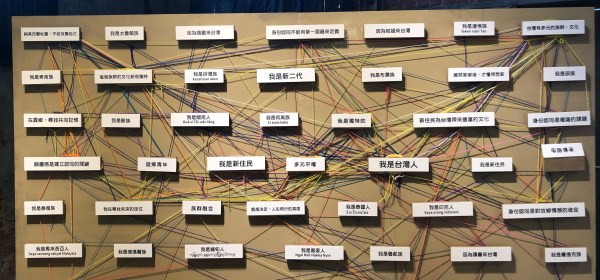
Written by Chien-Ping Liu. This article examines how transnational marriage migration has reshaped Taiwan’s demographic and civic landscape since the 1990s. It traces the shift from stigmatisation to multicultural recognition through grassroots advocacy and state developmental agendas. While bottom-up movements advanced inclusion, state-led multiculturalism often instrumentalised difference, reproducing class, gender, and geopolitical hierarchies within Taiwan’s immigrant integration discourse.

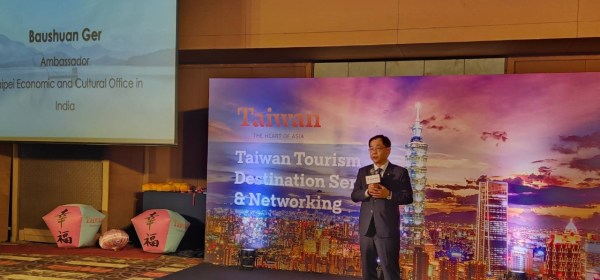
From Overcrowding to Opportunity: Taiwan’s Appeal for Indian Tourists

Written by Neeraj Mehra. This article discusses Taiwan’s untapped potential in India’s booming outbound tourism market, highlighting shared cultural ties, natural attractions, and democratic values. The author proposes that easing visas, improving air connectivity, boosting targeted marketing, and fostering educational exchanges may expand tourism, strengthen Taiwan’s soft power, and advance its New Southbound Policy goals.

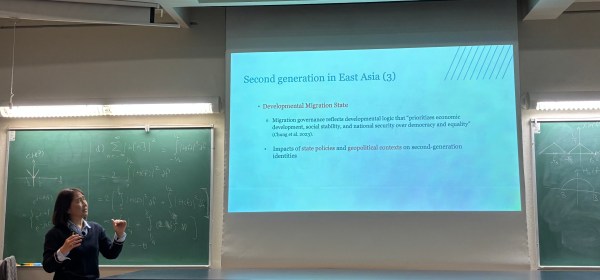
Navigating Taiwanese Identity: Second-Generation Multiculturalism in Conversation with Dr Pei-Chia Lan

Written by Rose Kuo and Rachel Levine. The article is the first in this special issue in collaboration with the Center for Taiwan Studies (CTS) at the University of California, Santa Barbara. It recapitulates a talk by Dr. Pei-Chia Lan, hosted by CTS. Focusing on children of immigrant marriage migrants and their children, Dr. Lan examines identity struggles, social stigma, and geopolitical impacts. Her research highlights Taiwan’s evolving multicultural landscape and advocates for inclusive policies that support immigrant families and promote societal integration.

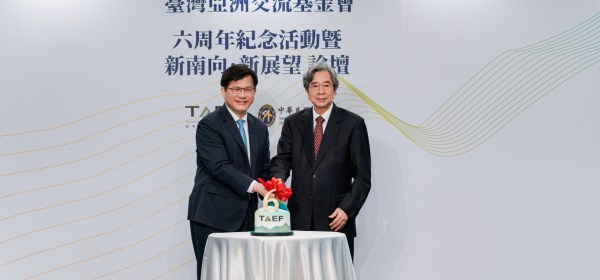
Taiwan’s NSP Enabling a Better World: Perspectives from the Next Generation

Written by Ian Yi-Rong Su. Taiwan is enhancing its New Southbound Policy (NSP) in response to Chinese threats, focusing on sharing economy, technology, and youth empowerment. The NSP strengthens ties with ASEAN countries and promotes Taiwan’s role in global supply chains, especially in semiconductors. The upcoming NSP+ aims to further enhance international partnerships and Taiwan’s global presence.

Reimagining Education: The Shift Towards Southeast Asian Students in Taiwan’s Universities

Written by Chia-Yuan Huang. This article reviews the shift of the origins of international students in higher education in Taiwan from mainland China to Southeast Asian nations such as Vietnam, Indonesia and Malaysia in the past few years. This could be attributed to the New Southbound Policy of the Tsai Ing-wen’s administration. This trend calls for more targeted admission policies and internships and job opportunities.

Clientelism, Social Movements, and Weak Ideology: Is Institutionalisation in Taiwan’s DPP Comparable with the Philippines’ Liberal Party?

Written by Russell Sherrard-Smith. This article compares Taiwan’s DPP with the Liberal Party of the Philippines, focusing on party institutionalisation and how it contributes to our understanding of the quality of democracy. The author looks at the two parties’ systemness, centralisation, leadership stability and other factors that significantly influence the countries’ democratic development.

Challenging the Myth of Intercultural Competence: Encounters between the “New Second Generation” and a Philippine Studies Scholar in Taiwan 

Written by Yi-Yu Lai. In the name of promoting multiculturalism in Taiwan, the new second generation is anticipated to utilise their intercultural ability to serve as a bridge between Taiwan and Southeast Asia. This article highlights that the assumption has caused increased anxiety among the new second generation if they are unable to prove their competence. It has also erased the internal disparities and the actual daily experiences of the individuals, making the historical injustice and their own agendas invisible.

Semiconductor and Renewable Energy: Taiwan-Vietnam Cooperation under New Leadership

Written by Tran Thi Mong Tuyen. Since the 1990s, Taiwan’s government has championed the “Go South” and “New Southbound” policies, catalyzing Taiwanese entrepreneurship across the Association of Southeast Asian Nations (ASEAN). Vietnam, boasting a stable economy, ample labour force, a youthful demographic, and rich natural resources, has emerged as a prime destination. This article focuses on the recent cooperation between Taiwan and Vietnam in different industries, and proposes potential future collaborative opportunities between the two.

What Does Taiwan’s Presidential Election Outcome Tell Us About Its Economic Prospects?

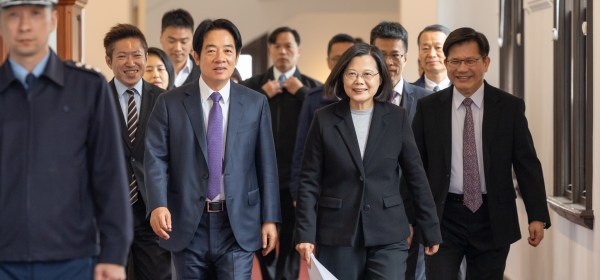
Written by Min-Hua Chiang. William Lai (Lai Ching-te) of the Democratic Progressive Party (DPP) secured his election as Taiwan’s 16th president on January 13, 2024. As the DPP extends its rule for another four years, the administration is likely to maintain President Tsai Ing-wen’s economic policies, notably diversifying the economy away from China. Navigating Taiwan’s export-oriented economy through the evolving US-China relationship will pose the most significant challenge for the new administration. 

Cross-border Movement of Labour between Taiwan and the Philippines: A Taiwanese NGO Worker’s Perspective

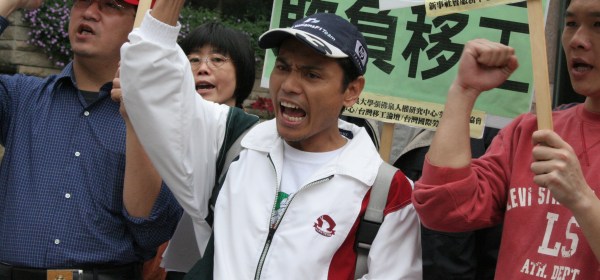
Written by Yi-Yu Lai. Lennon Wong is the director of a shelter for migrant workers in Taiwan. Before joining the shelter in the early 2010s, he was already a labour activist and worked in the Chinese Federation of Labour and the First Commercial Bank Union. Although his prior work was not directly relevant to migrant workers in Taiwan, his engagement with the labour movement may have started with the issue of migrant workers from Southeast Asia. As a result, we may thus understand the cross-border movement of migrant workers between Taiwan and the Philippines through some of his observations.

Sight and Sound: Conversations on Death Penalty between Taiwan and Southeast Asia

Written by Kar-Yen Leong. In an article by Franklin Zimring and David Johnson, we are reminded of the importance of studying the death penalty in Asia as it is the site of “…at least 85 per cent and as many as 95 per cent of the world’s execution.” The authors add that the region is a key battleground as to whether this practice will continue or become a remnant of a less civilised past. This struggle is no more intense than in East and Southeast Asian states, where the death penalty is not only an indelible part of only their legal systems but also their very societies. The decision to retain or abolish the death penalty has become a matter of intense soul-searching among states such as Taiwan, South Korea, Singapore, and Malaysia, navigating landscapes replete with ghosts of colonial and authoritarian pasts. For these countries, the state’s power over life and death is a direct extension of its sovereignty. Giving up this power is to lose that sovereignty, but it also means the loss of a weapon of last resort forged to keep the forces of chaos at bay.

1 2 3