Is Going Green Hurting Indigenous Communities? Reflection from Participating in the United Nations Permanent Forum on Indigenous Issues 

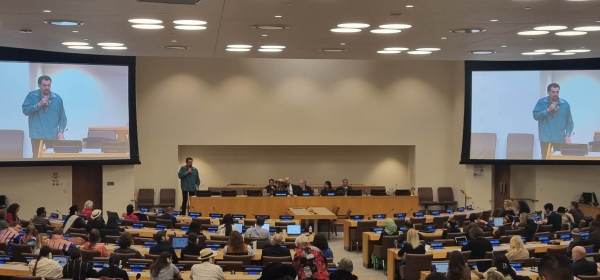
Written by Wasiq Silan. Is going green hurting Indigenous communities? Not necessarily. However, exclusionary conservation measures create a lose-lose outcome for non-Indigenous and Indigenous communities. Indeed, Indigenous peoples’ full and substantial participation is a prerequisite to achieving a sustainable future and halting the rapid loss of global biodiversity. This is true for the Indigenous communities in Taiwan, such as in the case of the solar panel controversy on the Katratripulr Pinuyumayan (Beinan in Mandarin Chinese) people’s traditional territory. Drawing from the experience of the Sámi, my recent participation in the United Nations Permanent Forum on Indigenous Issues (UNPFII) may shed light on this issue.

Taiwan and the Netherlands: What the East Asian Island Nation Can Learn from its Former Colonizer

Written by Charlie Smith. The King’s Field is a famous Japanese video game series created in the 1990s. But nearly 400 years ago, there was another King’s Field—the entire island nation of Taiwan. For 38 years in the 17th century, Taiwan was a colony of the Dutch Republic under the administration of the Dutch East India Company. And the Dutch king was the largest shareholder. 

“The Han people pioneers cleared the land, but the land they cleared was stolen from them, and they were forced to turn their labors toward tilling the so-called ‘king’s fields’,” wrote historian Su Beng in Taiwan’s 400 Year History. “Moreover, most of what they achieved was given over, in the form of rent or taxes, called ‘king’s field rent contributions,’ for the use and enjoyment of the Dutch.”

What is the significance of the dialogue with the Dutch community in Vancouver for 2023 TAIWANfest in Canada? 

Written by Charlie Smith. The Dutch Cultural Association of B.C. is trying to tell a more nuanced and complete story of the Netherlands, including the experiences of those who lived under Dutch colonial rule. Moreover, the association’s goal is to provide a richer understanding of how Dutch descendants should act as visitors on the unceded lands of Indigenous nations in Canada’s westernmost province. Oostindie believes that this has set his organization up well for a collaboration with this year’s TAIWANfest in Vancouver and Toronto. Oostinde discusses how Taiwan, the Netherlands and Canada can “have heartfelt discussions that bring these hidden histories forward. And we can learn about what it means for contemporary politics, how we work together, and how we consider democracies.” 

Taiwan’s 2024 presidential election candidates: What will Hou or Lai’s election mean for tensions across the Taiwan Strait?

Written by Corey Lee Bell. Taiwan’s main opposition party, the Beijing-friendly Kuomintang (KMT), recently selected its candidate for the 2024 presidential election. With the main competitors for Taiwan’s top job essentially locked in, each has been interrogated on their policies on cross-strait relations in recent weeks. With tensions high across the Taiwan Strait, and between Beijing and Washington, what each candidate stands for could have profound ramifications for, and perhaps even beyond, the Indo-Pacific region.

Progress or Not? An Assessment of the Significance of Liz Truss’ Taipei Visit

Written by Milo Hsieh and Wei Azim Hung. At a time when Downing Street seeks to recalibrate its relationship with Beijing, Liz Truss’ Taipei trip has raised eyebrows and controversy in London as well as provoked strong condemnation from Beijing. For Taiwan, the trip shows that yet another former official sees Taiwan as an important part of their agenda as world leaders increasingly make Taiwan a priority destination.

Provocations: Taiwan Amidst Trust, Truss and the G7

Written by Ian Inkster. Liz Truss led her charge into Taiwan on 16 May with the notion of Britain backing a Taiwan move to join the Pacific trade block, the CPTPP, against the present neutral position of the British Tory government under Rishi Sunak. This immediately provoked the Chinese to label her ‘sinister’. The point being that this was merely a Trussian wedge into her major provocation, that there is a ‘fatalism in the free world that somehow a Chinese takeover of Taiwan is inevitable’. Dangerously, Truss seems to have failed utterly (and almost certainly deliberately) to distinguish commercial and political, even military, aggressions, and to that extent, the danger of such an intervention should, of course, be noted.

Liz Truss: Fighting for Taiwan or Personal Credibility?

Written by John Burn. It was already clear from her recent speech to conservative think tank The Heritage Foundation in Washington DC that Liz Truss – the UK’s shortest-serving Prime Minister of all time – is trying to develop her image beyond the country’s shores. Being responsible for one of the most disastrous economic policy outlines in the UK’s history in her mini-budget upon coming to office, she lost public confidence and the confidence of the Conservative Party in very short order, resulting in her dismissal after 44 days in office.

Going for Low-Hanging Fruit, Deliberate Strategy, or Path Dependency?: Liz Truss’ Visit to Taiwan

Written by Brian Hioe. Former UK prime minister Liz Truss arrived in Taiwan on May 16th for a five-day visit. Truss’ main purpose in visiting was to give a speech at the invitation of the Prospect Foundation, a think tank close to the Tsai administration. In addition, Truss met with President Tsai Ing-wen, Vice President William Lai, and other high-ranking officials.

Truss Visits Taiwan: Worth or Trouble?

Written by Huynh Tam Sang and Phan Van Tim. Liz Truss’s journey is in the limelight as the first ex-British prime minister to set foot in Taiwan nearly thirty years after Margaret Thatcher’s visits in the 1990s. Nonetheless, the worth of Truss’s five-day sojourn is a contentious issue. From one perspective, Truss’s visit is deemed immensely significant, exemplifying the UK’s unwavering backing for Taiwan amidst escalating Chinese pressure, given her enduring advocacy for a democratic Taiwan. But, conversely, others argue that her visit merely inflamed the already high-strung tensions between China and Taiwan.

An Instagram comeback tour or a sincere bid to strengthen democracy in East Asia? Liz Truss’s Taiwan visit exposes growing Conservative Party tensions over China, but either way, Taiwan still wins.

Written by Max Dixon. Liz Truss, MP for South West Norfolk and British Prime Minister for 44 days, visited Taiwan last week, between May 16th and May 20th, meeting with senior officials, including William Lai, the frontrunner to replace current President Tsai Ing-wen, and giving a keynote speech to the Prospect Foundation that called for a more stringent British approach to China. Ostensibly the visit of a former Prime Minister has been heralded as a coup for Taipei in emboldening the position of Taiwan in the global imagination amidst growing Chinese assertiveness; indeed, the Ministry of Foreign Affairs has welcomed Truss’ visit.

Wave Makers on Netflix: A Vision of Taiwanese Politics Not ‘Amid Tensions’  

Written by Chieh-Ting Yeh. “Wave Makers” (2023; ​人選之人-造浪者​) is a new drama on Netflix about political staffers trying to win a presidential election in the last few months of the campaign. This may sound like the premise of many television shows in the political intrigue genre, but it is the first of its kind from Taiwan to be available to a worldwide audience. The drama addresses various political issues relevant to contemporary Taiwan, including environmental concerns, energy policies, and workplace sexual harassment, reflecting the ongoing public debates on these topics. But it is glaring in what it is missing: Taiwan-China relations.

How Does Recipients’ Corruption Taint the International Image of Taiwan’s Foreign Aid?

Written by Ernie Ko. Taiwan’s foreign aid, officially known as official development assistance (ODA), has rarely been mentioned as a good practice in the circle of international press and international aid agencies. On the contrary, corruption, inefficiency, non-transparency, and unaccountability are often associated with the recipient countries of Taiwan’s aid. So, the question is, does this negative stereotype unavoidable?

1 13 14 15 16 17 61