How might China’s new Taiwan policy pan out?

Written by Huynh Tam Sang. One year after the 2019 eruption of large-scale pro-democracy protests in Hong Kong, China enacted the “national security law” for the special administrative region, cracking down on freedom and democracy there. Under such a situation, Taiwan’s populace disapproved of China’s strategy of occupying and turning the self-governed island into a new colony in the vein of Hong Kong. In light of the widespread criticism of “one country, two systems,” the political framework that Chinese authorities have embraced to pursue peaceful reunification with Taiwan, the Chinese Communist Party’s leader Xi Jinping (習近平) has tasked Wang Huning (王滬寧), the party’s chief of ideology and his mastermind, with finding a replacement arrangement.

Taiwan-China relation: 2023 and beyond (Part II)

Written by Daniel Jia. The Taiwanese government, as the administrative body of a democratic state, is currently facing a formidable challenge from both external and internal sources. While China’s aggression towards Taiwan is widely acknowledged, many Taiwanese citizens are beginning to realise that the significant differences between Taiwan’s and China’s social structures outweigh any cultural similarities between the two nations. However, it is important to note that only a few people recognise that these differences could be easily erased if China imposed its rule upon Taiwan, as it did with Hong Kong.

Taiwan-China relation: 2023 and beyond (Part I)

Written by Daniel Jia. The year 2022 has been particularly bumpy for Taiwan and China in their relationship. The tension reflected the growing identity gap between the two sides of the Taiwan Strait. While China’s strength of pulling Taiwan closer through its economic attraction and political influence was waning, Taiwan’s growing confidence transformed into a centrifugal force that would one day liberate Taiwan completely from China’s repressive sphere. Taiwan’s desire to part tyrannical China bears an analogy with Ukraine’s struggle to free the re-born nation from the centuries-old Russian oppressor. The turbulent year of 2022 is now in the past, but does its impact affect our future? What would the Cross-Strait relation be like in 2023 and beyond? This paper includes two perspectives, the first is a reflection from China, and the second is a reflection from Taiwan.

Sitting on The Fence? The Ambiguous Position of the TPP and Its Potential Causes

Written by Jonathan Leung and Chengyu Yang. For the TPP, there are two issues that have been most widely criticised by the Taiwanese public and politicians. The first is that the TPP’s political stance is too vague and often lacks clear views on cross-strait issues. The second is that the TPP itself relies too heavily on the popularity of former Taipei City Mayor Ko Wen-je, while relatively ignoring the views of other TPP politicians. Some politicians have recently argued that Ko and his TPP are likely to repeat the 2014 PFP and Song’s failure in 2024. Why is the TPP’s cross-strait stance receiving attention in the Taiwanese political arena and is the TPP’s political stance really ambiguous? What are the potential reasons for public and politicians’ perceptions about the ambiguity of the TPP’s position?

Addressing the Elephant in the Room: The California Shooting and the “Political Problem”

Written by His-Yao Lin and Yi-Lan Lin; translated by Yi-Yu Lai. It has been a while since the mass shooting at the Irvine Taiwanese Presbyterian Church in Southern California, United States, occurred last year. Many pieces of evidence are still ambiguous and cannot be determined. This shooting was not a unique case that sparked political tensions between the Chinese, Taiwanese, and Americans. In January 2023, a series of mass shootings also occurred in California, and two of them were emphasised since the suspects and victims seemed to be Asian. If we focus on the moment when the shooting happened, the “political” reaction in Taiwanese public opinion demonstrates the complexity and difficulties of Taiwan’s ethnic politics since 1949. 

The Fall of Evergrande: A Case Study of China’s Financial Turmoil in 2022 and the Implication to China-Bound International Capital in 2023 and Beyond

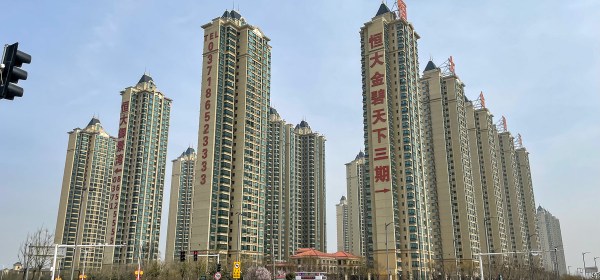
Written by Daniel Jia. In late 2021, international investors felt a real chill from China: China’s real estate giant, China Evergrande Group, defaulted on interest payments on US$1.2B offshore bonds. The Evergrande trouble was shocking, but it was only the tip of a monstrous China iceberg, toward which the Titanic of international investors are headed. What would follow in 2023 and beyond? Is Taiwan prepared?

Taiwan’s Relationship with its Last Remaining African Ally – Eswatini

Written by Kristina Kironsk. Taiwan did not always have such a limited presence in Africa as it does now. Its official relations with the countries on the continent began in 1949, shortly after the Nationalists were driven out of China by the Communists during the Chinese Civil War. Altogether 30 African countries at one time or another maintained formal relations with Taiwan, but today the country is a politically marginalised actor with a minuscule presence mostly confined to the pursuit of economic interests.

Taiwan’s mid-term elections: Most politics is local, the KMT remains a force to be reckoned with, and the DPP needs to regroup

Written by Gerrit van der Wees. The main indicator of how well the parties did, was the number of city mayor and county magistrate positions they gained or lost: the ruling DPP went down from their current number of seven positions to five, while the opposition KMT went down from their current number of 14 to 13, with two of the remaining seats going to independents, and one, Hsinchu City, to the Taiwan People’s Party of Taipei mayor Ko Wen-je. In one location, Chiayi City, the election had to be postponed until December 18 because of the death of a mayoral candidate.

After China’s 20th Party Congress, How Could Cross-Strait Relations Go?

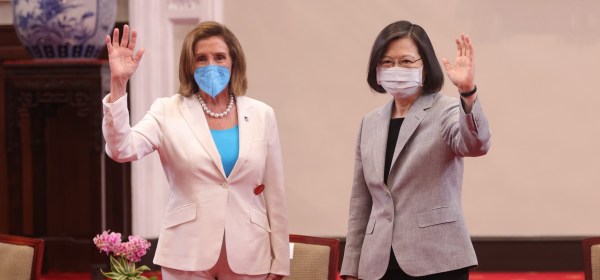
Written by Huynh Tam Sang and Shaoyun Lin. After the controversial visit of U.S. House Speaker Nancy Pelosi to Taipei in August, the relationship between Taiwan and China went downhill to a political deadlock. Dialogues and negotiations have been absent, and the possibility of breaking the ice in the stalemate is uncertain. Following the 20th National Congress of the Chinese Communist Party (CCP), which marked a milestone for Xi Jinping’s third term as China’s most powerful leader, the forthcoming trajectory of China-Taiwan relations should be read with a thorough assessment.

1 16 17 18 19 20 61