Cross-border Movement of Labour between Taiwan and the Philippines: A Taiwanese NGO Worker’s Perspective

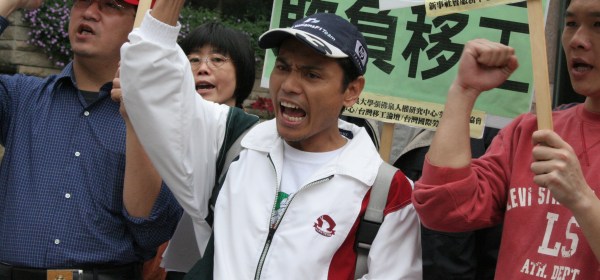
Written by Yi-Yu Lai. Lennon Wong is the director of a shelter for migrant workers in Taiwan. Before joining the shelter in the early 2010s, he was already a labour activist and worked in the Chinese Federation of Labour and the First Commercial Bank Union. Although his prior work was not directly relevant to migrant workers in Taiwan, his engagement with the labour movement may have started with the issue of migrant workers from Southeast Asia. As a result, we may thus understand the cross-border movement of migrant workers between Taiwan and the Philippines through some of his observations.

Sight and Sound: Conversations on Death Penalty between Taiwan and Southeast Asia

Written by Kar-Yen Leong. In an article by Franklin Zimring and David Johnson, we are reminded of the importance of studying the death penalty in Asia as it is the site of “…at least 85 per cent and as many as 95 per cent of the world’s execution.” The authors add that the region is a key battleground as to whether this practice will continue or become a remnant of a less civilised past. This struggle is no more intense than in East and Southeast Asian states, where the death penalty is not only an indelible part of only their legal systems but also their very societies. The decision to retain or abolish the death penalty has become a matter of intense soul-searching among states such as Taiwan, South Korea, Singapore, and Malaysia, navigating landscapes replete with ghosts of colonial and authoritarian pasts. For these countries, the state’s power over life and death is a direct extension of its sovereignty. Giving up this power is to lose that sovereignty, but it also means the loss of a weapon of last resort forged to keep the forces of chaos at bay.

Roots and Routes in the Malay World and Beyond: Dialogues Between Singapore and Taiwan

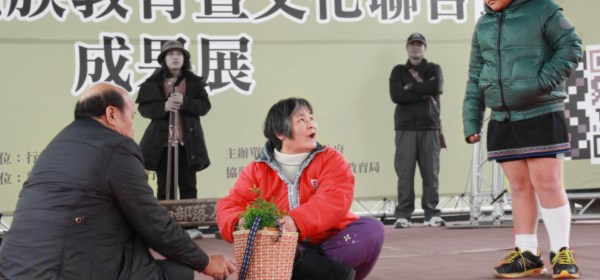
Written by Doris Yang. In 2021, five artists/researchers from Singapore, Malaysia, and Taiwan gathered to present their project, The Malay World Project: Roots & Routes, in an online event held by Taipei Performing Arts Center. This event was inspired by a research project asking, ‘Where do the Malays originate?’ Not only did the project study the diaspora of Malay peoples around the Asia-Pacific, but it also created a space for dialogue between Taiwan’s Indigenous people and Malay in Singapore and Malaysia on the issues of identity and belonging. This article compares the advocacy experiences of Malay people in Singapore and Indigenous people in Taiwan. I argue that there is space to foster additional connections and collaborations between the civil societies among these two groups.

Why Should Taiwan’s Civil Society Raise Its Focus on Southeast Asia and Forge Concrete Collaborations?

Written by Liang Liang. Like most once-colonised countries, Taiwan has experienced a chequered history. However, the unique part of Taiwan, which may not be so similar to the rest of the world, is that the historical remnant has resulted in its awkward (but de facto independent) status, hence making Taiwan a coveted land to China. As a result, Taiwan has been identified as the “canary in the monetary coal mine” globally when China’s sharp power grows unprecedentedly. While Taiwan gradually receives interest from all over the world, including Southeast Asia, “the world” used to signify only China and the United States to the Taiwanese government and society. Located at the crossroads of Northeast and Southeast Asia and frequently using the slogan “The Heart of Asia” in its global tourism advertisements, it had, however, rarely shared the same interests and consciousness with its southern neighbours.

Semiconductor industry: a shield to Taiwan or the source of insecurity?

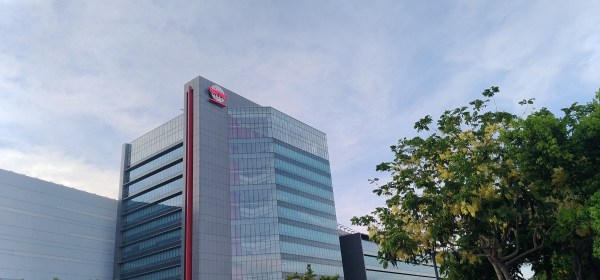
Written by Guo-Huei Chen and Ming-En Hsiao. That is why Taiwan’s semiconductor industry is a key element in the strategic competition between the United States and China in science and technology. Losing Taiwan is equivalent to losing the power to speak in future innovative technology. Neither the United States nor China can afford the consequences of losing Taiwan’s semiconductors.

The gulf that separates Taiwan and China is getting wider (1)

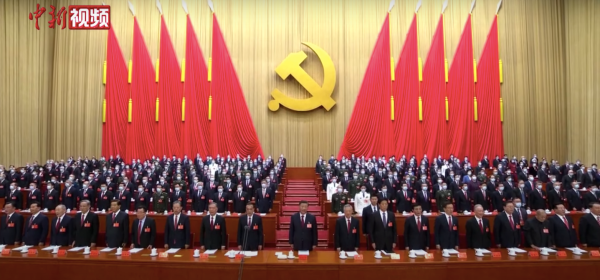
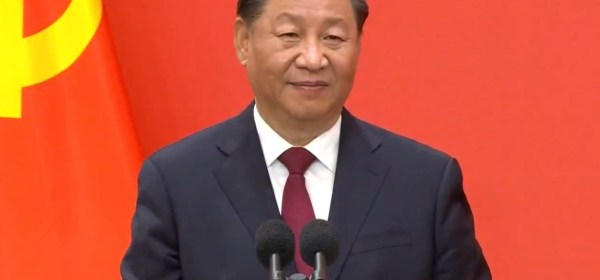
Written by Daniel Jia. The question, then, is why the CCP’s “reunification” agenda faces increasing resistance from Taiwan? The answers are in Xi’s Report and will be even more obvious compared to another speech given by Taiwan’s President Tsai Ing-wen a week earlier at a National Day ceremony on October 10. The following are six takeaways from Xi’s Report that merit a close examination.

Taiwan’s 2022 Local Elections: The State of Electoral Campaigns

Written by T.Y. Wang. Taiwan will hold its 2022 local elections on November 26. Dubbed the “9-in-1” elections, voters will select candidates in several races, including mayors of the six special municipalities, 16 county/city magistrates, council members, and heads and representatives of boroughs. Candidates of the ruling Democratic Progressive Party (DPP), the main opposition Nationalist Party (Kuomintang or KMT), and smaller parties, such as the Taiwan People’s Party (TPP) and the New Power Party (NPP), will participate in the elections. The electoral outcomes will have important political implications as they not only determine the fate of candidates running for more than 11,000 positions but also impact the future direction of main political parties, the viability of small parties and the playing field of the country’s 2024 presidential election.

How Europe looks at Taiwan – and how Taiwan fails to send out a clear message

Written by Gunter Schubert. The Taiwanese people and their political representatives must decide if they want to forge a national consensus on their relationship with China and communicate this clearly in Europe and beyond – or if they would rather prefer to adhere to an unclarified stance on their national identity and the concept of ‘unification’, giving in to uncompromising viewpoints and undermining any chances as gaining the lasting support of the countries that cherish democracy and admire their struggle for survival.

Can g0v International Affairs Really be Open?

Written by chihao. Contributors of g0v started various discussions on international community affairs in late 2018, after the g0v Summit that year and other governance-related conversations some months before that. Like many things in g0v, these efforts to engage with international organisations and people were largely self-initiated. No permission was required since none could be given. However, unlike many things in g0v, there are little to no public records of these activities, such as correspondence, meetings notes, or slide decks. Open collaboration becomes very difficult, if not impossible, without shared documentation of these activities. Also, unlike many things in g0v, some were paid for their role in these international activities. Discrepancies between a paid full-time job and part-time volunteering work further exacerbate the difficulties.

Is Taiwan Ready to Defend Itself against China’s Invasion?

Written by Daniel Jia. Since Tsai Ing-wen of the Democratic Progressive Party (DPP) took office as President of Taiwan in 2016, China is becoming more hostile than ever toward the self-ruled democratic island. As China sees its chance of “reunification” with Taiwan through mutual consent is diminishing, taking Taiwan by force becomes China’s only option. The matter of China’s invasion is evolving from the “if” in the past to the “when” today. And it could happen sooner than any rational calculation would have predicted.

1 17 18 19 20 21 61