Cutting Through the Fog of War in the Taiwan Strait

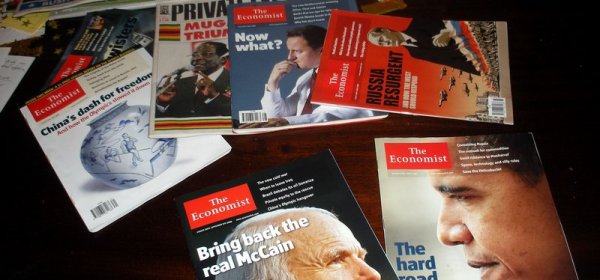
Written by J. Michael Cole. A recent cover story in The Economist referring to the Taiwan Strait as “the most dangerous place on earth” has caused mixed reactions in Taiwan and elsewhere. While the headline was certainly alarmist—one can imagine more dangerous places than Taiwan to be in, from Yemen to Afghanistan, Somalia to some neighbourhoods in Mexico, for example—the article nevertheless reflects the reality that no other geopolitical flashpoint today is as likely to spark major armed conflict than the Taiwan Strait. China has shown much greater hostility in the past year.
Biden & Taiwan: Advancing a Flexible US One China Policy

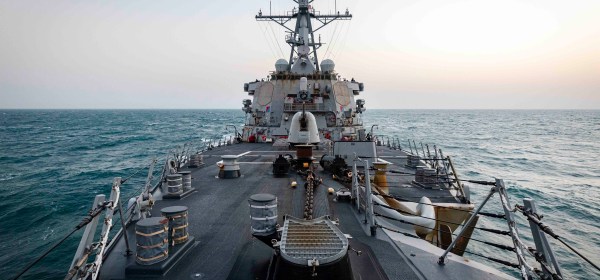
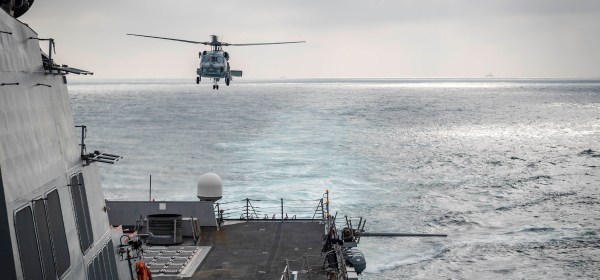
Written by Robert Sutter. The Biden administration continues the Trump government’s remarkable advances with Taiwan despite China’s objections. Thus high-level US government rebukes Beijing military countermeasures, including repeated warship passages in the Taiwan Strait and Chinese air and naval shows of force attempting to intimidate Taiwan. An extraordinary visit to Taiwan in April by a delegation of top policymakers in the Barack Obama and George W Bush administrations …

Idealization and Fearmongering Opposite Sides of the Same Coin for International Media Reporting on Taiwan

Written by Brian Hioe. An article in the May issue of The Economist caused strong reactions in Taiwan due to referring to Taiwan as “the most dangerous place on Earth.” In particular, the article cited the geopolitical risks to Taiwan–of being caught between great power competition between the US and China and facing the threat of Chinese invasion–as making Taiwan “the most dangerous place on Earth.”

Taiwan: The unsinkable Aircraft Carrier sails again?

Written by Arthur Ding. In April, the London based Economist carried several in-depth analyses on Taiwan and US-China relations in the context of China’s increasing assertive policy toward Taiwan. Among them, the one titled “Taiwan: the most dangerous place on Earth” elicited heated debates in Taiwan. Assuming that these analyses are correct, what do these analyses entail?

Taiwan Deserves Its Rightful Place Under the Sun

Written by Gerrit van der Wees. On 30 April 2021, the London-based The Economist published an article with the sensationalist headline referring to Taiwan as “The most dangerous place on earth.” The essay highlighted the increasing tension between the United States and China over Taiwan and the dangers of an armed conflict if China decides to use force against the democratic island.

The Public Nature of Civil Disobedience: Lessons from the Sunflower and Umbrella Movement

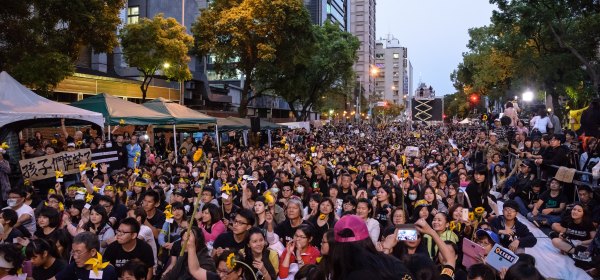
Written by Leon N. Kunz. In March 2014, participants in the Sunflower Movement peacefully occupied the main chamber of Taiwan’s parliament to block the ratification of a controversial trade agreement with the PRC that they viewed as a threat to Taiwanese democracy. In September of the same year, protesters involved in Hong Kong’s Umbrella Movement created street occupations to push for genuine democratic reform. In both cases, participants not merely occupied public space but claimed to engage in civil disobedience. According to the often-cited definition by liberal theorist John Rawls, civil disobedience is “a public, nonviolent, conscientious yet political act contrary to law usually done to bring about a change in the law or policies of the government.” To what extent did the occupations in Taiwan and Hong Kong conform to the dominant liberal civil disobedience script?

Gastrodiplomacy in Contemporary International Relations of Asia and Its Relationship to Everyday Nationalism: A Reflection on the Gastronomic Campaigns of Taiwan, Thailand, and South Korea

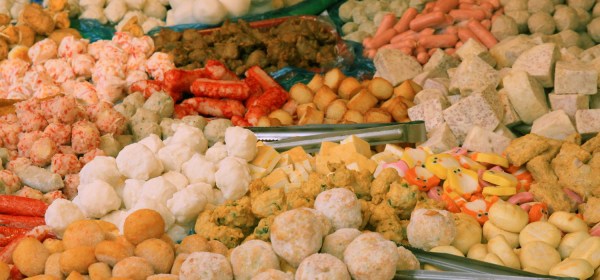
Written by Fatimaah J Menefee. Culinary diplomacy, food diplomacy, gastronationalism, and gastrodiplomacy are applied liberally to describe food and diplomacy in contemporary international relations. Culinary Arts as a medium in diplomacy dates to the genesis of humankind. Consider Peaches of Immortality, protected by the Queen Mother in Ancient China, that served as a reward to all faithful mortals and immortals.

Back to the 80s: Taiwanese-American Intellectuals’ Views on Taiwan Relationship in Two Oversea Magazines

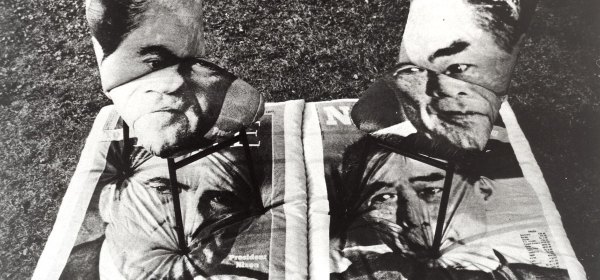
Written by Sui Lam Cheung. Taiwan’s international status and sovereignty have always been closely related to US international policies. As a result, the US-Taiwan relation has always attracted widespread attention and discussion. Thus, scholars have begun to pay attention to the American aid culture in economic and cultural fields. For instance, Wang Meihsiang and Chen Chienchung have analysed the US aid literature system from a sociology of literature perspective to explain how Taiwanese intellectuals received direct or indirect economic assistance from the United States. This assistance was used to introduce or develop related cultural production literary works and cultural phenomena. In addition to examining the development of Taiwan’s literary field, US aid culture can also be another perspective to examine non-official views other than the official discourse of the US and Taiwan.

Taiwan’s Non-Traditional Diplomacy During the Pandemic: The Case of Mexico

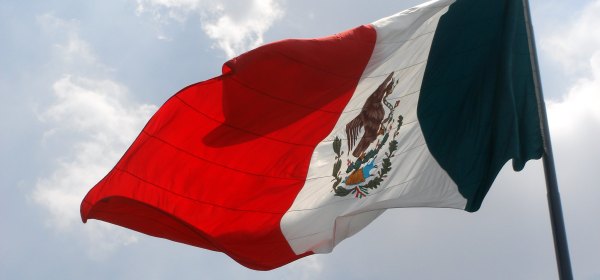
Written by Fabricio A. Fonseca. In the spring of 2020, the social media accounts of the Taipei Economic and Cultural Representative Office (TECRO) in Mexico City began to share posts made by Mexican federal legislators. In these posts, they showed appreciation for the donations made by Taiwan’s representatives in the country under the difficult circumstances posed by the COVID-19 pandemic. Initially, those donations consisted of food baskets and eventually included thousands of face masks. The different images of people across Mexico receiving boxes with the slogan “Taiwan Can Help” (TCH) made me think about how authorities on the island were using different instruments associated with non-traditional diplomacy.

Continuities’ Strategy through Poetry’s Writing, Translation and Editing of the Translingual Poet Ch’en Ch’ien-wu 陳千武 (1922-2012)

Written by Sandrine Marchand. In Taiwan, 1945 marks the end of the Japanese colonisation. For many Taiwanese intellectuals and writers, it also means the abandonment of the Japanese language for Mandarin. But a language cannot be erased as quickly as architecture or other material goods. The language of childhood – the language of education – stubbornly persists. After this initial silent period, in the 1970’s – thanks to the Nativist movement – there has been a revaluation of pre-war Taiwanese writers gathered under the appellation of “a translingual generation” as they emerged from the shadows.

Victims without Perpetrators: Slovakia’s and Taiwan’s Lack of Retributive Justice

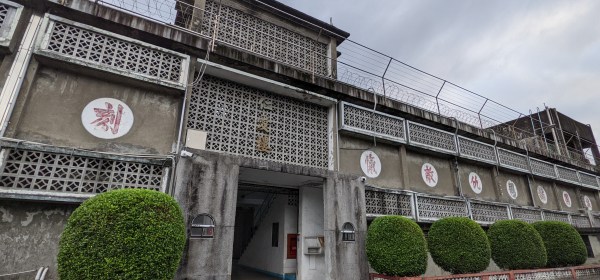
Written by Dominika Remžová. Despite the recent 228 Incident commemoration, along with the latest exonerations of White Terror political victims, the lack of retributive justice from criminal trials or other perpetrator-focused measures remains the case in Taiwan. In fact, the legality of the only perpetrator-focused act related to the KMT’s party assets has been continually contested by the party, despite the ruling of the Council of Grand Justices that upheld the constitutionality of the act’s provisions. A similar lack of retributive justice occurred in another country with a recent authoritarian past, Slovakia

Xi Jinping’s 2.0 version of the “Letter to Compatriots in Taiwan”

Written by Simona A. Grano & Helena Y.W. Wu. On January 2, 2019, Xi Jinping held a speech to commemorate the famous “Letter to Compatriots in Taiwan” of 1979. In this letter, he defined unification across the Taiwan Strait as “the great trend of history.” He also warned that attempts to facilitate Taiwan’s independence would be met by force. Not only this, but he also called for “unification under the ‘one country, two systems’ formula.”

1 31 32 33 34 35 61