Prospects for President Tsai Ing-wen’s Second term

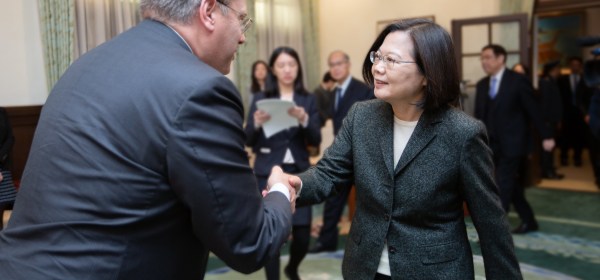
Written by Gerrit van der Wees. Her overwhelming victory in the elections already gave President Tsai Ing-wen a solid mandate to push domestic reforms with greater vigor, while the country’s excellent performance in combating the Coronavirus crisis gave Taiwan an unmatched international visibility, which will help in pushing back against China’s mounting political and economic aggressiveness.
Taiwan’s Rising International Standing amid the COVID-19 Pandemic

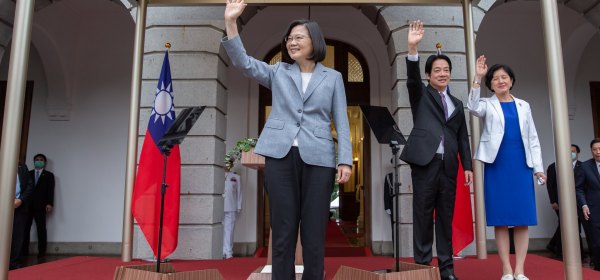
Written by T.Y. Wang. With its recent dispute with the director-general of the World Health Organization (WHO), Dr Tedros Adhanom Ghebreyesus, the island country has grabbed international headlines again, which may aid its efforts to join the international health organisation. Responding to a question from a reporter, and without providing any evidence, Tedros claimed that the Taipei government was behind recent death threats and racist online attacks against him.

Europe and America Cannot Learn from Taiwan’s Anti-epidemic Experience, But We Can Work Out Solutions Together

Written by Lien-yi Hsu. Although the Taiwanese authorities may harm the rule of law in their epidemic prevention strategies, I still believe that Taiwan’s society still has the energy to resist if such measures go too far and damage the foundations of democracy. Hence, if Taiwan’s parliament can impose a robust public health bureaucracy, it could be argued that some preventative, legislative restrictions – which would work to limit democratic damage during the pandemic — would naturally be a better option.

US Congress passes Act in Support of Taiwan’s Diplomatic Alliances

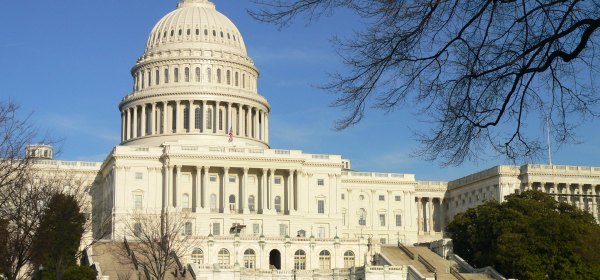
Written by Gerrit van der Wees. On March 4th, 2020, the US House of Representatives passed the TAIPEI Act with unanimous consent. TAIPEI, in this case, stands for “Taiwan Allies International Protection and Enhancement Initiative” – a smart acronym for legislation designed to support more international space for Taiwan around the world. The US Senate had passed a similar Bill at the end of October 2019, and the House actually took up the Senate version of the Bill.

A Political Gamble: Taiwan’s Kinmen Island and the Decision of Supporting the Central Government’s Coronavirus Prevention Measures

Written by Shun-Te Wang. As Chinese influence infiltrates everyday life in Kinmen, local politicians still find it challenging to predict local opinion over border control issues. In early February 2020, 6 kilometres away from China, a dissatisfaction toward the government’s Coronavirus prevention measures became prominent on the Kinmen island. The island’s public demand that Taiwanese central government, which is 300 kilometres away from Kinmen, to suspend the “Three Links” to prevent the Coronavirus disease 2019 (COVID-19) from entering.

A State-based World Health Organisation: The Taiwan Paradox for Global Pandemic Governance

Written by Po-Han Lee. Due to the recent outbreak of the new coronavirus (COVID-19), Taiwan—which is greatly affected because of its intensive communication with China—has come under the international spotlight, because of its exclusion from the World Health Organisation (WHO), which is the largest institution responsible for disease control. Drawing on the rules/practices regarding the WHO-related meetings, this essay discusses why it is so difficult for the Taiwanese to be heard by the WHO, let alone for them to be present at relevant forums.

How is Taiwan Facing the Coronavirus?

Written by Josie-Marie Perkuhn. As a precaution, most flights have been suspended, and entry spots have restricted access, such as maritime passages via Kinmen, Matsu or Penghu Island. President Tsai also assured that “as long as the two sides fully communicate and cooperate, I do believe that we will be able to take good care of our people”. However, controversy arose when on February 3rd evacuees arrived. Three of the 247 people on the charter flight had not been on the priority list, which Taiwan provided to China, and one was tested positive, becoming the 11th patient in Taiwan to be diagnosed.

Taiwan’s participation in the WHO in the outbreak of the coronavirus: the Old Global Health vs. the new

Written by Kai-yuan Cheng. Perhaps most fundamentally, Taiwan needs to make young Taiwanese believe that, despite our sad past and difficult present, going into global health as a Taiwanese is a promising career filled with opportunities and excitement. Building a global health-informed civil society will appeal to the new generation of governance bodies whose more flexible frameworks are ready to engage Taiwan, not necessarily because of the globalist ideal of leaving no one behind or the humanitarian concern for the Taiwanese population health, but because we have something to offer.

Time To Bring Taiwan In From The Cold: Start Working Towards A Normalization Of Relations

Written by Gerrit van der Wees. A recent episode in Prague illustrates in two important ways that China’s relations with the West are changing fast. It shows the need for the US and Western Europe to reimagine relations with Taiwan, bring Taiwan in from the cold of political isolation, start working towards a normalization of relations, and find a rightful place for that democratic country in the international family of nations.

The DPP’s Electoral Victory as a Political Regression?

Written by Ian Inkster. The conclusion is that the DPP should take the risk of dropping the rhetoric of China whilst seeking ways of beginning more positive diplomatic exchanges. And this should be undertaken on a broad basis. DPP negotiations that are not within a reasonably broad-based consensus at home are unlikely to progress far, for domestic quarrels do not make for confident diplomacy on either side of a table.

1 13 14 15 16 17 28