What Strategy will the KMT Take Next? What Are the Odds of Reform Under Chu?

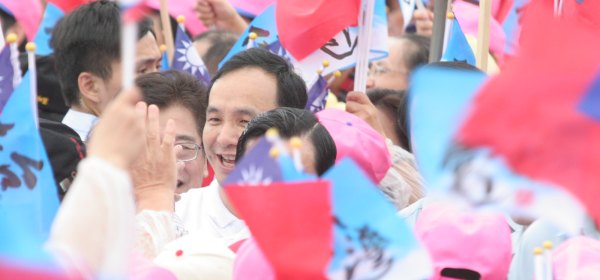
Written by Brian Hioe. Eric Chu was the winner of the KMT chair election that took place on Saturday, September 25th, triumphing over incumbent chair Johnny Chiang and Sun Yat-Sen School director Chang Ya-chung. Chu was the undisputed winner, taking in close to half the vote share. At the same time, Chang Ya-chung took in 32.59% of votes to Chu’s 45.78%, while Chiang trailed far behind with 18.86% of votes.
Synergies Between Taiwan’s New Southbound Policy and Biden’s Free and Open Indio-Pacific Strategy

Written by Grace Faerber. The Biden administration is strengthening its recognition of the strategic importance of Taiwan to the FOIP, the greatest indicator being the appointment of Sandra Oudkirk as Director of the American Institute in Taiwan (AIT), the de-facto U.S. embassy in Taipei. Director Oudkirk previously served as a Senior Official for APEC at the Bureau of East Asian and Pacific Affairs (APEC’s member countries include the nations of Australasia and ASEAN).

Taiwan’s COVID-19 Vaccination Against Biological and Political Viruses

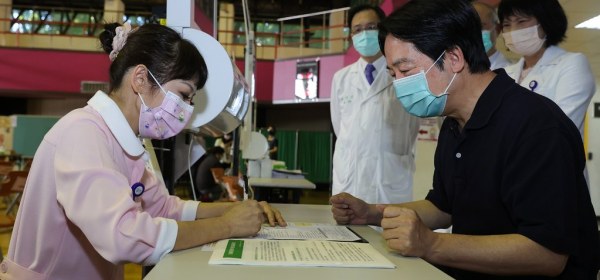
Written by Chunhuei Chi. For Taiwan to move toward the post-pandemic era, it must be understood that its main challenge is political rather than biological. Besides fighting disinformation and external and internal attempts to divide Taiwan and undermine its control effectiveness, it needs to consider the vaccines’ critical role in ending this pandemic. Further, the criticism of its government’s vaccine under-preparedness has shifted Taiwanese to inward-looking and toward vaccine nationalism.

Remembering Tragic Spirits: The Worship of Nationalist and Communist War Dead in Kinmen

Written by Junbin Tan. would know, Kinmen was the Republic of China’s (ROC Taiwan) battlefront against the People’s Republic of China (PRC) from 1949 to the 1990s. Thus, the residents of Guningtou, a cluster of villages a short drive from Kinmen’s north-western shoreline where one could see Xiamen’s skyscrapers, were first-hand witnesses of battles, artillery bombardments, and decades of militarisation.

A Fourth U.S. Communiqué on the Sovereignty of Taiwan?

Written by David Pendery. This work will examine the possibility of a new announcement by the United States, which on the surface may appear to be an agreement between the United States and China but which is not, in fact, that. In a word, it is not a formal treaty or concord. It would instead express a US view on the reality of international relations. I will call it a “Fourth Communiqué,” and like the well-known first three communiqués, it would in large measure deal with relations between the US, Taiwan, and China, with other essential considerations.

In the Wake of the Afghanistan Withdrawal, the US Must Send the Right Signals on Taiwan (Part II)

Written by Corey Lee Bell. In part one of this series, I discussed how important it is for the US to move quickly to convince China that its withdrawal from Afghanistan is not symptomatic of a retreat towards isolationism but rather part of a strategy of redirecting American resources to the Indo-Pacific and the defence of Taiwan in particular. However, with the Biden administration likely to stop short of formally declaring ‘strategic clarity’ (i.e., that it will definitely fight China if it invaded or embargoed Taiwan), and with China thus far having a low estimation of America’s resolve and capacity to defend the island, I suggested demonstrating this through actions that show that America is not only strengthening its regional presence, but also its preparedness and combat readiness.

In the Wake of the Afghanistan Withdrawal, the US Must Send the Right Signals on Taiwan (Part I)

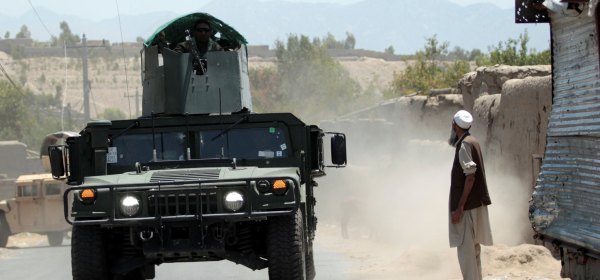
Written by Corey Lee Bell. There is little doubt that America’s chaotic withdrawal from Afghanistan has been a propaganda boon for Beijing. Nowhere has this been more apparent than in Chinese state media’s efforts to draw parallels between Afghanistan’s abandonment and the potential fate of Taiwan. Already, Chinese press, and pro-China media and political allies in Taiwan, are telling the Taiwanese people that America cannot be relied upon, with one article, from China’s state-mouthpiece Global Times, warning that if “total war” broke out in the Taiwan Strait, “America will not rush to the rescue.”

The Fall of Afghanistan: Why Taiwan is Fundamentally Different?

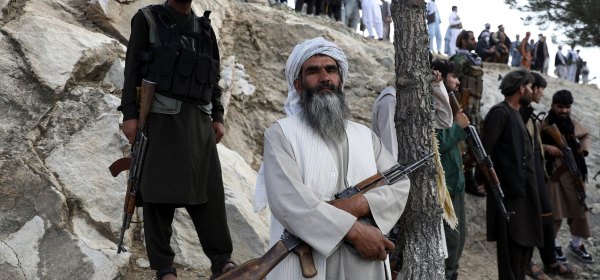
Written by Gerrit van der Wees. The scenes from the tragic events unfolding in Afghanistan are heart-wrenching. One would have hoped that the withdrawal by the United States and its Allies could have been planned such that it would be taking place in a more orderly fashion. Many an analysis will be written on this topic (…) A brief scan of the internet shows that Beijing’s propaganda machine is already hard at work to capitalize on the moment by publishing several articles implying that Taiwan could befall the same fate.

What is ‘Home’ and Who are the ‘Overseas Chinese’?

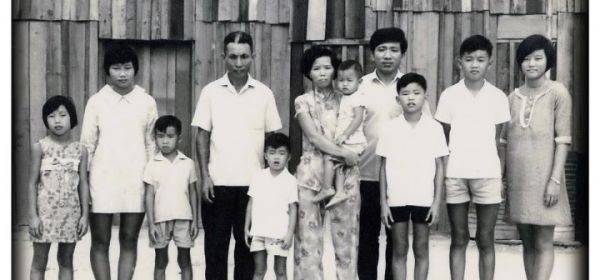
Written by Yun Seh Lee. This year marks the 100th anniversary of that first KMT-CCP coalition, and the competition across the Taiwan Strait is still going strong. Focusing on the Overseas Chinese communities across the globe – a term populated by the prominent scholar Wang Gungwu – both players have been enthusiastically trying to win the hearts and minds of this diaspora. The label ‘Overseas Chinese’ itself hints at an ongoing link to China, but the PRC and Taiwan dispute the nature of that link and its contemporary manifestation.

The Taiwan-Australia Partnership: An Observation

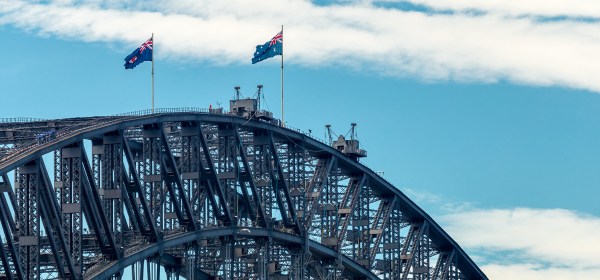
Written by Ek-hong Ljavakaw Sia. Few bilateral relationships between any other two countries in the world can be as balanced, reciprocal, and complementary as the Taiwan-Australia partnership. Located in the southernmost and westernmost parts of the Pacific, Australia and Taiwan have many features in common: nearly the exact size of the population, an equally prosperous economy, a vibrant civil society, and a healthy democratic polity.

Why Is the Revitalisation of Taiwan’s New Southbound Policy So Pressing?

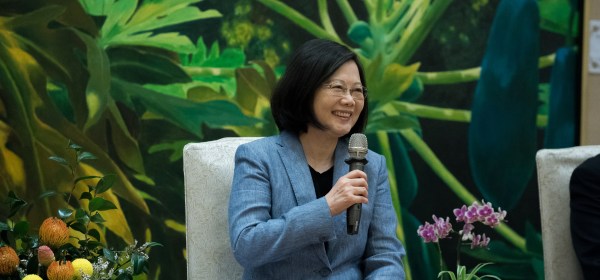
Written by Huynh Tam Sang. Adopted by President Tsai Ing-wen in 2016, the New Southbound Policy (NSP) has helped fortify Taiwan’s international standing and promoted the spirit of “Taiwan helps Asia, and Asia helps Taiwan.” In recent years, the NSP has facilitated Taiwan’s participation in the Indo-Pacific society. At the same time, they ensure that Taiwan could get on board with other regional and middle powers, like China, Japan, South Korea, India, and Australia, which have been forging their ties with Southeast Asian countries. 

1 14 15 16 17 18 40