Taiwan Deserves Its Rightful Place Under the Sun

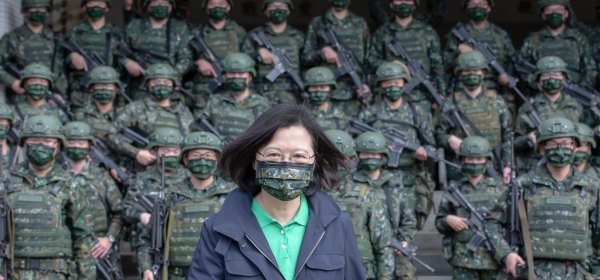
Written by Gerrit van der Wees. On 30 April 2021, the London-based The Economist published an article with the sensationalist headline referring to Taiwan as “The most dangerous place on earth.” The essay highlighted the increasing tension between the United States and China over Taiwan and the dangers of an armed conflict if China decides to use force against the democratic island.
The Public Nature of Civil Disobedience: Lessons from the Sunflower and Umbrella Movement

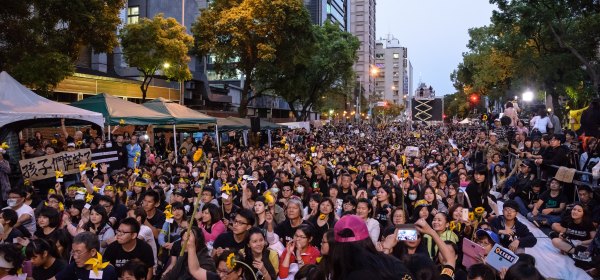
Written by Leon N. Kunz. In March 2014, participants in the Sunflower Movement peacefully occupied the main chamber of Taiwan’s parliament to block the ratification of a controversial trade agreement with the PRC that they viewed as a threat to Taiwanese democracy. In September of the same year, protesters involved in Hong Kong’s Umbrella Movement created street occupations to push for genuine democratic reform. In both cases, participants not merely occupied public space but claimed to engage in civil disobedience. According to the often-cited definition by liberal theorist John Rawls, civil disobedience is “a public, nonviolent, conscientious yet political act contrary to law usually done to bring about a change in the law or policies of the government.” To what extent did the occupations in Taiwan and Hong Kong conform to the dominant liberal civil disobedience script?

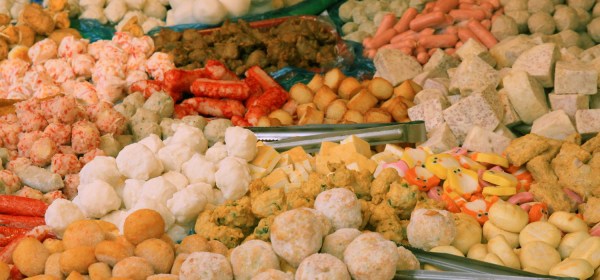
Gastrodiplomacy in Contemporary International Relations of Asia and Its Relationship to Everyday Nationalism: A Reflection on the Gastronomic Campaigns of Taiwan, Thailand, and South Korea

Written by Fatimaah J Menefee. Culinary diplomacy, food diplomacy, gastronationalism, and gastrodiplomacy are applied liberally to describe food and diplomacy in contemporary international relations. Culinary Arts as a medium in diplomacy dates to the genesis of humankind. Consider Peaches of Immortality, protected by the Queen Mother in Ancient China, that served as a reward to all faithful mortals and immortals.

Continuities’ Strategy through Poetry’s Writing, Translation and Editing of the Translingual Poet Ch’en Ch’ien-wu 陳千武 (1922-2012)

Written by Sandrine Marchand. In Taiwan, 1945 marks the end of the Japanese colonisation. For many Taiwanese intellectuals and writers, it also means the abandonment of the Japanese language for Mandarin. But a language cannot be erased as quickly as architecture or other material goods. The language of childhood – the language of education – stubbornly persists. After this initial silent period, in the 1970’s – thanks to the Nativist movement – there has been a revaluation of pre-war Taiwanese writers gathered under the appellation of “a translingual generation” as they emerged from the shadows.

Xi Jinping’s 2.0 version of the “Letter to Compatriots in Taiwan”

Written by Simona A. Grano & Helena Y.W. Wu. On January 2, 2019, Xi Jinping held a speech to commemorate the famous “Letter to Compatriots in Taiwan” of 1979. In this letter, he defined unification across the Taiwan Strait as “the great trend of history.” He also warned that attempts to facilitate Taiwan’s independence would be met by force. Not only this, but he also called for “unification under the ‘one country, two systems’ formula.”

Explaining Cross-Strait Relations with Theories of European Integration

Written by Frédéric Krumbein. The European Union has the densest integration region globally, whereas current trends in cross-strait relations point to a further divide between both sides. Despite noticeable significant differences between the European Union and cross-strait relations, theories of European integration provide a useful framework to analyse the past, present, and future of relations between Taiwan and the Chinese mainland. Four major theories of regional integration that were developed for or applied to the European integration process will be used to analyse cross-strait relations: neofunctionalism, historical institutionalism, liberal intergovernmentalism, and postfunctionalism.

Changing Circumstances Call for Taipei to Lift Its Effort in Promoting Democracy on China and beyond

Written by Chen Jie (陈杰). There are remaining concerns urging the government of democratised Taiwan to support democratic causes and human rights in China. In fact, for the Tsai Ing-wen administration, these issues have strengthened. Despite their disdain for the one China project, politicians of the Democratic Progressive Party (DPP) share the sentiment that Taiwan’s own democratisation inspires China. This is echoed internationally. The former US Vice President Mike Pence spoke positively about Taiwan’s “embrace of democracy” and the example it had set for “all the Chinese people.”

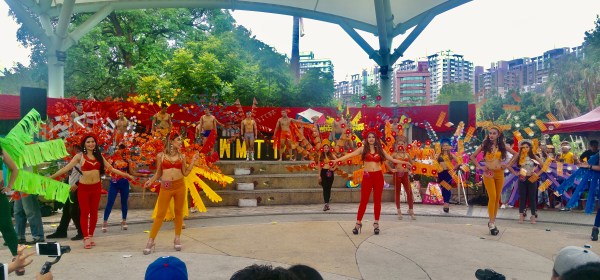
The Fashioning of Filipino Community in Taiwan: OFW Beauty Pageants in the Era of Social Media

Written by Yi-Yu Lai. As an anthropologist who studies Indigenous movements in the Philippine highlands, my experiences of beauty pageants’ are not rare. The beauty pageant has been culturally entrenched in the Philippines and its diasporic communities for many decades. Because these contests are very popular with Filipinos, some Indigenous youth advocates use them as an instrument for cultural activism, empowering participants and attracting those who were previously indifferent to political issues. Nevertheless, the Filipino beauty pageants of Taiwan are quite different from those I previously experienced.

Disinformation in the January 2020 Taiwan Elections

Written by Nicholas Welch. Approaching the January 2020 Taiwan elections, many Taiwanese and international spectators broadly feared PRC-based disinformation operations weakening Taiwan’s democratic institutions. In particular, many feared Russian-style “covert social influence via the use of bots and fake persona accounts,” which would sway public opinion en masse. Nevertheless, when the dust settled, it remained unclear whether the PRC propagated that form of disinformation at all. Before the election, and although no substantial evidence for such claims exists, the international community pre-emptively accused the PRC of spreading disinformation.

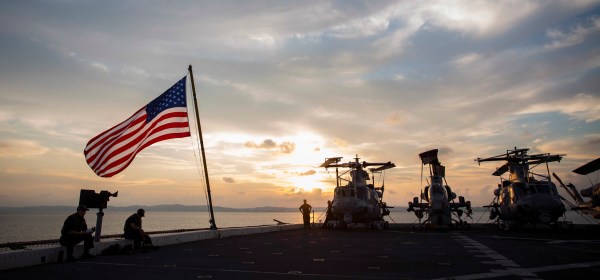
Why Taiwan Should Pay More Attention to the Futenma Relocation Issue in Okinawa, Japan

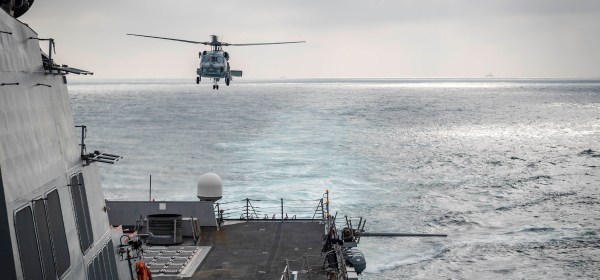
Written by Mari Uchima. Most analyses of Taiwan’s security focus on cross-strait relations and the U.S.-China military balance. What is mostly missing in the debate is that the U.S. military bases in Okinawa, Japan, are critical to any U.S. defence of Taiwan due to their geographic proximity. Therefore, Taiwanese and analysts and students of Taiwan’s security should pay more attention to the ongoing developments there, as they have implications for Taiwan’s security.

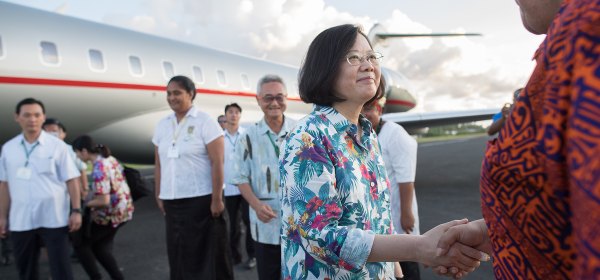
As Sea Levels Rise and Chinese Pressure Mounts, Taiwan Must Extend NSP to the South-Pacific

Written by Ma’ili Yee. A year after losing two of its Pacific Island allies, Taiwan continues to feel the mounting pressure of Chinese influence in the South-Pacific ocean. Within recent years, China has pointedly increased its presence in the Pacific through financial aid, commercial trade, and high-level diplomatic engagement. The four Pacific states of Tuvalu, the Marshall Islands, Nauru and Palau now compose nearly a third of the remaining countries that officially recognize the ROC. Despite their small geographic and economic size, Taiwan would be wise to recognize these Pacific island nations’ immense political weight and properly address their top concerns—sustainable development and climate change—through concerted foreign policy.

The Last Trump: Or, Taiwan as a Potential Pawn on a New Chess Board

Written by Ian Inkster. As Joseph Cummings has summarised recently for Redaction Politics, ‘experts believe that Mr Biden’s policy will fall short of provocation of mainland China and Mr Trump’s open empowerment of Taiwanese militarisation,’ and there is little reason yet to discount that view. The fact that the US has approved recent arms purchase deals with Taiwan may mean no real change in the long history of less-than-best military techniques being sold off to Taiwan as part of the old cold-war alliance.

1 17 18 19 20 21 40