Divided Not Doomed: Domestic Challenges for the Lai Administration’s Foreign Policy

Written by Nils Peterson. This article analyses the domestic challenge for the Lai administration’s foreign policy under a KMT-aligned Legislative Yuan. The divided government poses two potential hurdles: the risk of domestic gridlock and fights over defence appropriation funding. These challenges will require some degree of compromise between the KMT and the DPP, reinforced by the recent recall campaigns.

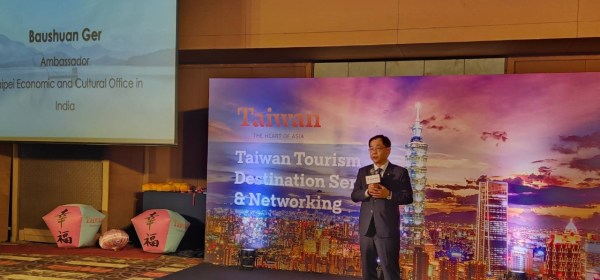
From Overcrowding to Opportunity: Taiwan’s Appeal for Indian Tourists

Written by Neeraj Mehra. This article discusses Taiwan’s untapped potential in India’s booming outbound tourism market, highlighting shared cultural ties, natural attractions, and democratic values. The author proposes that easing visas, improving air connectivity, boosting targeted marketing, and fostering educational exchanges may expand tourism, strengthen Taiwan’s soft power, and advance its New Southbound Policy goals.

Resolution 2758 and Taiwan’s Global Struggle for Recognition

Written by Yenting Lin. This article examines the misinterpretation and misuse of UN Resolution 2758, which defines China’s representation in the UN but not the status of Taiwan. But it has been used by Beijing to endorse the “One China Policy”. Pushback against China’s interpretation has begun to emerge in recent years as Taiwan’s contributions to international society are recognised.

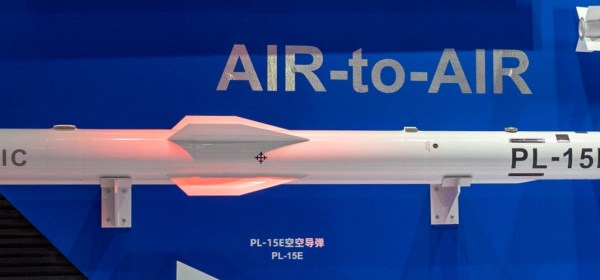
A Strategic Wake-Up Call: Insights from South Asia for Taiwan’s Defence Posture 

Written by Hsiao-Chen Lin. The article examines how South Asia’s recent strategic developments, particularly Pakistan’s use of integrated C4ISR systems, offer crucial insights for Taiwan’s defense. It highlights China’s export of integrated warfare doctrines and Taiwan’s efforts to enhance its resilience through defence reforms, societal readiness, and strategic realignment amidst evolving Indo-Pacific dynamics.

India-Pakistan Conflict: Lessons for Taiwan

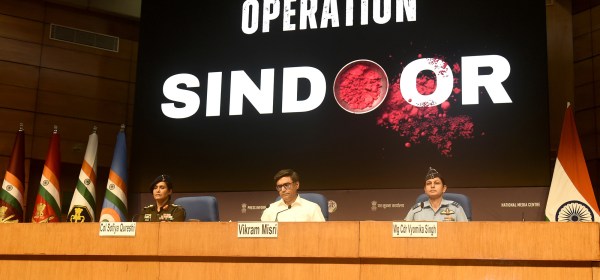
Written by Sana Hashmi. This article discusses how the 2025 India-Pakistan conflict served as a critical case study for Taiwan, especially concerning a potential Chinese invasion. The author argues that China’s indirect support for Pakistan during the conflict allowed Beijing to test limited war scenarios, grey-zone tactics, and cognitive warfare strategies, mirroring Taiwan’s own strategic environment. This highlights Taiwan’s need to diversify its defense partnerships and enhance its resilience against disinformation.

From Missiles to Malware: India-Pakistan Cyber Rivalry and Lessons for Taiwan 

Written by Sameer Patil. This article discusses how the May 2025 India-Pakistan conflict unveiled a new chapter of cyber warfare and cognitive warfare. As the two nations exchanged conventional blows, an intense battle simultaneously unfolded in cyberspace, targeting digital infrastructure and spreading disinformation. Pakistan aggressively launched cyberattacks and propaganda, while India largely adopted a retaliatory and defensive cyber posture. This highlights the critical and evolving role of cyberspace in modern conflicts and offers key lessons for Taiwan regarding cybersecurity and countering disinformation.

The Implications of Recent India-Pakistan Conflict for Taiwan: Raising Awareness of Security Threat and Strengthening Will to Resist Aggression

Written by Mei-chuan Wei. This article examines the recent India-Pakistan conflict’s implications for Taiwan, highlighting the importance of developing advanced defence systems like data links and integrated air defence. It underscores the critical need for Taiwan to bolster public awareness of security threats and cultivate an unwavering will to resist potential Chinese aggression, viewing these as crucial for national defence.

What I Saw and Heard: Triangular Relations among Taiwan, China, and the Holy See

Written by Thomas Ching-Wei TU. This two-part article reflects on Taiwan’s diplomacy with the Holy See from a high-level politics perspective and examines how Taiwan can enhance cooperation. It argues that in addition to calling for religious freedom in China, the Taiwanese should understand the primary goals of the Vatican’s diplomacy and its differences with secular states. 

1 2 3 4 40