Covid 19 – Taiwan in East Asia

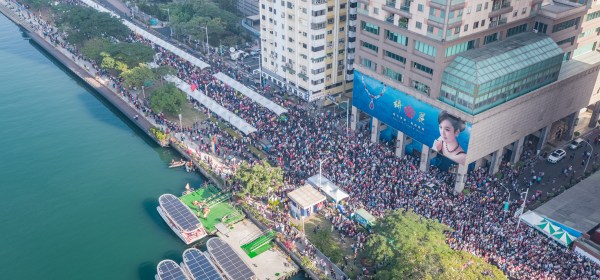
Written by Ian Inkster. The East Asian capacity for self-help is not an illusion nor irrelevant to our further understanding of the global Covid 19 crisis. More of this later. First, a few statistics that put East Asia in some perspective, derived from my analysis of the figures available on 28-29 March. All figures are problematic and very temporary, but the death/cases ratio seems sturdy in that the numerator is visible, which is more difficult to hide and easier to find than most of the measures being bandied about elsewhere.

Dispelling the monolith: The geopolitics of language in Taiwan and Hong Kong

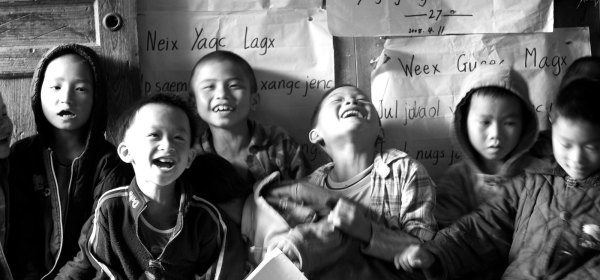
Written by Justin Kwan. In an attempt to reach audiences in Taiwan and Hong Kong, China has attempted to use both Hokkien and Cantonese in its messaging through media and popular culture, eliciting mixed responses from locals in both places. In the case of Taiwan, Beijing resorted to a strategy of direct coercion in 2018, when it released a dubbed propaganda video in Hokkien titled ‘God of War’. The video featured bomber aircrafts flying around Taiwan, a warning from Beijing for the islands Taiwanese-speaking activists to curb their so-called ‘pro-independence’ activities.

The Repositioning of Taiwan in the Global Supply Chain Network

Written by Min-Hua Chiang. The relocation of Taiwanese outward direct investment (ODI) away from China is a clear sign of the shifting global business landscape. The cross-strait division of labour in manufacturing production has started to fade after China’s wage hike, industrial upgrading as well as stricter rules on the environment and labour protection. Taiwan’s ODI in China has declined visibly after 2012.

Can Taiwan decouple from the Chinese economy?

Written by Michael Reilly. In the medium to long-term, the coronavirus outbreak may turn out to be the high-water mark of foreign investment in China. Even before this, foreign companies were growing increasingly frustrated as the government increased minimum wage levels in provinces such as Guangdong and Fujian, and they also became frustrated with a growing burden of regulations and a bias in favour of domestic companies.

City Pop in Taiwan: old mainstreams becoming new indies

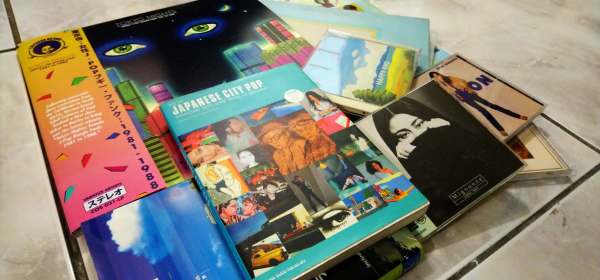
Written by Yan-Shouh Chen. As City Pop become more known to Taiwanese indie music lovers, unveiling J-pop history might not be enough. Some fans turned their eyes toward Taiwanese artists that are good at creating groovy melodies. These artists might consider themselves as R&B and Hip Hop rather than City Pop, but the boom did them a favour, and now the spotlight is on them.

Wu Zhuoliu’s Orphan of Asia and the Madness of the Colonial Reality

Written by Makiko Mori. Wu Zhuoliu’s (1900–1976) Orphan of Asia is a renowned work of colonial Taiwanese literature. Surreptitiously written towards the end of Japan’s colonial rule in Taiwan (1895-1945), this semi-autobiographical novel bears a powerful witness to Taiwan’s deeply troubled, albeit legitimately modern, claim for the right to self-determination and self-representation.

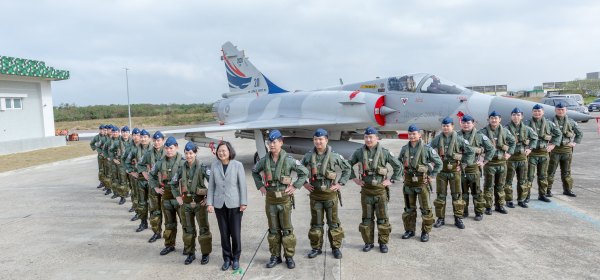
What will the re-elected Tsai-DPP government’s foreign and defence policies look like?

Written by Yu-Hua Chen.
On January 11th 2020, the incumbent president of Taiwan, Tsai Ing-Wen, was re-elected to serve a second term as President of Taiwan by a land-slide majority. Tsai’s 8.17 million votes (57.1%) was a record high for Taiwan (well surpassing the record set by Ma Ying-jeou in 2008), and occurred in the backdrop of an unprecedented high turn out (19 million votes at 74.9% of the voting population). Yet the performance in the legislative election of Tsai’s party, the Democratic Progressive Party (DPP), was far less impressive.

The “Hong Kong factor” in the 2020 Taiwanese Presidential Election

Written by Adrian Chiu. A large number of Hong Kong people travelled to Taiwan, personally covering experiences, just to share the sentimental moment of the Tsai’s predicted victory. Hong Kongers were present at electoral rallies in Taiwan, waving the anti-ELAB movement flag and slogan, “Liberate Hong Kong, Revolution of Our Times.” Although these Hong Kong people may not vote in Taiwan, they nevertheless all campaigned for Tsai.

Taiwan’s 2020 elections: Rallying around the flag

Written By Wen-Ti Sung. Taiwan hosted its quadrennial presidential and legislative elections on 11 January 2020. Shaping the contours of these critical elections is first and foremost the impending US-China strategic rivalry, as manifested in the Hong Kong crisis and the resultant prioritisation of national security above all other campaign issues on the part of the Taiwanese electorate.

Taiwan’s 2020 Elections: A Losing Battle for Han Kuo-Yu and the KMT in Opposition?

Written by Mei-chuan Wei. Han’s campaign strategies were ‘unconventional’, especially given his position as the KMT candidate. For example, his rhetoric intentionally appeals to ‘common folks’ (shumin), the majority of whom are working class people and have been the main social base of the DPP’s political support. Han’s anti-elitist position was also considered unusual, for although the DPP is generally seen as increasingly elitist, the KMT has always been perceived to be the elitist party.

Taiwan’s Presidential Election: the View from Southeast Asia

Written by Ratih Kabinawa. Taiwan’s presidential election is just around the corner and the entire world is watching this highly contested democratic event that will determine not only Taiwan’s domestic politics but also foreign affairs direction. While the presidential debates mainly covered the future of cross-Strait relations with Beijing, little attention is given to Taiwan’s relations with countries in Southeast Asia. How will the result of the presidential election affect Taiwan’s engagement with Southeast Asian countries?

1 9 10 11 12 13 14