Global Britain Goes to Southeast Asia: Investment Flows in an Era of Great Power Competition

Written by Guanie Lim and Xu Chengwei. In March 2021, the UK government published the ‘Global Britain in a Competitive Age’ report. Amongst other things, it sets out the UK’s four key objectives: upholding an international order supportive of liberal democratic values; contributing to the security of this order; building greater global resilience to the impacts of climate change, health insecurity, and related challenges; and pursuing an international economic agenda that strengthens the UK’s global competitiveness and supports the welfare of its citizens. One of the most practical measures to achieve such goals is to channel foreign direct investment (FDI) to outward-oriented economies, not least those with potentially enormous upside. Boasting the fifth-largest economic output in the world and a very favourable demography, the Association of Southeast Asian Nations (ASEAN) must figure prominently in the calculus of UK policymakers.

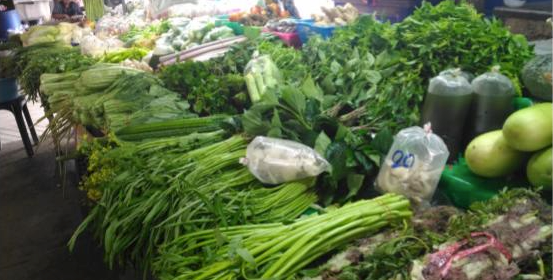
A plant out of water: Taiwanese greens in Thailand

Written by Angel Chao (趙于萱), translated by Sam Robbins. In supermarkets in Thailand, you can find Thai hydroponic vegetables labelled as ‘Taiwanese greens.’ Why? Because these plants are grown in Thailand by Taiwanese businesspeople who brought Taiwanese hydroponic technology to Thailand, using Taiwanese equipment to grow crops in Thailand.

The Sunflower, the Umbrella, and the Square: How Three Protest Movements in 2014 Foreshadowed Russia and China’s Foreign Policy Approaches in 2022

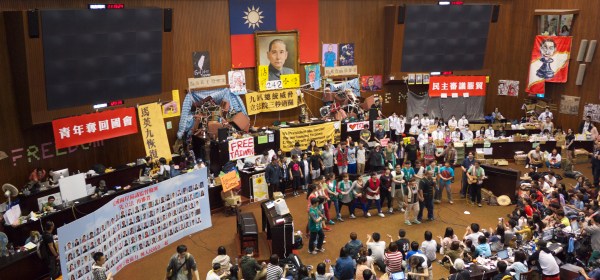
Written by Max Dixon. Therefore, the grievances, tactics and repression of the protest movements outlined here enable a clear foreshadowing of the approaches of Russia and China that would follow. Yet where Ukraine and HK saw their political systems collapse in their post-movement societies, the strength of Taiwan’s democratic institutions and values prevailed. This resulted in negotiating with the Sunflower Movement’s strains and the calls to repress it, which have seen a stronger Taiwan emerge.

Falling Through the Cracks of Care: Southeast Asian Migrant Workers Navigating Through Healthcare in Taiwan

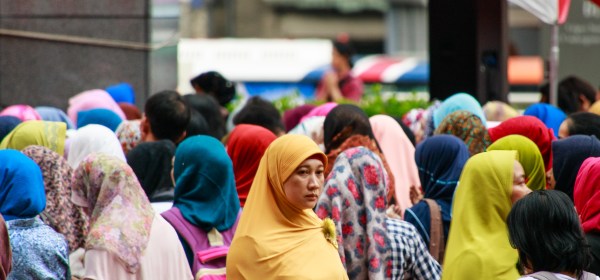
Written by Shao-Yun Chang (張韶韻) and Hang-Tang Chen (陳翰堂). Since their labour was first viewed as a supplement to the domestic labour market, Southeast Asian migrants have become indispensable to the manufacturing, agricultural, fishing, and care industries over the last three decades. While the initial foreign population was primarily Thai and Filipino workers, Vietnamese and Indonesian workers are now taking over factory jobs, farm work, and caring for seniors and the disabled. 

Cultivating Support from a Distance: The Transnational Activism of Taiwan Alumni Associations in Southeast Asia

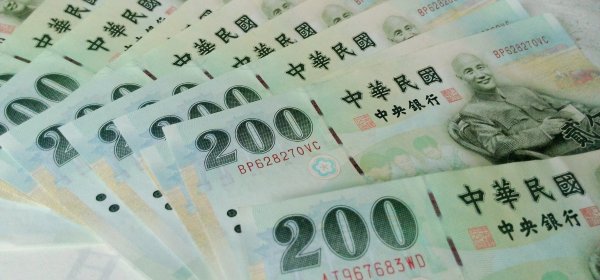
Written by Ratih Kabinawa. Since Tsai Ing-wen won power in 2016, Taiwan has experienced increased international isolation. Beijing stepped up its offensive policy toward Taiwan by blocking Taipei’s participation in international forums, for example, in the WHA, WHO, and International Civil Aviation Organisation (ICAO). The PRC also exercised its dollar diplomacy to push Taiwan’s remaining diplomatic allies to switch recognition from Taiwan to China. As a result, during Tsai’s first term (2016-2020), Taiwan lost its major diplomatic allies, leaving the country with only thirteen diplomatic allies. Consequently, the Taiwanese government has looked to overseas communities to enhance its image and visibility, including Taiwan alumni associations. The Tsai administration has given these overseas communities a significant role under Taiwan’s New Southbound Policy (NSP). 

Bridging Islands of/beyond Borders: Dongyin and Yonaguni

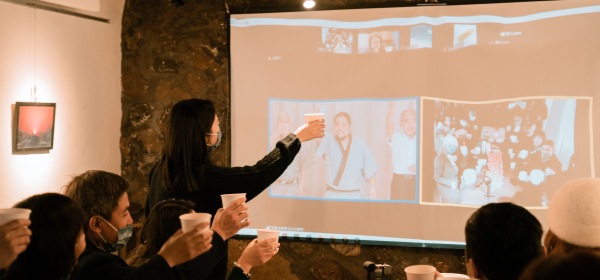
Written by Yi-Yu Lai. While the COVID-19 has stopped many individuals from travelling and interacting over the last two years, some cultural exchanges that we never expected to see have emerged during the pandemic. For example, on February 18th, 2022, people in Dongyin, an insular township in Taiwan’s Matsu Islands, had their first online workshop with those from Yonaguni, an island that belongs to Okinawa. Both islands are considered frontiers in their respective countries, and they had many comparable fates throughout history. Therefore, such a cultural exchange between the islands was particularly impressive because it was an activity with the islands as the focal point.

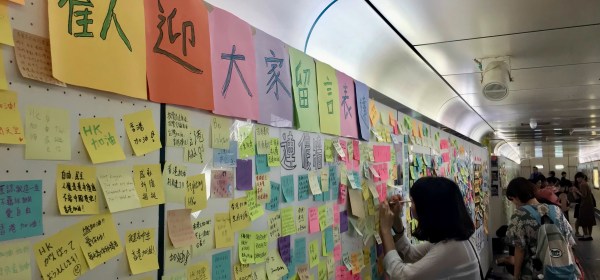
Two Hong Konger Projects on Taiwanese Soil: A Personal Encounter

Written by Judy Lee. I very well understand why he considers Taiwan a promising base for the initiative—a general acceptance of Hong Kong and Hong Kongers as an individual entity in its own right, favourable geographical location for necessary shipments and visits, highly-educated Traditional Chinese users ready to provide assistance…; but most importantly, just as in my own case, it is the generosity and amicability that Taiwan people offer that encourages continuous work and cooperation towards a more comprehensive narrative for the Greater China area.

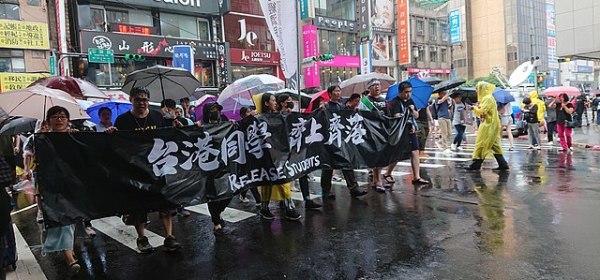
Hong Kong and Taiwan, Past and Present

Written by Jieh-min Wu. The deterioration of the situation over the last two years has been largely shaped by the global geopolitical environment, with growing Sino-American tensions or the “New Cold War” playing a critical part in Beijing’s decisions on Hong Kong. Given that the Xi regime is the source of Hong Kong’s political authority, the situation is unlikely to change unless Beijing loosens its grip. Even so, things can be done to preserve a glimmer of hope for the future of democracy in Hong Kong.

Hong Kong is the Canary in the Coalmine: Why We Must Take Xi Jinping’s Words Seriously When It Comes to Taiwan

Written by Dennis Kwok and Johnny Patterson. A little more than a year after the introduction of Hong Kong’s National Security Law, Taiwan does indeed seem to be the next target of an increasingly assertive Chinese foreign policy. PLA warplanes now regularly breach Taiwan’s air defence identification zone, often more than 150 in a row. At the same time, Taiwan has invited US marines to help shore up the island’s military forces. Throughout all of this, the aggressiveness of the rhetoric surrounding these issues continues to ratchet up.

Care work in Singapore and Taiwan: Beyond ‘Migrant Maids’ and Female Employers

Written by Lynn Ng Yu Ling. From the domestic caregivers in both locations, I gather that although there are important differences in the hiring criteria for employers, the root problem of employers having the upper hand in an asymmetrical working relationship remains unresolved. On the whole, it is harder for Taiwanese families to hire a ‘migrant maid’ (wai yong) than in Singapore, and several differences in the hiring process seem to indicate that Taiwan treats home care more seriously.

1 4 5 6 7 8 14