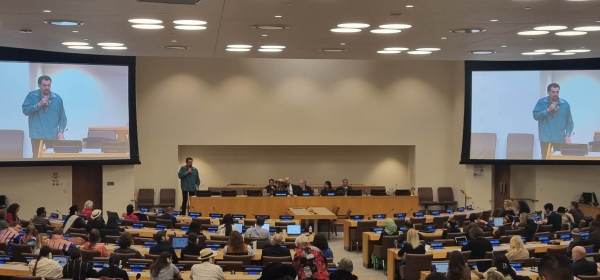
An era of change: Taiwan’s unofficial diplomacy in Eastern Europe during the Tsai Ing-Wen presidency

Written by Eason Leung. This article examines the unofficial diplomacy of Taiwan in Eastern Europe. It identifies a flexible approach of Taiwan in dealing with various Eastern European nations – deepening ties with friendly nations such as Lithuania, Poland and the Czech Republic, while seeking trade and investments opportunities for countries with closer ties with China like Hungary. 

How Czechia Engages Taiwan 

Written by Filip Šebok. While it has been over the past few years that the Czech-Taiwanese relations have grabbed headlines over the world, the two sides’ ties have not come from nowhere. In fact, the recent intensification of cooperation has been built on a very solid foundation jointly forged by the two sides since the early 1990s. Taiwan has become an important investor in the Central European countries already in the 2000s, especially through the investment of electronic manufacturer Foxconn, which has become a major exporter and tax payer in the country.  

Taiwan-Netherlands relations: strong ties with historical weight

Written by Sense Hofstede. Taiwan and the Netherlands share a long history. The island’s central position on the critical trading networks of its time sparked Dutch interests both in the 17th century and today. Dutch-Taiwanese economic ties are strong but also increasingly under intense scrutiny as the chip war heats up. Next to strong trade ties, a 1980s arms sale is the most high-profile of the Netherlands’ maritime ​​​​security involvement with Taiwan. The historical, security and economic ties all touch upon sensitive issues. 

The EU-China Summit and the Future of EU-Taiwan Relations: Reconstructing the Normative Agenda

Written by Dominika Remžová. A few days prior to this year’s EU-China summit (the first to take place in person since the COVID-19 pandemic), the Financial Times has published an opinion piece by Anders Fogh Rasmussen, former Secretary-General of NATO, calling for the Union’s stronger support for Taiwan. The article singles out security considerations as the main reason for such a principled stance, which the author acknowledges has been taken up by only a few Central and Eastern European (CEE) leaders. This focus on security issues and small states is noteworthy, as it provides the most fruitful avenue for further strengthening of ties moving forward.

Taiwan and Europe – Partners of choice, not obligation

Written by Zsuzsa Anna Ferenczy. In January 2024, Taiwan will elect a new president. Facing an existential threat from China, for Taiwan cooperation with the EU as a partner is essential to strengthen its democratic resilience. To expand the partnership however, a better understanding of the complex nature of the EU and developing a greater sense of clarity about what Taiwan wants will be indispensable. 

Staging and Restaging Taiwan at the Centre Pompidou: Taiwanese Art on Display 2020 to Present

Written by Gabriela-Alexandra Banica. In the third decade of the 21st century, Taiwanese artists and exhibitions have appeared at the Centre Pompidou in Paris and Metz, and this could serve as a compelling case study of Taiwan’s pursuit of international recognition through arts. Through this exploration, this article aims to address the gaps in the current scholarship related to curatorial practices concerning art from contested territories while enriching the field of France-Taiwan curatorial practices. By analysing the current subject of interest, it is hoped that art from more disputed territories can be made accessible to audiences in France, Europe, and around the globe.

Is Going Green Hurting Indigenous Communities? Reflection from Participating in the United Nations Permanent Forum on Indigenous Issues 

Written by Wasiq Silan. Is going green hurting Indigenous communities? Not necessarily. However, exclusionary conservation measures create a lose-lose outcome for non-Indigenous and Indigenous communities. Indeed, Indigenous peoples’ full and substantial participation is a prerequisite to achieving a sustainable future and halting the rapid loss of global biodiversity. This is true for the Indigenous communities in Taiwan, such as in the case of the solar panel controversy on the Katratripulr Pinuyumayan (Beinan in Mandarin Chinese) people’s traditional territory. Drawing from the experience of the Sámi, my recent participation in the United Nations Permanent Forum on Indigenous Issues (UNPFII) may shed light on this issue.

Taiwan and the Netherlands: What the East Asian Island Nation Can Learn from its Former Colonizer

Written by Charlie Smith. The King’s Field is a famous Japanese video game series created in the 1990s. But nearly 400 years ago, there was another King’s Field—the entire island nation of Taiwan. For 38 years in the 17th century, Taiwan was a colony of the Dutch Republic under the administration of the Dutch East India Company. And the Dutch king was the largest shareholder. 

“The Han people pioneers cleared the land, but the land they cleared was stolen from them, and they were forced to turn their labors toward tilling the so-called ‘king’s fields’,” wrote historian Su Beng in Taiwan’s 400 Year History. “Moreover, most of what they achieved was given over, in the form of rent or taxes, called ‘king’s field rent contributions,’ for the use and enjoyment of the Dutch.”

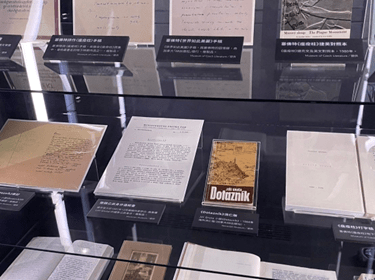
What is the significance of the dialogue with the Dutch community in Vancouver for 2023 TAIWANfest in Canada? 

Written by Charlie Smith. The Dutch Cultural Association of B.C. is trying to tell a more nuanced and complete story of the Netherlands, including the experiences of those who lived under Dutch colonial rule. Moreover, the association’s goal is to provide a richer understanding of how Dutch descendants should act as visitors on the unceded lands of Indigenous nations in Canada’s westernmost province. Oostindie believes that this has set his organization up well for a collaboration with this year’s TAIWANfest in Vancouver and Toronto. Oostinde discusses how Taiwan, the Netherlands and Canada can “have heartfelt discussions that bring these hidden histories forward. And we can learn about what it means for contemporary politics, how we work together, and how we consider democracies.” 

Europe’s Dream of Strategic Autonomy

Written by Gunter Schubert. Slowly, the dust settles after French President Emmanuel Macron’s remarkable performance during his state visit to China from April 5-7. However, it is a safe bet that his statements on the danger of the European Union (EU) being drawn into a war by the US because of Taiwan, a place of no interest to Europeans, will have long-lasting repercussions for the transatlantic relationship.

1 2 3 4