Political Implication of Olympic Formula for Taiwanese Spectators in the Stands

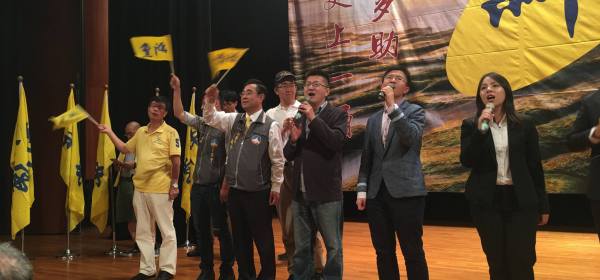
Written by Junwei Yu. This article highlights the political implication of the Olympic Formula of Chinese Taipei for Taiwanese spectators in the stand. The IOC regulations for spectators are relatively vague and that allow different handling of Taiwanese fans in various Olympics and sports events. This article reviews these incidents amidst increasingly assertive Taiwanese identity.

Taiwan in the Olympics: From ROC to Chinese Taipei

Written by Marcus P. Chu. This article reviews Taiwan’s journey of participation in the Olympics, from the representation of the ROC to Chinese Taipei. It highlights the Nagoya Resolution and Lausanne Agreement as fundamental to Taiwan’s participation. Such a formula is challenged by recent ongoing demands for name rectification, which raises questions about Taiwan’s future in the Olympics.

Taiwan’s Internet Governance: A Democratic Framework for Multistakeholder Participation and Global Connectivity 

Written by Anthony Lee. This article explores Taiwan’s Internet governance model, underlining its commitment to democratic principles and multistakeholder participation. Taiwan’s success in this area will depend on confronting challenges such as adapting to emerging technologies, ensuring privacy protection, and navigating geopolitical pressures while upholding democratic values and fostering international partnerships.

The Most Critical Resilience Questions of Them All: Taiwan’s Undersea Cables  

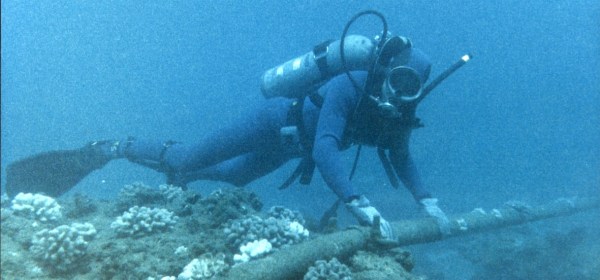
Written by Charles Mok and Dr Kenny Huang. This article examines Taiwan’s critical reliance on its undersea cable system for digital resilience in the face of potential blockades and disruptions. It emphasises the need for Taiwan to enhance its strategy by expanding partnerships to position itself as a regional “transfer station” for digital traffic while fostering investment and cross-sector collaboration to strengthen its connectivity infrastructure.

Tell a Taiwan Story to an American: A Recap at the Creative and Collaborative Workshop

Written by Dah-Wei (David) Yih. This article describes a workshop hosted at the NATSA conference that aimed to empower participants to communicate Taiwan’s significance to American audiences. The workshop emphasised Taiwan’s multifaceted importance to the United States, ranging from economic and geopolitical ties to shared democratic values and technological cooperation. It used interactive activities and facilitated discussions to help attendees understand why Taiwan matters and how to communicate this understanding to others effectively.

Asian Migrants and Taiwanese Americans: A Dialogue on Identity, Activism, and History

Written by Panchen Lo, Pei-Chen Cheng, and Ssu-chieh Jessica Fan (University of Texas, Austin). This article details a panel discussion at the NATSA conference featuring three scholars who discussed the experiences and identities of Taiwanese Americans. The panel focused on the intersection of Cold War geopolitics, class, and the complicated process of identity formation. It critically examined how historical context, class, and racial narratives have shaped the lives and experiences of Taiwanese Americans.

Is it the End for Taiwan and Pacific Regionalism? Controversy at the 53rd Pacific Islands Forum (PIF) Leaders Meeting in Tonga

Written by Jess Marinaccio. This article examines the 53rd Leaders Meeting of the Pacific Islands Forum, taking place from 26 to 30 August 2024. It highlights the several controversies that Taiwan was embroiled in during the Meeting, particularly in regard to Taiwan’s position as a PIF “development partner” despite objections from China.

An era of change: Taiwan’s unofficial diplomacy in Eastern Europe during the Tsai Ing-Wen presidency

Written by Eason Leung. This article examines the unofficial diplomacy of Taiwan in Eastern Europe. It identifies a flexible approach of Taiwan in dealing with various Eastern European nations – deepening ties with friendly nations such as Lithuania, Poland and the Czech Republic, while seeking trade and investments opportunities for countries with closer ties with China like Hungary. 

The trend of Grey Zone Conflict by China toward Taiwan during the presidency of Tsai Ing-Wen

Written by Ping-Yang Chao. This article examines China’s Grey Zone Conflict strategy employed since the Tsai Ing-wen’s presidency. These incursions became more frequent and intensive particularly after the visit of former US House speaker Nancy Pelosi. China is attempting to establish a “new normal” and intimidate Taiwan without triggering war and international intervention.

1 11 12 13 14 15 94