Does “Hong Kong Influence” Linger in the 2024 Taiwan Election?

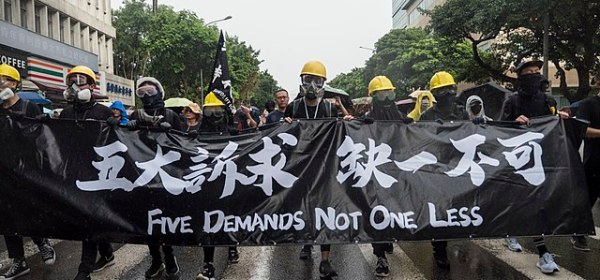
Written by Sanho Chung. It has been widely recognised that Hong Kong’s Anti-Extradition Movement in 2019 was the turning point of the 2020 General Election in Taiwan. In the last general election, Beijing’s hardline crackdown on the protests in Hong Kong gave rise to the Taiwanese’s mistrust of China and finally brought a big win to the Democratic Progressive Party (DPP), which was expected to lose both their majority over the Legislative Yuan and their presidency. But after three years of National Security Law (NSL) enactment in Hong Kong, the Hong Kong issue in this general election seems no longer as focal as it was. How should we make sense of this huge contrast in attention? Has “Hong Kong Influence” faded out totally?

How Czechia Engages Taiwan 

Written by Filip Šebok. While it has been over the past few years that the Czech-Taiwanese relations have grabbed headlines over the world, the two sides’ ties have not come from nowhere. In fact, the recent intensification of cooperation has been built on a very solid foundation jointly forged by the two sides since the early 1990s. Taiwan has become an important investor in the Central European countries already in the 2000s, especially through the investment of electronic manufacturer Foxconn, which has become a major exporter and tax payer in the country.  

Taiwan-Netherlands relations: strong ties with historical weight

Written by Sense Hofstede. Taiwan and the Netherlands share a long history. The island’s central position on the critical trading networks of its time sparked Dutch interests both in the 17th century and today. Dutch-Taiwanese economic ties are strong but also increasingly under intense scrutiny as the chip war heats up. Next to strong trade ties, a 1980s arms sale is the most high-profile of the Netherlands’ maritime ​​​​security involvement with Taiwan. The historical, security and economic ties all touch upon sensitive issues. 

The EU-China Summit and the Future of EU-Taiwan Relations: Reconstructing the Normative Agenda

Written by Dominika Remžová. A few days prior to this year’s EU-China summit (the first to take place in person since the COVID-19 pandemic), the Financial Times has published an opinion piece by Anders Fogh Rasmussen, former Secretary-General of NATO, calling for the Union’s stronger support for Taiwan. The article singles out security considerations as the main reason for such a principled stance, which the author acknowledges has been taken up by only a few Central and Eastern European (CEE) leaders. This focus on security issues and small states is noteworthy, as it provides the most fruitful avenue for further strengthening of ties moving forward.

As Two Go Blue, will Green be the Tertius Gaudens of Taiwan’s 2024 Elections?

Written by Jasper Roctus. What then transpired in November went completely beyond general expectations. While a desponded Gou could have been expected to go independent or join forces with Ko Wen-je, the former mayor of Taipei (2014–2022) and founder of the third force, “white” (白) Taiwan People’s Party, an outright electoral pact between Hou and Ko seemed out of the question. The idea that Ko, who in the past has been perceived as greener than even the DPP as he, for instance, mingled with student protestors during the 2014 Sunflower Movement and later stumped for deep Green rockstar Freddy Lim, would join forces with the KMT representative of the establishment he claimed to loathe, seemed a contradiction in terms.

Why are the 2024 elections seemingly less competitive than the 2020 elections?

Written by Brian Hioe. Compared to the 2020 elections, it has often been remarked that the 2024 elections have been decidedly less competitive. Certainly, this does seem to be true, in that for most of the election cycle, DPP presidential candidate Lai Ching-te has been ahead. Nevertheless, what are the structural factors at work here, which differentiate the 2024 elections from the 2020 elections? We might take a look.

Taiwan’s Presidential Elections in Full Swing

Written by Gerrit van der Wees. Mid-November has thus fundamentally changed the picture of the campaign. The addition of Hsiao Bi-khim as VP candidate has reinvigorated Lai Ching-te’s campaign, while on the Blue-White side, the move to attempt a merger of the tickets had backfired and set bad blood. With Hou Yu-ih and Ko Wen-je running separate campaigns, the differences are now becoming increasingly clear.

Cybersecurity and National Security in Taiwan and Japan

Written by Margaret Siu and Tommy Hall. In an era where digital technology permeates every aspect of our lives, national security strategies increasingly hinge on robust cybersecurity measures. This is particularly evident in the approaches of Taiwan and Japan, two democratic governments at the forefront of integrating advanced technological defences against emerging digital threats. The evolving cybersecurity strategies of Taiwan and Japan are not merely reactive measures to emerging threats but are emblematic of broader global trends where digital security is inextricably linked to political stability. Their experiences offer vital insights for other governments grappling with similar challenges, emphasising the importance of agility, technological innovation, and international cooperation in crafting national security strategies for an interconnected digital world.

Computational Propaganda and Democracy in Taiwan: AI’s Impacts on Pre-Existing Challenges

Written by Tommy Hall and Margaret Siu. When generative, artificial intelligence (AI) programmes are used with malicious intent in the realm of politics, the resulting “deepfakes” can be both convincing (at a glance) and extremely damaging to the target’s image. This article will argue that a unified and proactive response is necessary for Taiwan to successfully navigate the gauntlet of challenges created by AI in a democratic political environment.

The Digital Evolution in Taiwan and Japan: Implications for Political Communication

Written by Tommy Hall and Margaret Siu. The digital era has revolutionised political communication, with profound effects in Asian democracies, notably Japan and Taiwan. This exploration delves into the intricacies of how political entities in these countries harness digital platforms. It aims to unpack the varied strategies they employ, the challenges they confront, and the opportunities they seize within the digital realm. Our analysis will not only highlight the distinct tactics and responses shaped by each country’s unique cultural, legal, and historical contexts but also examine the broader implications these digital transformations hold for political engagement and democratic discourse in the region.

Digital Governance Perspectives for Taiwanese and Japanese Civil Society

Written by Tommy Hall and Margaret Siu. In the digital age, politics and technology are more intertwined than ever, especially in East Asia. With nations like Taiwan wrestling with the balance between free speech and foreign interference and Japan pivoting towards advanced tech solutions for national security, the right balance remains elusive, and the stakes perennial. By exploring these critical intersections between online spaces and national politics, this work spotlights the challenges and opportunities that lie ahead for these East Asian democracies, as well as connecting the East Asian experience to the world at large.

Invisible Nation Documentary is Making Taiwan More Visible

Written by Shawna Yang Ryan and Gerrit van der Wees. During the past weeks, a new documentary about Taiwan, Invisible Nation, has been making the rounds at various film festivals in the United States and Europe, including the International Documentary Film Festival Amsterdam on November 14-18, 2023.  Invisible Nation is the work of Vanessa Hope, who built up the film around the everyday life of President Tsai Ing-wen, in the process creating a fascinating picture of how the low-key President is ably leading Taiwan towards a better future.

1 18 19 20 21 22 93