Judicial Reform in Taiwan in the context of the Citizen Judges Act

Written by John Burn. In her inauguration speech in 2016, it was claimed that Tsai Ing-Wen received her most rapturous applause for her pledges to institute reform of the judiciary and criminal law proceedings. In a climate of widespread public mistrust in a perceived detachment of judges’ interpretations of the law and public morality, Tsai embarked upon her stage of the long and slow relay of reform. So far, her administration’s most significant stride in this direction has been the Citizen Judges Act, which came into effect on the 1st of January this year. Yet this measure is only the latest legislative development in the long, complicated course of Taiwanese judicial reform.

History was Reconfigured at the Time of Discovery: The Life and Afterlife of Chiang Wei-Shui

Written by Fang-Long Shih. The life and afterlife of Chiang Wei-Shui (蔣渭水 1891–1931) have echoed what the film Rashomon has denoted: “History was not found at the time of its occurrence, but was reconfigured at the time of discovery” (dir. Akira Kurosawa 1950). In 1921, Chiang Wei-Shui founded Taiwan Cultural Association (TCA, 台灣文化協會), the first culture-based organisation in Taiwan’s history. The TCA was established “to promote Taiwan to a position of freedom, equality and civilisation”. The TCA also had a political aim to “adopt a stance of national self-determination, enacting the enlightenment of the Islanders, and seeking legal extension of civil rights”.

Transformation of Women’s Status in Taiwan, 1920-2020

Written by Doris T. Chang. Among all the gains made by Taiwanese women in the past century, achieving leadership roles in the political arena is perhaps Taiwanese women’s greatest achievement. During the Japanese colonial era, women had no right to vote. However, after lifting martial law in 1987, Taiwan emerged as a vibrant democracy. Due to political parties’ commitment to nominating more qualified women candidates for elections in the late 1990s and after that, the percentage of women elected to Taiwan’s Legislative Yuan reached 42 per cent in 2020 — the highest in Asia. This is equivalent to the percentage of women legislators in most Scandinavian countries. But Taiwanese women’s achievement in the political arena would not have been possible without making significant progress in their educational attainment throughout the twentieth century.

Why Does Taiwan’s Development in the Past Century Matter?

Written by Peter C.Y. Chow. By the end of the 20th century, most former colonies had become independent though few qualify as modern states. Taiwan is an exceptional case in modern development history. Although still a Japanese colony until WWII, Taiwan became a modernised country with remarkable achievements in socio-political and economic developments by the end of the 20th century. Its unique development trajectory is worthy of in-depth analysis such that other developing countries can share its experience in the struggle for modernisation.

For the UK, Taiwan Could Provide an Alternative to Confucius Institutes

Written by Adrienne Wu and Marshall Reid. For the United Kingdom, 2022 was a year of significant change, particularly in its approach to the People’s Republic of China (PRC). Following years of relatively cordial UK-PRC relations, London followed the example of many other European states by shifting to a far more sceptical, confrontational policy toward Beijing. While this transformation was the product of various factors—from growing concerns regarding China’s human rights abuses to rising awareness of the PRC’s coercive economic policies—it was heavily influenced by domestic political manoeuvring. Nowhere was this more evident than in the competition between Liz Truss and Rishi Sunak to succeed Boris Johnson as prime minister, in which both candidates sought to frame themselves as the most tough-on-China. In a move emblematic of this game of China-sceptic one-upmanship, Sunak made the bold claim that he would close all of the UK’s remaining Confucius Institutes, the PRC’s international Mandarin language learning centres.

Chu Yun-han: Influential Political Scientist, Promoter of Taiwan Studies and Sinology in Europe

Written by Dafydd Fell and Robert Ash. It was with the greatest sadness that we heard of the passing of the influential Taiwanese political scientist Chu Yun-han. He died at home on 5 February 2023 – just two days after his 67th birthday. His loss is irreparable: through his own academic research and his tireless efforts as Executive Director of the Chiang Ching-kuo Foundation, he exerted an enormous influence on East Asian Studies throughout Europe, as well as in many other parts of the world.

“Kind and Gentle Soul”(「謙謙君子,溫潤如玉」): Remembering My Dear Friend Yun-han Chu (1956-2023)

Written by Tse-min Lin. The news came as a total shock. I had arrived in Taiwan just five days earlier to visit the new Taipei School of Economics and Political Science that Yun-han had helped establish. I knew he was ill and had been hoping to visit him after being unable to do so for five years. That is never going to happen now. Yun-han was a dear friend for 40 years. His passing is a heart-breaking personal loss.

Chu Yun-han (67), An Eminent Scholar and President of Taiwan’s CCK Foundation, Died on February 5th, 2023

Written by Gunter Schubert. It was a spring day in 2007 when I entered the commercial building at Tun Hua North Road, where the headquarters of the Chiang Ching Kuo Foundation (CCKF) were located on one of the upper floors. I came to meet Chu Yun-han in his capacity as CCKF president and introduce to him my idea to establish a Taiwan research centre at the University of Tübingen. I had prepared a detailed presentation and pondered every detail that could jeopardise my proposal’s consistency.

In Memoriam: Missing Yun-Han

Written by Yu-Shan Wu. Gone is Yun-han, a true friend. We were colleagues at National Taiwan University and Academia Sinica for over half a century. He is a world-class political scientist, a gentle junzi in the finest Confucian sense of the term, a deep thinker who cares about the fate of the country and the world, and a master of delicate tastes in life. These are the four integral aspects of Yun-han’s personality that I am sure Yun-han would like us to keep in mind when thinking of him.

Cross-Strait Relations: De-coding What’s “New” for the New Year?

Written by Raian Hossain. Despite such heightened tension in cross-strait relations across 2022, President Xi Jinping and Tsai Ing-wen have delivered their English and Lunar new year speeches, showing signs of certain tolerance and a softer tone toward each other. The message from both sides of the Taiwan Strait is not random but rather driven by political objectives and motives likely to determine the cross-Strait relations in the upcoming years. Although speeches by President Xi Jinping and Tsai Ing-wen cover numerous angles, this article uses some specific lenses of the Politics of Security, the local and presidential election of Taiwan, and pandemic politics while de-coding the Cross-strait relations for the near future.

Xi’s 2022-2023 Remarks Deepen Internal Division in Taiwan

Written by Wei-Hsiu Huang. To sum up, based on the address to the 20th National Congress of CPC and the 2023 Lunar New Year Greetings by Xi Jinping, it is explicit that the Chinese mainland will exercise even more robust sharp power and attempt to break up Taiwan from within. Moreover, the Chinese Mainland, which is always wary of foreign powers interfering in Taiwan’s affairs, could use the same sharp power against democratic states such as the US and Japan. This is because many countries, not just Japan, already have developed strong economic interdependencies with the Chinese mainland, creating routes for China’s sharp power. It is an important issue for democracies: how to prevent dictatorships from using sharp power to exploit freedom of speech and collapse democracies from within.

How might China’s new Taiwan policy pan out?

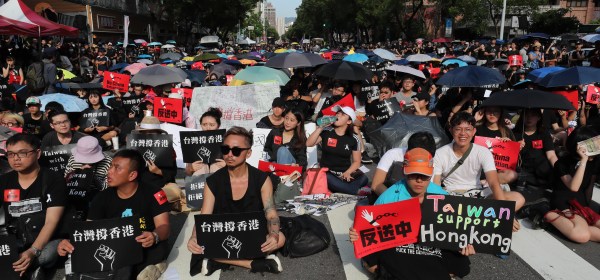
Written by Huynh Tam Sang. One year after the 2019 eruption of large-scale pro-democracy protests in Hong Kong, China enacted the “national security law” for the special administrative region, cracking down on freedom and democracy there. Under such a situation, Taiwan’s populace disapproved of China’s strategy of occupying and turning the self-governed island into a new colony in the vein of Hong Kong. In light of the widespread criticism of “one country, two systems,” the political framework that Chinese authorities have embraced to pursue peaceful reunification with Taiwan, the Chinese Communist Party’s leader Xi Jinping (習近平) has tasked Wang Huning (王滬寧), the party’s chief of ideology and his mastermind, with finding a replacement arrangement.

1 25 26 27 28 29 93