Taiwan’s Pandemic Control Policy in 2021 — Lockdown, Vaccine Purchase and Distribution, and Testing

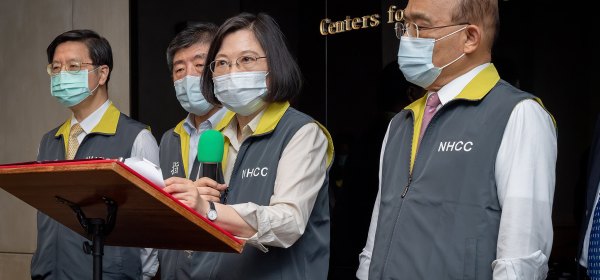
Written by Mark Wenyi Lai. Because of Taiwan’s COVID-19 pandemic control policies, the ruling and opposition parties agree on a national partial lockdown and vaccine distribution. However, they disagree on vaccine purchase and testing policy. This essay argued that there is more consensus than discord and the reason rested on Taiwan’s unique political-economic status. Here are their debates.

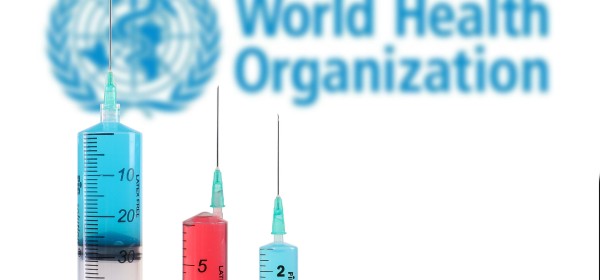
The WHO Approval and Support for China’s COVID-19 Vaccines in Taiwan

Written by Wen-Chin Wu, Greg Sheen, Hans H. Tung, Chien-Hui Wu. As COVID-19 began to spread from China to the world in early 2020, experts predicted that Taiwan would have “the world’s second-worst outbreak after China” ). Nevertheless, Taiwan was almost COVID-19-free until mid-May 2021 due to a set of successful policies, such as strict border control, population-based contact tracing of confirmed cases, and encouragement to wear facial masks. The “normal” pre-COVID-19 life lasted for almost one year until May 19, 2021, when Taiwan declared a nationwide COVID-19 Level 3 alert. The total number of confirmed COVID-19 cases in Taiwan since early 2020 had soared from 1,132 on May 1 to 8,511 on May 31, 2021.

A Wake-Up Call to Improve Factory Working Procedures in a Time of Crisis

Written by Chan-Yuan Wong, Ker-Hsuan Chien, and Mei-Chih Hu. As the world enters the second year of the Covid-19 pandemic crisis, Taiwan – previously acknowledged as a Covid-free nation – encountered a new outbreak in mid-May 2021. This wave of infection has been deemed critical, as the number of infection cases has surpassed 700, and the infectivity rate is as contagious as measles. To date, Taiwan encountered 635 death cases related to Covid-19 – of which 98% are attributed to the recent outbreak since 15 May 2021.

The Political and Economic Implications from Taiwan’s Covid-19 resilience performance

Written by Chun-Chien Kuo. According to the latest Bloomberg Covid-19 Resilience Report, Taiwan’s ranking has slumped to 44th place in June from the 15th in May. Meanwhile, the support rates for President Tsai have declined dramatically. Taiwan had successfully controlled the Covid-19 virus for more than one year under the strict border control, and people had been luckily enjoying the near normal life without lockdown elsewhere. The economy gained positive momentum both from strong export and little affected domestic activities. The CECC Commander Chen, President Tsai and DPP (Democratic Progressive Party) had been rewarded with high political support for their well performance in fighting the Covid-19 virus. However …

TI Viral Politics: Taiwan, China, and Covid vaccination

Written by Ian Inkster. On 28 May, just after the Taiwanese authorities had apparently rejected outright Beijing’s offer to supply Covid 19 vaccines to Taiwan, Hsiao Bi-khim was urgently requesting from the USA ‘access to safe and effective vaccines.’ By 3 June, we knew that Sinovac and Sinopharm vaccines had been approved by both WHO and Covax Facility for distribution to other nations, that many millions of vaccines have been sent out from China to Africa and Asia, and that whatever the political interpretation, these vaccines were offered early to Taiwan free of charge.

Harnessing national digital power to prevent COVID-19: the case of Taiwan

Written by Chih-Wei Chen. Over the past 18 months, the whole world has been severely challenged by the COVID-19 pandemic, which caused enormous numbers of infections and deaths, as well as economic recessions worldwide. Many countries took a series of actions to contain the spread of coronavirus, such as large-scale lockdowns and the provision of economic stimulate. Taiwan has often been positioned as a success story in terms of pandemic management. It did this largely by harnessing the national digital power, the core of which lies in the flexible and meaningful employment of technologies in governance, and supporting this with comprehensive policy planning for the whole society.

Taiwan’s Economy: GDP Growth is a Bright Spot for Now

Written by John F. Copper. The recent economic news emanating from Taiwan is the impressive growth in its gross domestic product (GDP)—one of the basic indicators of economic vitality. This is certainly good to hear. After experiencing negative growth throughout most of 2020, conditions changed in the last quarter of the year. As a result, Taiwan even bested China’s GDP growth. Furthermore, the upward trend accelerated this year, with GDP expansion the highest in two decades. If this growth is sustained, 2021 will end with a welcomed 5 per cent or better rise.

The Fear Factor: [Chinese] Censorship on Taiwanese Popular Music

Written by Chen-Yu Lin, Yun-Siou Chen and Yan-Shouh Chen. Music is a powerful symbolic good, and it is not uncommon that this symbolic good can be shipped into opposing – or different – ideological systems, influencing other societies. However, sometimes musicians fear the consequences of singing or expressing what they want. As South African musician John Clegg once said, “censorship is based on fear”. Regardless of forms, music censorship requires an agent capable of negatively affecting a musician, whether that means imprisonment, loss of income or receiving negative comments online.

Which Nation’s National Music? – A Critical Introduction of Contemporary Chinese Orchestra in Taiwan

Written by Min-erh Wang. From the late nineteenth century onwards, Chinese musical culture has been significantly impacted by the importation of Western music. Chinese musicians and intellectuals, therefore, began to organise an orchestra with Chinese instruments as a way for pursuing musical modernisation. The establishment of the music section at the Central Broadcast Station in Chongqing in 1935 was the most prominent example of this trend. By presenting this new ensemble at international occasions, the modern Chinese orchestra was further promoted as ‘Gou Yue (國樂),’ meaning ‘national music,’ in the first half of the twentieth century.

Landlords, Subsidies, and Policy Failures: Renting in Taipei and New Taipei City

Written by Natalie Dai(戴淨妍), Jessica Hsu(徐卉馨), Sophia Lee(李昕儒), Dennis He(何正生); Translated by Sam Robbins. In August 2020, Lin Nuo-ning signed a half-year contract with her landlord and planned to stay in this apartment during her career move. However, when Nuo-ning applied for the subsidy for a second time, she received a call from her landlord whilst at work, criticising her for applying for the subsidy without telling her landlord first. As a result, her landlord asked her to move immediately. In applying for the subsidy, Nuo-ning had unintentionally caused the national tax bureau to contact her landlord to expect her tax records.

Taiwan’s Real Estate Development from the Cross-Strait Perspective

Written by Wei-Che Fu and Yu-Chih Tseng. global economic and political geolocation, the challenges of its local industry development and social inequality were still ahead during the Sino-American conflicts. The mass capital escape from China is generally regarded as another chance for attracting investment. Taiwan experienced a new wave of housing inflation since the global financial crisis in 2008.

A Tale of Two Cities: Taiwan’s Social Housing Policy Practice in Taipei and Taoyuan City, 2014-2018

Written by Chris Chih-Hua Tseng. Taipei has spawned some policy innovations. Meanwhile, in Taoyuan, an adjacent developing city that has built massive amounts of social housing, none of the above happened. Instead, the city government proudly announced it had built social housing the fastest. Why has social housing developped much more sluggishly in the capital than it has in Taoyuan? To answer the differences between these two cities, we need to expand our scope to broader urban politics and urban developmental processes.

1 47 48 49 50 51 93