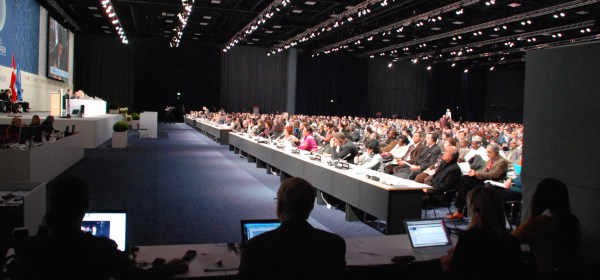
Victims without Perpetrators: Slovakia’s and Taiwan’s Lack of Retributive Justice

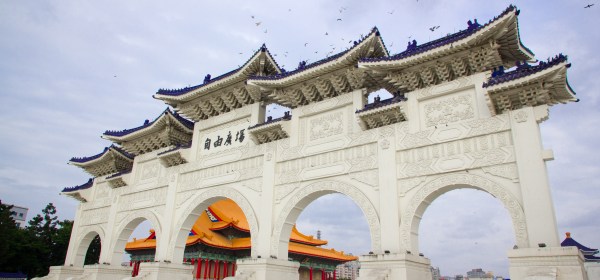
Written by Dominika Remžová. Despite the recent 228 Incident commemoration, along with the latest exonerations of White Terror political victims, the lack of retributive justice from criminal trials or other perpetrator-focused measures remains the case in Taiwan. In fact, the legality of the only perpetrator-focused act related to the KMT’s party assets has been continually contested by the party, despite the ruling of the Council of Grand Justices that upheld the constitutionality of the act’s provisions. A similar lack of retributive justice occurred in another country with a recent authoritarian past, Slovakia
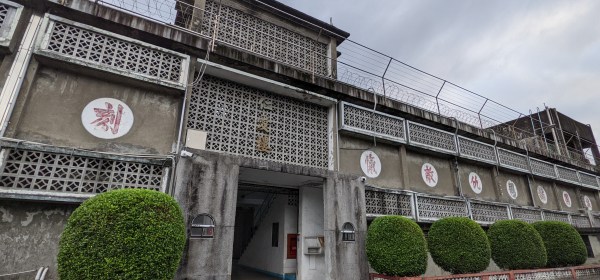
Xi Jinping’s 2.0 version of the “Letter to Compatriots in Taiwan”

Written by Simona A. Grano & Helena Y.W. Wu. On January 2, 2019, Xi Jinping held a speech to commemorate the famous “Letter to Compatriots in Taiwan” of 1979. In this letter, he defined unification across the Taiwan Strait as “the great trend of history.” He also warned that attempts to facilitate Taiwan’s independence would be met by force. Not only this, but he also called for “unification under the ‘one country, two systems’ formula.”

Explaining Cross-Strait Relations with Theories of European Integration

Written by Frédéric Krumbein. The European Union has the densest integration region globally, whereas current trends in cross-strait relations point to a further divide between both sides. Despite noticeable significant differences between the European Union and cross-strait relations, theories of European integration provide a useful framework to analyse the past, present, and future of relations between Taiwan and the Chinese mainland. Four major theories of regional integration that were developed for or applied to the European integration process will be used to analyse cross-strait relations: neofunctionalism, historical institutionalism, liberal intergovernmentalism, and postfunctionalism.

‘Bringing Back Transnational Relations’: Non-State Actors in Taiwan’s New Southbound Policy

Written by Ratih Kabinawa. Drawing from Risse-Kappen’s seminal book and his framework of domestic and international structures, this article explains Taiwan’s long-standing engagement with non-state actors in promoting its foreign policy objectives in Southeast Asia via a case study of the New Southbound Policy (NSP). After enjoying some success in maintaining semi-official contacts with Southeast Asian countries during the cross-Strait relation détente, the election of Tsai Ing-wen compelled Taiwan to bring transnational relations back into its foreign policy. In 2016, Taiwan’s newly elected president, Tsai Ing-wen, introduced a foreign policy flagship that stressed the essential role of people-to-people diplomacy in promoting Taiwan’s foreign policy objectives in Southeast Asia.

Changing Circumstances Call for Taipei to Lift Its Effort in Promoting Democracy on China and beyond

Written by Chen Jie (陈杰). There are remaining concerns urging the government of democratised Taiwan to support democratic causes and human rights in China. In fact, for the Tsai Ing-wen administration, these issues have strengthened. Despite their disdain for the one China project, politicians of the Democratic Progressive Party (DPP) share the sentiment that Taiwan’s own democratisation inspires China. This is echoed internationally. The former US Vice President Mike Pence spoke positively about Taiwan’s “embrace of democracy” and the example it had set for “all the Chinese people.”

A Taiwanese Soft Power?

Written by Nissim Otmazgin. Now that Taiwan has largely shed its Cold War KMT image and has gone through a democratisation process, it can project itself as a peaceful, prosperous, and above all, democratic country that might be a good ally for pro-democracy forces across the region? Given its regional setting in Northeast Asia, how does Taiwan tap into surrounding soft power competition and promote an international agenda? 

The Global Story of Traditional Chinese Medicine in Italy, China and Taiwan

Written by Daniele Mario Buonomo. The diffusion and practice of Traditional Chinese medicine (TCM) is an important issue both in the Chinese and Western worlds. In European and Western countries, TCM, and specifically acupuncture, is increasingly popular. In 1979, for the first time, acupuncture and moxibustion received the attention of the World Health Organization. TCM’s importance has even been stressed in 2010 by UNESCO, who inscribed acupuncture and moxibustion on the Representative List of the Intangible Cultural Heritage of Humanity.

Facing Advancing Global Warming and International Pressure Taiwan needs to Take Prompt Action

Written by Huang-Hsiung Hsu. Taiwan is currently suffering a severe drought. Water use restriction on agriculture, livelihood, and industry has been mounting since autumn 2020. No landfalling typhoons (except a minor one passing through the Luzon Strait in early November 2020 that brought very little precipitation) for the first time in 57 years led to our low water level in major reservoirs. These dry conditions were compounded by the following spring rainfall failure in 2021 (likely caused by the prevailing La Niña) that worsened the drought impacts. Nevertheless, a drought that usually lasted for few months was not uncommon in Taiwan and seemed to occur more frequently in recent decades.

POLITICAL CONTENTION TAKES PLACE IN AFTERMATH OF RAIL ACCIDENT

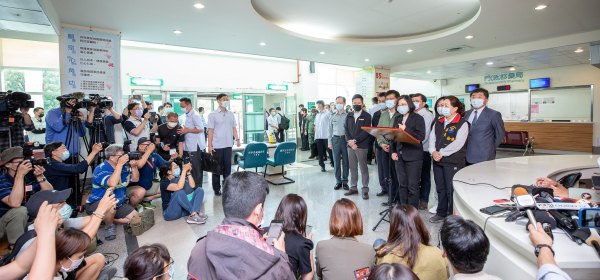
Written by Brian Hioe. After a rail accident on Friday that left fifty dead and injured over 200, there has been much political contention between both the DPP and opposition parties such as the KMT. The railway accident was the deadliest accident in Taiwan in decades and took place after a truck from a construction site on a slope overlooking train tracks slid down a slope and crashed into a train exiting a tunnel near Hualien.

Taiwan’s Green Diplomacy and the 1996 Taiwan Strait Crisis: The Legacy of Penny Kemp’s Taiwan Visit

Written by Dafydd Fell. Twenty-five years ago, Taiwan was amid the 1995-1996 Taiwan Strait Crisis and its first direct presidential campaign. It was not only the closest China and Taiwan had come to military conflict since the late 1950s but also the moment that Taiwan was first internationally recognised as a full democracy. At this crucial moment in Taiwan’s modern history, the Green Party of England and Wales issued a press release with the headline ‘Penny Helps Taiwan Greens Win Seat.’

The Fashioning of Filipino Community in Taiwan: OFW Beauty Pageants in the Era of Social Media

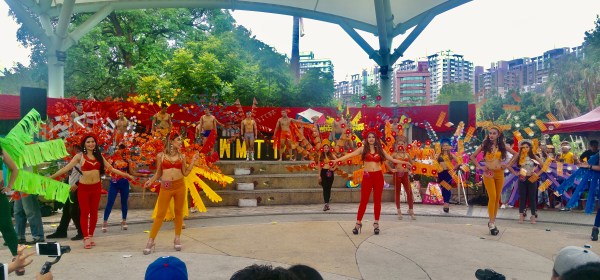
Written by Yi-Yu Lai. As an anthropologist who studies Indigenous movements in the Philippine highlands, my experiences of beauty pageants’ are not rare. The beauty pageant has been culturally entrenched in the Philippines and its diasporic communities for many decades. Because these contests are very popular with Filipinos, some Indigenous youth advocates use them as an instrument for cultural activism, empowering participants and attracting those who were previously indifferent to political issues. Nevertheless, the Filipino beauty pageants of Taiwan are quite different from those I previously experienced.

Cross-Strait Politics and the International Spectre of Climate Change in Taiwan

Written by Brian Hioe. Taiwan’s international climate conference participation has been subject to the same dynamics applicable to other international organisations. However, Taiwan has often been pushed out because of Chinese pressure. Namely, when the Ma administration held power, Taiwan could participate as an observer in climate change summits that it was later excluded from when the Tsai administration took office.

1 51 52 53 54 55 94