Keeping the Door Open: How Taiwan’s Gender Quotas Brought More Women into Office – and Why We Need More

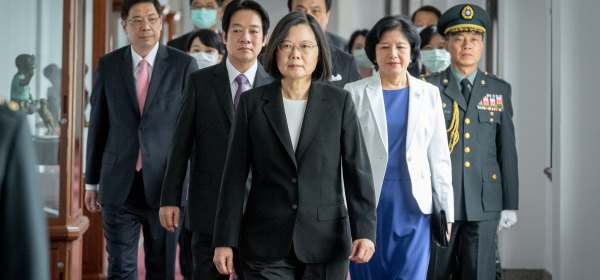
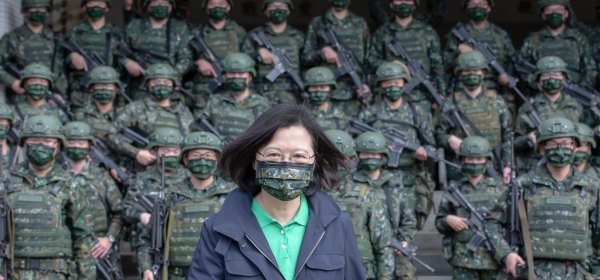
Written by Rose Adams. At only 20 years since its first democratic transfer of power, Taiwan’s democracy is shockingly well developed. With a voter turnout of 74.9% in 2020’s national election and a female President, Taiwan has achieved democratic feats that even the United States has yet to realize with 200-plus years of democratic experience. One of the more impressive of these records is Taiwan’s current percentage of women in government: a whopping 38% of legislative seats, one of the highest of any democracy. Compare that 38% to Japan and Korea, two of Taiwan’s neighbours who have similar electoral systems. At 10% and 17 %, respectively, of Japan and Korea’s legislature seats filled by women, Taiwan’s success is miraculous.

Jaw Shaw-Kong Wants To Make the Kuomintang Great Again. Can He?

Written by Hiro Fu. Media personality Jaw Shaw-kong has taken Taiwanese media by storm with the consecutive announcements of his return to the Kuomintang (KMT), possible bid for party chairman, and intent to gun for the 2024 presidency. The daily coverage following Jaw’s return foreshadows his impact on the political landscape, but will he be able to, as he claims, “Make Taiwan Great Again” or even make the KMT great again, for that matter?

KMT Begins to Call for Tsai Administration to Accept Chinese Covid-19 Vaccines

Written by Brian Hioe. The latest front on which the KMT has sought to attack the Tsai administration’s response to COVID-19 has been on the issues of vaccines. In particular, with the Tsai administration having enjoyed widespread public praise for its effective response to COVID-19, the KMT has tried to find ways to criticize or denigrate the Tsai administration’s response to COVID-19. In recent memory, this has included calls in January to lock down the city of Taoyuan in response to the Taoyuan General Hospital cluster.

Prosecution of a Fraudulent Labour Agency in Taichung: An Insight on the Exploitation of Migrant Workers in Taiwan

Written by Bonny Ling. On 28 January 2021, public prosecutors in Taichung indicted four individuals on charges of human trafficking, violations of the Employment Services Act and forgery of documents for their role in exploiting Vietnamese migrant workers in Taiwan. The four involved worked at the Hong Yu Employment Service Agency Company (弘宇人力仲介公司) in Taichung to recruit migrant workers from Vietnam. Established in 2017, Hong Yu placed 126 Vietnamese migrant workers in the construction sector around Taiwan from July 2018 to August 2020.

The Biden Administration and Taiwan’s Post-Covid Economic Prospect

Written by Min-hua Chiang. With 2.98% of growth rate in 2020, Taiwan’s economy has outperformed many countries in the world. The moderate economic expansion was attributed to the surging external demand for information and communications technology (ICT) goods and the growing investment repatriation. The domestic consumption remained resilient thanks to the growth in domestic tourism and economic stimulus measures. After all, Taiwan’s success in containing the COVID-19 underpinned the whole economy well amid the ongoing global pandemic crisis.

Post-COVID-19 Taiwan in the Global Semiconductor Industry: The Context of the New U.S. Administration

Written by Yu-Ching Kuo and Robyn Klingler-Vidra. Early into the global pandemic — and amidst ongoing U.S.-China trade tensions — the International Monetary Fund’s (IMF) World Economic Outlook in April 2020 forecast that Taiwan’s GDP would shrink by 4% in 2020. However, by October 2020, Taiwan’s exports unexpectedly grew by 3.4% and GDP increased by 2%. The outperformance was partly due to Taiwan’s capacity to fight COVID-19, which contributed to the export growth rate of semiconductors and electronics and information technology industries, which was as high as 20%. #Taiwan #economy #industry #covid #Trump @RobynVidra

The Last Trump: Or, Taiwan as a Potential Pawn on a New Chess Board

Written by Ian Inkster. As Joseph Cummings has summarised recently for Redaction Politics, ‘experts believe that Mr Biden’s policy will fall short of provocation of mainland China and Mr Trump’s open empowerment of Taiwanese militarisation,’ and there is little reason yet to discount that view. The fact that the US has approved recent arms purchase deals with Taiwan may mean no real change in the long history of less-than-best military techniques being sold off to Taiwan as part of the old cold-war alliance.

Something, Nothing, or Everything? The Recall Vote of DPP’s Taoyuan City Councillor Wang Hao-Yu

Written by Chieh-chi Hsieh. On 16 January, Taoyuan city councillor Wang Hao-yu of the Democratic Progressive Party (DPP) was revoked by a whopping 84,582 ‘in-favour’ ballots. This was a staggering contrast to the 16,292 ballots received that won him his re-election merely two years prior. This election makes Wang the first city councillor from one of Taiwan’s six special municipalities to be recalled. More importantly, one can tentatively make a case that this is an important success for opposition parties such as the Kuomintang (KMT) and other pan-blue parties (e.g., People First Party) regaining political clout against the incumbent DPP government.

“Eating Spinach”:The Taiwanese Working in Philippines Gambling Industry. Part II

Written By William Kung 孔德廉. Regarding the dramatic changes brought about by the “spinach industry,” Wang Weiren, an old overseas Chinese who has lived in the Philippines for 60 years, described it as “locusts crossing the border.” Although the gambling industry has helped drive obvious GDP growth in the Philippines, the economic gains have not been shared by the public at large. Instead, it has been concentrated in the hands of a few Chinese business owners. Not only that, a large number of Chinese ethnic groups in the industry are not prepared to integrate into the local area. Instead, they are reluctant to change their ways and prone to conflict with the locals. If China and the Philippines were ever to join forces to crack down on illegal businesses, the first thing to bear would be the Philippine economy, which is currently overly dependent on the gambling industry.

“Eating Spinach”:The Taiwanese Working in Philippines Gambling Industry. Part I

Written By Willian Kung. Ten years ago, Many Chinese, Malaysians, and Indonesians left their hometowns and moved to the Philippines to chase the gold rush triggered by online gambling. In recent years, the latest wave has attracted many Taiwanese. According to statistics from the Philippine Immigration Bureau, in 2018, more than 200,000 Chinese workers applied for work visas, 90% related to online casinos. There are also many Taiwanese living in the Philippines. In 2016, the Taiwan Economic and Cultural Office in the Philippines issued a message stating “recently, there has been an increasing number of Taiwanese people going to the Philippines to work in the gambling industry, please be wary that risks often outweigh the rewards. Many have had their passports detained.”

台灣「新二代」運動

作者:鄒佳晶。二十世紀八〇年代開始,跨國婚姻、移民為全球化人口流動的現象,在多元、種族文化的環境下,間接影響台灣人口結構的改變,新移民、新二代人口總數的增加,成為台灣的第五大族群。同時,新二代的文化形象在這三十年間也經歷了轉變。起初,由於文化碰撞,以及過往的資訊不發達,媒體輿論也出現許多負面社會新聞版面,東南亞被形塑為落後、經濟不穩定、人口素質低落的國家,也實際影響台灣的整體社會氛圍對於婚姻移民產生刻板印象,政府將新移民、新二代視為「社會問題」,使新二代在不友善的環境中成長,2016年政府推行新南向政策,新移民、新二代的議題開始被重視,隨著政策的改變,新二代的身份從過去的弱勢變成社會優勢、資本,希望透過擁有雙語言、雙文化優勢擔任國民外交南向小尖兵的角色

1 53 54 55 56 57 94