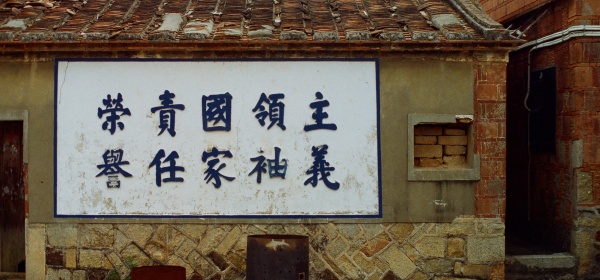
A Political Gamble: Taiwan’s Kinmen Island and the Decision of Supporting the Central Government’s Coronavirus Prevention Measures

Written by Shun-Te Wang. As Chinese influence infiltrates everyday life in Kinmen, local politicians still find it challenging to predict local opinion over border control issues. In early February 2020, 6 kilometres away from China, a dissatisfaction toward the government’s Coronavirus prevention measures became prominent on the Kinmen island. The island’s public demand that Taiwanese central government, which is 300 kilometres away from Kinmen, to suspend the “Three Links” to prevent the Coronavirus disease 2019 (COVID-19) from entering.

A State-based World Health Organisation: The Taiwan Paradox for Global Pandemic Governance

Written by Po-Han Lee. Due to the recent outbreak of the new coronavirus (COVID-19), Taiwan—which is greatly affected because of its intensive communication with China—has come under the international spotlight, because of its exclusion from the World Health Organisation (WHO), which is the largest institution responsible for disease control. Drawing on the rules/practices regarding the WHO-related meetings, this essay discusses why it is so difficult for the Taiwanese to be heard by the WHO, let alone for them to be present at relevant forums.

How is Taiwan Facing the Coronavirus?

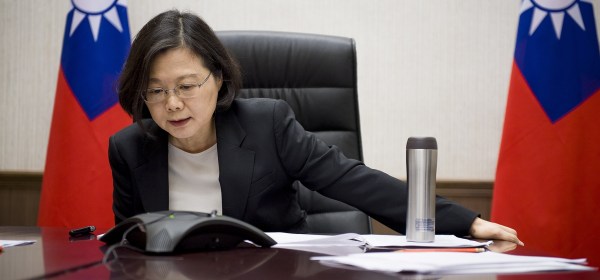
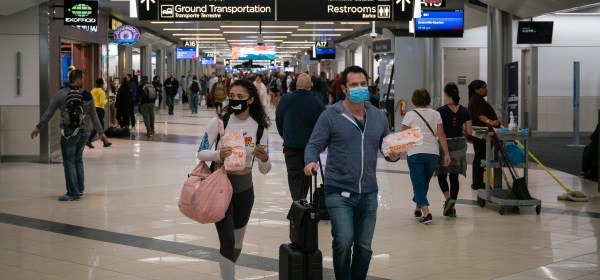
Written by Josie-Marie Perkuhn. As a precaution, most flights have been suspended, and entry spots have restricted access, such as maritime passages via Kinmen, Matsu or Penghu Island. President Tsai also assured that “as long as the two sides fully communicate and cooperate, I do believe that we will be able to take good care of our people”. However, controversy arose when on February 3rd evacuees arrived. Three of the 247 people on the charter flight had not been on the priority list, which Taiwan provided to China, and one was tested positive, becoming the 11th patient in Taiwan to be diagnosed.

Taiwan’s Response to the Coronavirus Challenge of 2020

Written by Tsung-Mei Cheng. Taiwan government’s most favoured policy for fighting Covid-19 initially is to prevent it from entering Taiwan in the first place, according to Ming-Liang Lee, former health minister, “Czar of SARS” — commander-in-chief in the debacle against Taiwan’s 2003 SARS epidemic, and now a senior adviser to Taiwan’s President Tsai Ing-wen. To this end, Taiwan implemented strict travel advisories and entry protocols tiered by the risk level of the countries in question.

Taiwan’s participation in the WHO in the outbreak of the coronavirus: the Old Global Health vs. the new

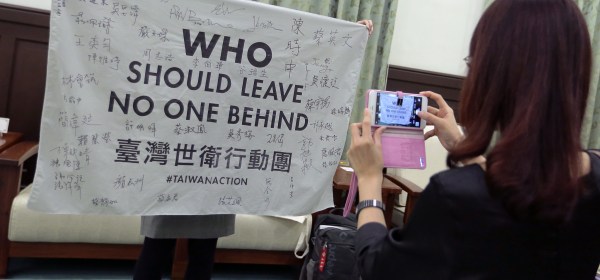
Written by Kai-yuan Cheng. Perhaps most fundamentally, Taiwan needs to make young Taiwanese believe that, despite our sad past and difficult present, going into global health as a Taiwanese is a promising career filled with opportunities and excitement. Building a global health-informed civil society will appeal to the new generation of governance bodies whose more flexible frameworks are ready to engage Taiwan, not necessarily because of the globalist ideal of leaving no one behind or the humanitarian concern for the Taiwanese population health, but because we have something to offer.

Time To Bring Taiwan In From The Cold: Start Working Towards A Normalization Of Relations

Written by Gerrit van der Wees. A recent episode in Prague illustrates in two important ways that China’s relations with the West are changing fast. It shows the need for the US and Western Europe to reimagine relations with Taiwan, bring Taiwan in from the cold of political isolation, start working towards a normalization of relations, and find a rightful place for that democratic country in the international family of nations.

The DPP’s Electoral Victory as a Political Regression?

Written by Ian Inkster. The conclusion is that the DPP should take the risk of dropping the rhetoric of China whilst seeking ways of beginning more positive diplomatic exchanges. And this should be undertaken on a broad basis. DPP negotiations that are not within a reasonably broad-based consensus at home are unlikely to progress far, for domestic quarrels do not make for confident diplomacy on either side of a table.

Dispelling the monolith: The geopolitics of language in Taiwan and Hong Kong

Written by Justin Kwan. In an attempt to reach audiences in Taiwan and Hong Kong, China has attempted to use both Hokkien and Cantonese in its messaging through media and popular culture, eliciting mixed responses from locals in both places. In the case of Taiwan, Beijing resorted to a strategy of direct coercion in 2018, when it released a dubbed propaganda video in Hokkien titled ‘God of War’. The video featured bomber aircrafts flying around Taiwan, a warning from Beijing for the islands Taiwanese-speaking activists to curb their so-called ‘pro-independence’ activities.

A clash or reconciliation of nationalisms across the Taiwan Strait?

Written by Zhidong Hao. In 2014, the Umbrella Movement in Hong Kong failed to persuade the Beijing government to grant them full universal suffrage for the election of the chief executive. Since then the so-called high degree of autonomy guaranteed by the Basic Law was eroded so much that Hong Kong was becoming more like Macau. Macau has been touted by the Central government as a perfect model of ‘one country, two systems’, but in reality, it is more like a model of ‘one country, one and a quarter systems’, i.e. an authoritarian system plus some press freedom.

The Repositioning of Taiwan in the Global Supply Chain Network

Written by Min-Hua Chiang. The relocation of Taiwanese outward direct investment (ODI) away from China is a clear sign of the shifting global business landscape. The cross-strait division of labour in manufacturing production has started to fade after China’s wage hike, industrial upgrading as well as stricter rules on the environment and labour protection. Taiwan’s ODI in China has declined visibly after 2012.

Can Taiwan decouple from the Chinese economy?

Written by Michael Reilly. In the medium to long-term, the coronavirus outbreak may turn out to be the high-water mark of foreign investment in China. Even before this, foreign companies were growing increasingly frustrated as the government increased minimum wage levels in provinces such as Guangdong and Fujian, and they also became frustrated with a growing burden of regulations and a bias in favour of domestic companies.

City Pop in Taiwan: old mainstreams becoming new indies

Written by Yan-Shouh Chen. As City Pop become more known to Taiwanese indie music lovers, unveiling J-pop history might not be enough. Some fans turned their eyes toward Taiwanese artists that are good at creating groovy melodies. These artists might consider themselves as R&B and Hip Hop rather than City Pop, but the boom did them a favour, and now the spotlight is on them.

1 65 66 67 68 69 93