Winners and Losers of the Great Recall Election in Taiwan

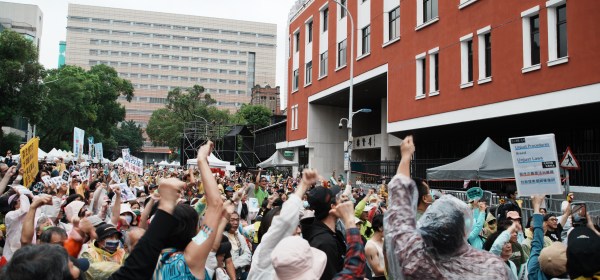
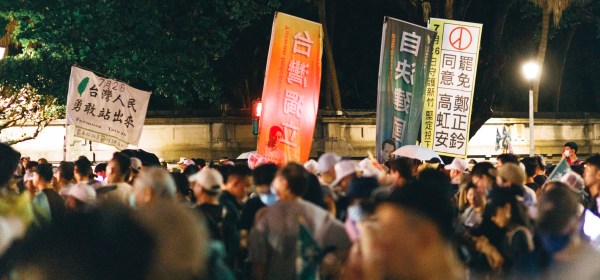
Written by Dr Chieh-chi HSIEH. This article analyses the winners and losers of the great recall election in Taiwan. It argues that while the two opposition parties (KMT and TPP) neither gained nor lost and the DPP is undoubtedly the main loser, the main winner is the Taiwanese society. The self-motivated attempts to recall their respective legislators, albeit unsuccessful, consolidate Taiwan’s democracy.
Trump’s Liberation Day Tariffs and Potential Impacts on Taiwan

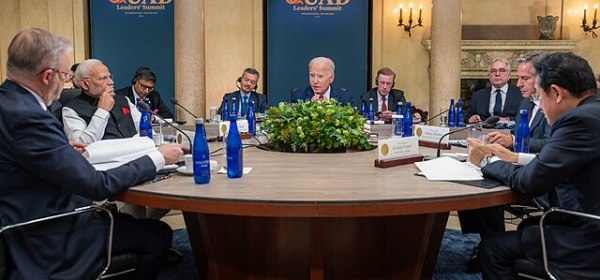
Written by Dr Chieh-chi Hsieh. This article asks the question of whether Trump’s tariffs on Taiwan signal a potential divergence of his foreign policy on cross-Strait relations. It argues that although the country needs to remain cautious, the long-term impact might be less severe than one expects. Recent developments suggest that the Trump administration has not altered its foreign policy.

Turmoil at Home for Taiwan in 2024

Written by Dr Chieh-chi HSIEH. This article examines the domestic political turmoil in Taiwan in 2024, including corruption scandals for all three main parties and ongoing confrontation in the Legislature. However, it argues that these challenges have demonstrated the resilience of Taiwan’s democracy based on the evidence of its institutions, leadership and people.

Taiwan in 2024: Geopolitical Uncertainties

Written by Dr Chieh-chi HSIEH. This article argues that the path dependencies of the Taiwanese, US, Japanese, and South Korean governments encountered a change of political leadership in 2024, which created some uncertainties for Taiwan in 2025. They are compounded by the conservative stance of President Lai Ching-te towards President Trump since the latter’s election.

Deviation or Continuation of Tsai’s Approach to Cross-Strait Relations? A few hints from President Lai’s Inaugural Address

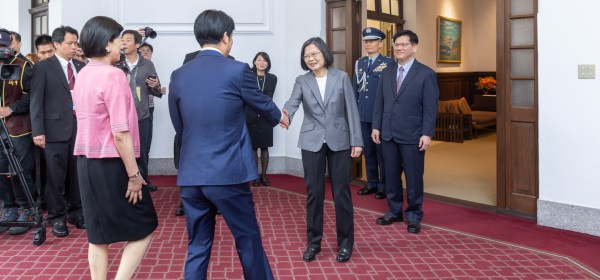
Written by Dr Chieh-chi HSIEH. Based on President Lai Ching-Te’s inaugural speech, this article argues that Lai is likely to adopt a ‘passive responsiveness’ approach when engaging with the Chinese government in the next four years. This is a continuation of President Tsai’s strategy on cross-strait relations, only responding firmly when the circumstances are pertinent.

The Abe Factor and the ‘Special’ bond between Taiwan and Japan

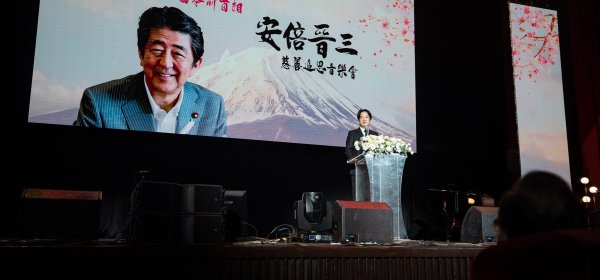
Written by Chieh-chi Hsieh. Abe has widely been regarded as ‘the Prime Minister who is most supportive of Taiwan’. Not only had he been an advocate for legitimatising Taiwan’s status on the international ground on many occasions, but he also made the renowned statement during a video conference with the Taiwan Institute for National Policy Studies in 2021 that ‘if something happens to Taiwan, it means something happens to Japan’. Hence, although the news of Abe’s assassination sent shockwaves worldwide, the political implications of his untimely death on the future trajectory of Taiwan-Japan warrant further investigation.

‘Today’s Ukraine is Tomorrow’s Taiwan’?

Written by Chieh-chi Hsieh. In sum, there is no reason to believe that imminent conflict in the Taiwan strait would occur after the Russia-Ukraine war outbreak. However, it is imperative to underscore that the proposition is not formed based on comparing Taiwan’s relative advantages over Ukraine. Instead, it is underlined by how the ongoing war has been perceived by not only Taiwan’s general public and government but also Xi and the CCP.

‘Too Much Love Will Kill You?’ An Account of the Recent Recall Elections in Taiwan and Subsequent Political Dynamics

Written by Chieh-Chi Hsieh. Since Taiwan’s 2020 Presidential election, 14 recall elections have taken place. Yet, it would be hard to disagree that amongst the 14 recall ballots, merely five have managed to attract nationwide media coverage and broader public attention. These include the recall elections of former Kaohsiung Mayor Han Kuo-yu, city councillors Wang Hao-yu (Taoyuan City), Huang Jie (Kaohsiung City), and legislators Chen Po-wei (Taichung City), Freddy Lim (Taipei City). So, what are the underlying political implications of these recall campaigns and their subsequent developments?

The Political Implications of Freddy Lim’s Recall Election

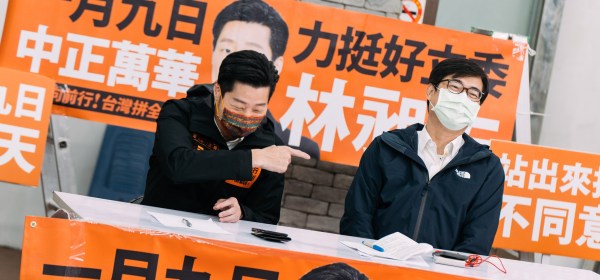
Written by Chieh-Chi Hsieh. In brief, the two ballots may be conveying a down-spiralling trajectory of KMT’s popularity and supporting rate. Yet, by observing the DPP government’s actions in the respective campaigns of Lin and Lim, one can explain the diverging results of the elections. Moreover, with pan-Green media (e.g. political talk shows broadcasted on 3 Set News, Formosa TV network) continuing to focus on Lu’s actions and connections with Yen after the by-election, it makes apparent that pan-Green groups have already begun their preparations for the 2022 local elections later this year.

A Pursuit of Housing Justice?

Written by Chieh-chi Hsieh. If anything is troubling the incumbent government led by the Democratic Progressive Party (DPP), it would not be the external threats imposed by China. On the contrary, China’s continuous assertive actions toward Taiwan have become the DPP government’s greatest asset, enabling the mobilisation of domestic support observed after President Tsai’s National Day speech, which gathered 67.9% of residents’ approval based on a public survey.

Taiwan Is ‘a’ Dangerous Location on Earth

Written by Chieh-chi Hsieh. Yes, I get it. Not many can resist a bold and eye-catching title. However, if you supplement this with an articulated argument underpinned with a fair amount of empirical evidence, one can expect the article to reach a broader readership. Yet, the underlying issue of placing a bold statement at the forefront is that it is frequently misleading. This is precisely why I am sceptical about the recent article published by The Economist, which states Taiwan as ‘the most dangerous place on Earth.’

Something, Nothing, or Everything? The Recall Vote of DPP’s Taoyuan City Councillor Wang Hao-Yu

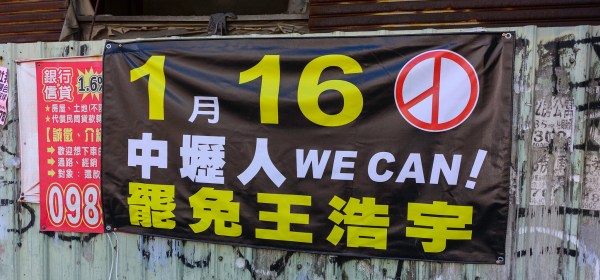
Written by Chieh-chi Hsieh. On 16 January, Taoyuan city councillor Wang Hao-yu of the Democratic Progressive Party (DPP) was revoked by a whopping 84,582 ‘in-favour’ ballots. This was a staggering contrast to the 16,292 ballots received that won him his re-election merely two years prior. This election makes Wang the first city councillor from one of Taiwan’s six special municipalities to be recalled. More importantly, one can tentatively make a case that this is an important success for opposition parties such as the Kuomintang (KMT) and other pan-blue parties (e.g., People First Party) regaining political clout against the incumbent DPP government.

1 2