Biden Speaks Again: The End of Strategic Ambiguity?

Written by Gerrit van der Wees. The press and think tanks, on their part, need to reassess their understanding of “strategic ambiguity”: they need to come to a clearer understanding of its origins – as reiterated in the quotes from former NSC Director Robert Suettinger’s book – and arrive at the unavoidable conclusion that it does not equate policy. Rather, it is, at best, a mode of operation determining how to calibrate a response. As described above, the policy itself on how to (help) defend Taiwan is laid down clearly in the Taiwan Relations Act.

The Abe Factor and the ‘Special’ bond between Taiwan and Japan

Written by Chieh-chi Hsieh. Abe has widely been regarded as ‘the Prime Minister who is most supportive of Taiwan’. Not only had he been an advocate for legitimatising Taiwan’s status on the international ground on many occasions, but he also made the renowned statement during a video conference with the Taiwan Institute for National Policy Studies in 2021 that ‘if something happens to Taiwan, it means something happens to Japan’. Hence, although the news of Abe’s assassination sent shockwaves worldwide, the political implications of his untimely death on the future trajectory of Taiwan-Japan warrant further investigation.

For The Good of Taiwan. Truss, Sunak, or Complete Indifference?

Written by Ian Inkster. The most likely manner in which the choice of Tory candidates might be of interest in Taiwan would be through foreign or economic policy. Unfortunately, though these two areas of government are meant to complement each other in normal times, our days are increasingly abnormal, thus the array of rhetoric, the focus on personalities, the exaggeration of anomalies, and the fixation on trust, veracity, and the lack thereof. And that is just in one party. Look around to your left and see the mirror image. Look across the Channel and see confusion and a reluctance to debate all major socio-economic problems. Look across the greater sea to find headless leadership. Not a charming prospect.


The Many Faces of the Hokkien-language Internet

Written by Sam Robbins. This linguistic transnationalism has never died. In the digital era, online content distinctly aimed at promoting Taiwanese Hokkien within Taiwan abounds, but there is also a wide range of content created by communities interested in Hokkien generally. Hokkien-speaking populations across national borders also found each other and formed groups on social media. They share, remix, and collate content in these spaces rather than promote particular types of language use. For example, “Min Peoples, Min Languages” (閩人閩語), a Facebook group with almost 20,000 members from Malaysia, Singapore, Taiwan, and China, is dedicated to “sharing everything relating to Southern Min (folk) culture, (folk) songs, and Southern Min languages.”

Taking a leaf out of Taiwan (and Vietnam): How “Taiwanese” is Taiwanese bubble tea? 

Written by Kuan-Ren Yun (雲冠仁), translated by Sam Robbins. When I was in Vietnam from 2016 to 2018, there was a time of immense market transformation underway that raised a very interesting question: The now-famous “Taiwanese bubble tea” had become reliant on Vietnamese tea leaves in Taiwan, and it was only after the transition to Vietnamese tea leaves was made could Taiwanese bubble tea be produced at such a scale to become a global phenomenon.

Pelosi Baloney or Distractions versus Realities

Written by Ian Inkster. So, China warned of ‘resolute and strong measures,’ and Speaker Nancy Pelosi left Taiwan without incident on her way to the rest of East Asia. She may well have infuriated parts of the Chinese regime when she said: ‘Make no mistake: America remains unwavering in our commitment to the people of Taiwan – now and for decades to come.’ Nevertheless, there is still no hint of any change in US policy, which will not recognise Taiwan as an independent entity, never mind a nation. No pathway has been opened. Indeed, the Western media made more noise than Taiwan itself.

Nancy Pelosi’s visit to Taiwan did go through: A major milestone in Taiwan’s relations with the rest of the world

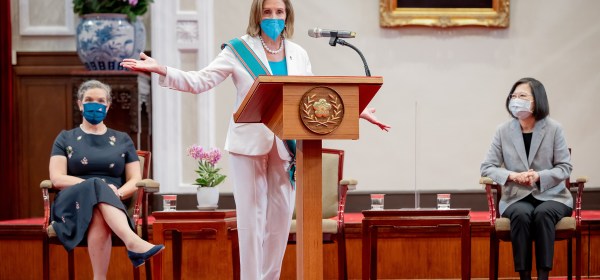
Written by Gerrit van der Wees. The picture circulating on the internet of Speaker Pelosi and President Tsai Ing-wen standing next to each other was indeed a powerful image of two women who are determined to bend history in the right direction. The main conclusion of the episode is that it was crucial that Speaker Pelosi stood her ground and pushed through her plans for a visit to Taiwan. It is a win for democracy and a major milestone in Taiwan’s relations with the rest of the world.

Taiwan Decriminalized Adultery, But Does the Public Support The Change?

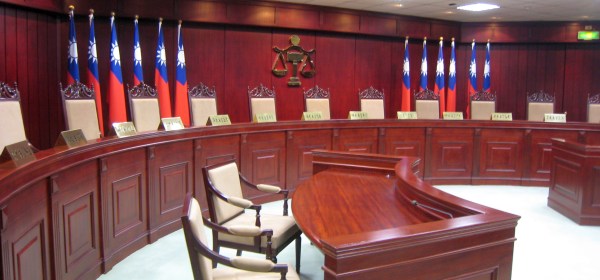
Written by Madelynn Einhorn, Josie Coyle, and Timothy S. Rich. In June 2021, the Taiwanese legislature removed a nearly 90-year law criminalizing adultery, punishable with up to 12-months in prison and fines averaging 90,000 NTD (roughly USD 3000). In May 2020, the Constitutional Court overruled Article 239 of Taiwan’s criminal code, which criminalized adultery, because it violated the Constitution. The legislature removed the article from the legal code approximately a year later. South Korea removed a similar law in 2015 and India in 2018. Taiwan was one of the last liberal democracies to keep adultery illegal and the last East Asian country aside from the Philippines.

A Storm in a Coffee Cup: Indigenous Coffee Production, Typhoon Marokat and the long way home.

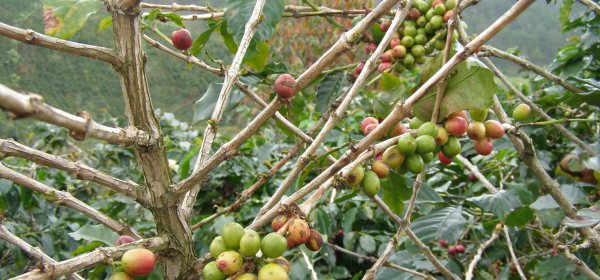
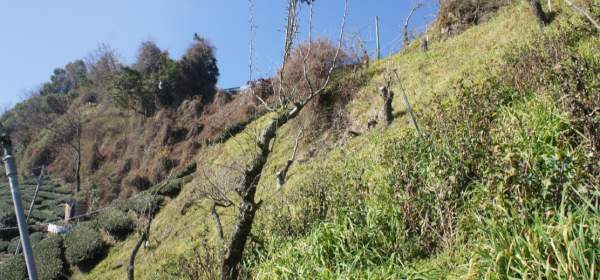
Written by Chang Yu-Hsin, Translated by Sam Robbins. After the typhoon, indigenous communities moved into new villages constructed in the lowlands through government and non-profit organisations’ funds. The new village for the people of the Taiwu township was roughly 17 kilometres from their original home, and the journey between the two locations took about 40 minutes by motorbike. The number of resources needed to take care of and manage the coffee farms increased as transport and oil costs went up. Especially for community elders who needed to go up the mountains to take care of the coffee farms, the time and energy now required to make the journey was no small burden.

A plant out of water: Taiwanese greens in Thailand

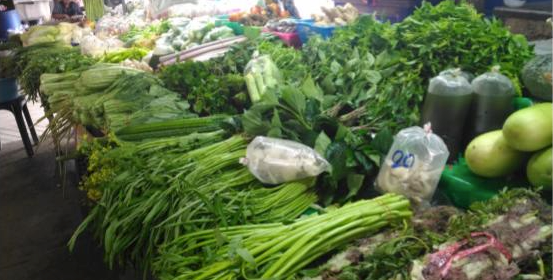
Written by Angel Chao (趙于萱), translated by Sam Robbins. In supermarkets in Thailand, you can find Thai hydroponic vegetables labelled as ‘Taiwanese greens.’ Why? Because these plants are grown in Thailand by Taiwanese businesspeople who brought Taiwanese hydroponic technology to Thailand, using Taiwanese equipment to grow crops in Thailand.

Let’s Stop Calling Taiwan a “Digital Democracy” (And Start Telling Better Digital Stories)

Written by Sam Robbins. This is what is at stake with how we tell digital stories: If we focus only on the tech itself and its impressive uses, we risk leaving most citizens feeling like they have no voice on the matter due to a lack of expertise. When we tell stories of civil society collaboration, of how governments are interacting with citizens, and of policies whose ramifications are much greater than the new data they create, we can start to create a space for greater public participation on these subjects.

1 2 3 4 5 6 22