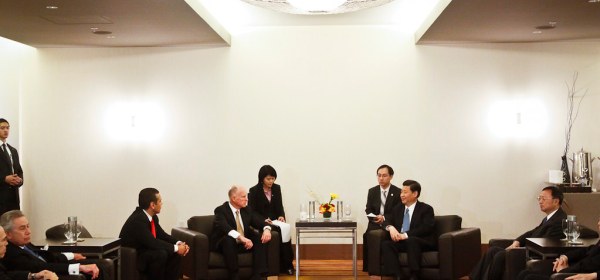
Taiwan Deserves Its Rightful Place Under the Sun

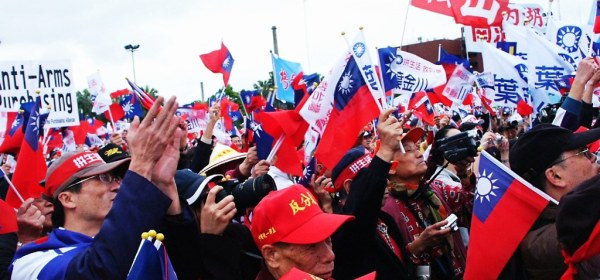
Written by Gerrit van der Wees. On 30 April 2021, the London-based The Economist published an article with the sensationalist headline referring to Taiwan as “The most dangerous place on earth.” The essay highlighted the increasing tension between the United States and China over Taiwan and the dangers of an armed conflict if China decides to use force against the democratic island.

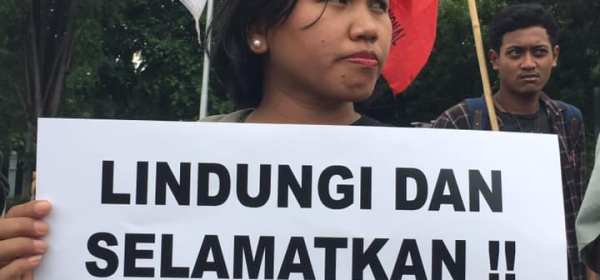
Not obedience but Dignity: A message from a former migrant worker

Written by Iweng Karsiwen and Ratih Kabinawa. Edited by Isabelle Cheng. A former domestic worker in Hong Kong for over ten years, Iweng Karsiwen is currently the Chair of Families of Indonesian Migrant Workers (Kabar Bumi). Initially she was recruited to work in Taiwan when the door opened for Indonesian women seeking domestic work there. However, instead of going to Taiwan, Iweng found herself arriving at a Hong Kong MTR station late one evening a year later. Knowing how the brokering industry functioned at home and abroad, after returning to Indonesia, Iweng was determined to help those who worked abroad and who faced similar challenges at various stage of their migration. She has particularly campaigned to outlaw salary reduction. This, as well as other practices mentioned by Iweng, are commonly adopted by brokers in Taiwan, Hong Kong, Malaysia and Singapore.

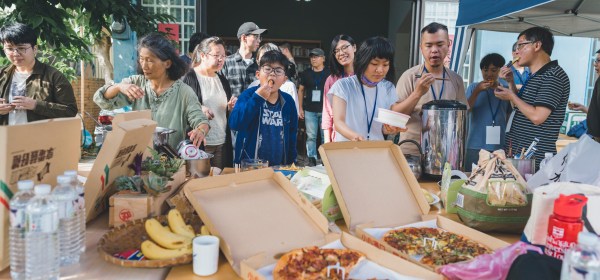
Fun Politics and the Politics of Fun in Taiwan’s g0v Community

Written by Sam Robbins. The notion that emotions can inspire political action is not new. Research into social movements contains many examples of the motivating power of passion, anger, and disgust… What is seemingly much less common is the active cultivation of positive emotions, such as happiness or fun, in such social movements. If you’re feeling content about your situation, what need is there to engage in collective action or civil engagement?

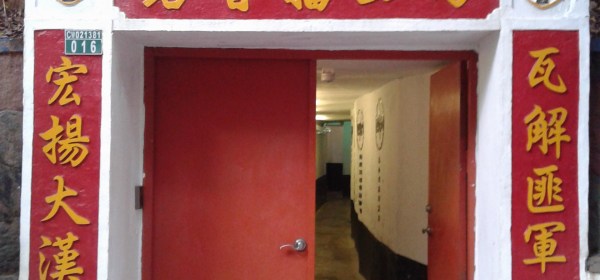
Speaking on Behalf of the State: The Women on the Radio and behind the Loudspeakers during the Cold War

Written by Isabelle Cheng. Women have a complicated relationship with the wars waged by the nation-state. Women are the reproducers and boundary ma(r)kers of the nation, so women, notably when they embody the nation’s image, are said to be protected by the state as a reason for going to war. They are also projected as the victims of war when the state loses to its enemy, mainly when the enemy uses rape as a weapon to weaken national morale. On the battlefield, women are used as fighters, porters, carers, entertainers or sex slaves to enhance war fighting capacity physically or mentally. During the two world wars, in the state’s propaganda, women were encouraged to ‘give away’ their husbands and sons to the state or were recruited to fill the vacancies left by men to work in the manufacturing, agricultural or transport sectors. Their homemaking and thrifty cooking were characterised as contributing to war efforts. Regardless of which of these roles they play, they are instrumentalised by the state.

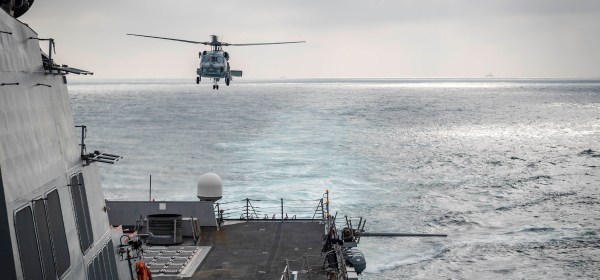
‘Bringing Back Transnational Relations’: Non-State Actors in Taiwan’s New Southbound Policy

Written by Ratih Kabinawa. Drawing from Risse-Kappen’s seminal book and his framework of domestic and international structures, this article explains Taiwan’s long-standing engagement with non-state actors in promoting its foreign policy objectives in Southeast Asia via a case study of the New Southbound Policy (NSP). After enjoying some success in maintaining semi-official contacts with Southeast Asian countries during the cross-Strait relation détente, the election of Tsai Ing-wen compelled Taiwan to bring transnational relations back into its foreign policy. In 2016, Taiwan’s newly elected president, Tsai Ing-wen, introduced a foreign policy flagship that stressed the essential role of people-to-people diplomacy in promoting Taiwan’s foreign policy objectives in Southeast Asia.

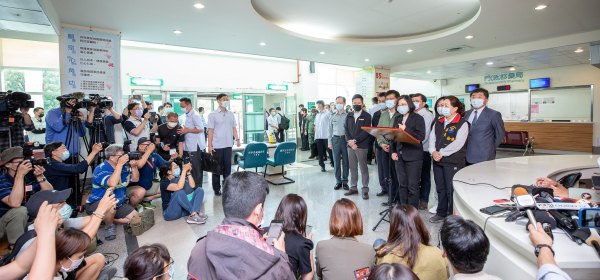
POLITICAL CONTENTION TAKES PLACE IN AFTERMATH OF RAIL ACCIDENT

Written by Brian Hioe. After a rail accident on Friday that left fifty dead and injured over 200, there has been much political contention between both the DPP and opposition parties such as the KMT. The railway accident was the deadliest accident in Taiwan in decades and took place after a truck from a construction site on a slope overlooking train tracks slid down a slope and crashed into a train exiting a tunnel near Hualien.

Cross-Strait Politics and the International Spectre of Climate Change in Taiwan

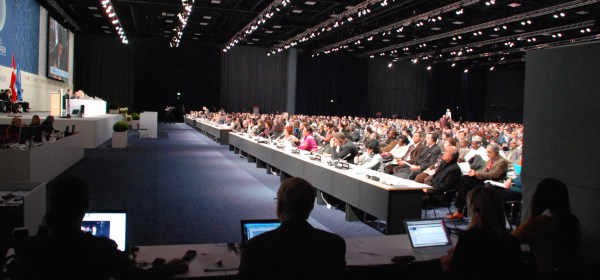
Written by Brian Hioe. Taiwan’s international climate conference participation has been subject to the same dynamics applicable to other international organisations. However, Taiwan has often been pushed out because of Chinese pressure. Namely, when the Ma administration held power, Taiwan could participate as an observer in climate change summits that it was later excluded from when the Tsai administration took office.

The Political Aspect of Taiwan’s Energy Policy and Reliance on Natural Gas

Written by Milo Hsieh. Recently, discussions around energy have emerged again as interest groups fight over whether it is right for the Tsai administration to install a new natural gas receiving station in Taoyuan near an algae reef habitat. Although the term “algae reef (藻礁)” became social media’s hot topic in Taiwan for a while—similar to how “Salmon” has grabbed the attention of many these past weeks—underlying energy issues have not really been discussed.

The Biden Administration and Taiwan: Positive Opening Moves

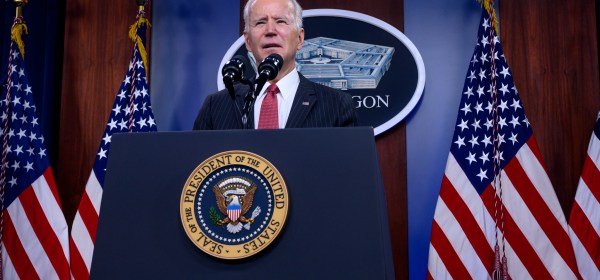
Written by Gerrit van der Wees. We are almost two months into the Biden Administration, and—contrary to what was argued in a recent article by Prof. John F. Copper—the new US administration has already shown on several key moments that it is strongly supportive of Taiwan. It is keen to help maintain Taiwan’s freedom and democracy and promote its place in the international community—a positive beginning. But where do we go from here?

Chao Shao-kang’s Return to Taiwan politics: Will He Replay the Han Kuo-yu Drama?

Written by Dongtao Qi. After a 25-year absence from the political arena, political commentator and media guru Chao Shao-kang returned to the Kuomintang (KMT), immediately declaring his intention to run for the KMT chairmanship this July and for Taiwan’s presidency in the 2024 election. This seems to have reinvigorated a deflated KMT since its defeat in the 2020 presidential election. Much speculation among the public has also ensued about whether Chao would be a flash in the pan and do even worse than former presidential candidate Han Kuo-yu who had stirred up a “Han craze” back then.

KMT Begins to Call for Tsai Administration to Accept Chinese Covid-19 Vaccines

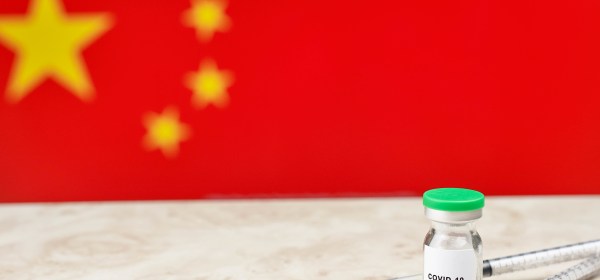
Written by Brian Hioe. The latest front on which the KMT has sought to attack the Tsai administration’s response to COVID-19 has been on the issues of vaccines. In particular, with the Tsai administration having enjoyed widespread public praise for its effective response to COVID-19, the KMT has tried to find ways to criticize or denigrate the Tsai administration’s response to COVID-19. In recent memory, this has included calls in January to lock down the city of Taoyuan in response to the Taoyuan General Hospital cluster.

1 7 8 9 10 11 22