
Written by Brian Hioe. US PRESIDENT DONALD TRUMP alarmed earlier this month after comments suggesting that he would decide whether to suspend arms sales to Taiwan after meeting with Chinese President Xi Jinping in April.
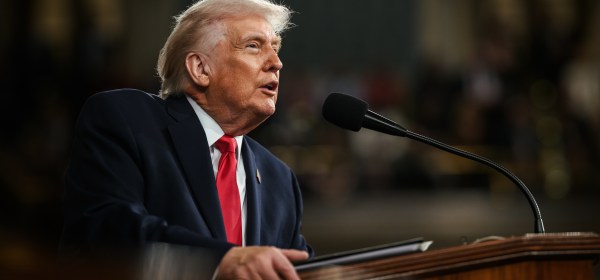
Written by Brian Hioe. US PRESIDENT DONALD TRUMP alarmed earlier this month after comments suggesting that he would decide whether to suspend arms sales to Taiwan after meeting with Chinese President Xi Jinping in April.
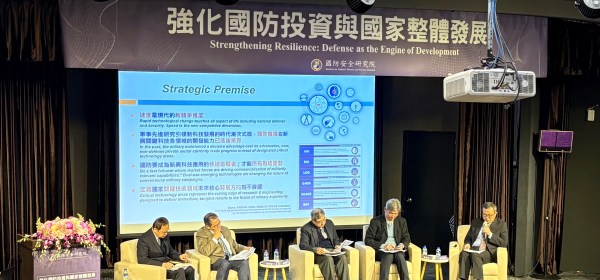
Written by Domingo I-Kwei Yang and Chan-Hsi Wang. This article argues that a new trend is emerging in Taiwan’s debate over defence spending, elevating the economic logic behind defence investment. It identifies the shift from fiscal burden to strategic investment, from buyer to co-production partner with the US and “peace through strength” as an economic strategy that fuses military readiness with an economic agenda.

This article examines whether Taiwan’s record NT$1.25 trillion defence package in 2025 strengthens deterrence or unintentionally accelerates strategic and demographic risk. The piece argues that both major parties rely on the same unspoken assumption that the United States will intervene decisively. It proposes a viable third path that balances readiness with societal resilience.

Written by Chieh-Ting Yeh. This article reviews an eventful year of 2025 in Taiwan-US relations. Defence and trade continue to be the most important issues of the bilateral relationship under the Trump administration. It argues that the narrative surrounding it is fundamentally reactive and does not inspire hope or action. We need a more robust, imaginative, positive, optimistic, uplifting, inspiring, forward-looking, and hopeful narrative for US-Taiwan relations.
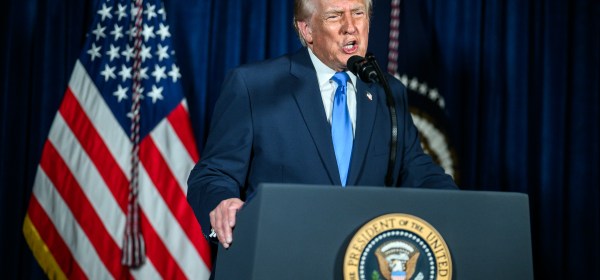
Written by Baosheng Guo. This article analyses Taiwan’s options in the face of Trump’s uncertain and unpredictable Taiwan policy. It suggests that Taiwan should urge the US to provide strategic clarity and strengthen its relationship with Europe. Taiwan should also weaponise the interdependence of its semiconductor industry with the US and prepare to restart its research and development of nuclear weapons.
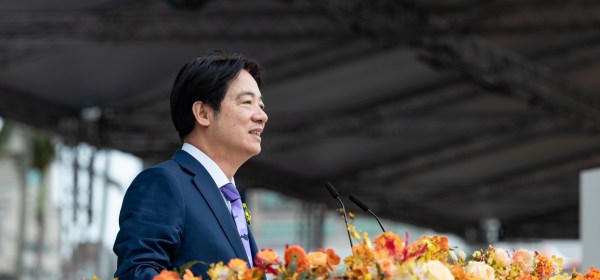
Written by Nils Peterson. This article analyses the domestic challenge for the Lai administration’s foreign policy under a KMT-aligned Legislative Yuan. The divided government poses two potential hurdles: the risk of domestic gridlock and fights over defence appropriation funding. These challenges will require some degree of compromise between the KMT and the DPP, reinforced by the recent recall campaigns.
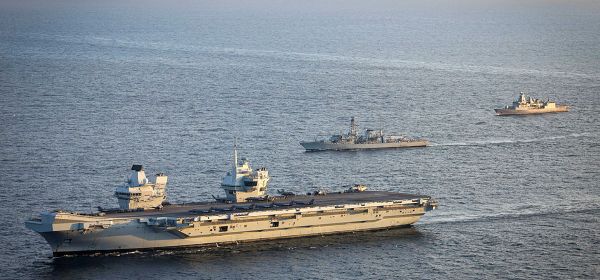
Written by Alexandra Whitehead. This article assesses the importance of Taiwan in the UK’s Strategic Defence Review (SDR) published in June 2025. It argues that the SDR recognises Taiwan’s global significance in the context of countering China, both in security and economic terms. However, it lacks explicit contingency planning to support Taiwan and remains ambiguous towards China.

Written by Daniel Jia. Taiwan’s 2024 presidential election has concluded. The Taiwanese people have elected the China-defiant candidate as the new president. For Taiwan, the results of the election are important. But what is more important, in view of the presence of China’s meddling with Taiwan’s election, is to lay out new strategies to mitigate China’s interference in the future.

Written by Shih-Yueh Yang. By preserving the Chinese identity, Taiwan can mitigate its political differences with the Mainland and thus be the sustenance of the whole Chinese people for a free, democratic, and equally prosperous China. With such a great and just cause for the future of the Chinese nation, Taiwan will get its strongest defence, and the danger of wars will also be minimized in the first place.

Written by Jyh-Shyang Sheu. With the military threats from China, Taiwan needs to enhance its military capabilities, or more precisely, enhance and rebuild its capabilities. The restoration of one-year conscription might solve the problem of limited human resources. Still, as evidenced by the war in Ukraine, other actions could serve to improve security in Taiwan further.

Written by Corey Bell. A problem in recent public commentary on tensions between China and Taiwan has been a conflation of what we know and what we fear. Nowhere is this more evident than on the topic of incursions by Chinese military aircraft into Taiwan’s air defence identification zone, or ADIZ. is month saw a shift from a pattern of incremental increases in the number of People’s Liberation Army Air Force aircraft participating in coordinated incursions into Taiwanese airspace to an exponential explosion. The campaign peaked at 56 aircraft on 4 October, with 159 over the four-day period of 1–4 October.
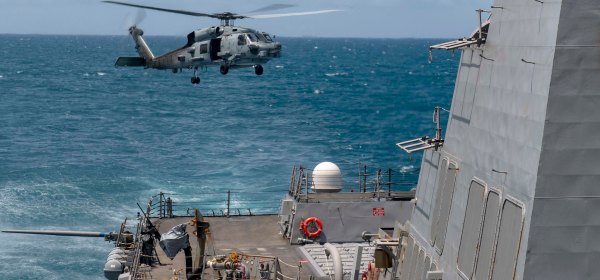
Written by Elizabeth Freund Larus. In his April 2021 Foreign Affairs article “Washington Is Avoiding the Tough Questions on Taiwan and China,” international relations scholar Charles Glaser asks whether it is time for the United States to relinquish maritime hegemony in the Asia-Pacific. He concludes that Washington should retrench those areas that would be unacceptably costly in terms of lives and treasure to defend. One of those places is Taiwan. This determination method is reminiscent of Dean Acheson’s 1950 “perimeter speech.” He excluded South Korea and Taiwan from the US defensive perimeter in East Asia in the early years of the Cold War. Stalin and Mao were watching, and we know how the story on the Korean peninsula ended.
 Taiwan Insight