First Round of Early Career Scholars Workshop on Taiwan Studies: Reflections of the Organisers 

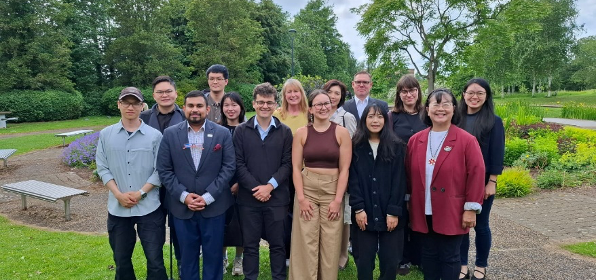
Written by Raian Hossain & Ping-An Wei. This article offers a reflection on the motivations behind organising the first Early Career Scholars Workshop on Taiwan Studies, the key achievements of the event, and the broader vision of establishing an Early Career Scholars Network under the Taiwan Research Hub. The organisers highlight how the workshop created opportunities for interdisciplinary exchange, professional development, and long-term community building among emerging scholars in the field.
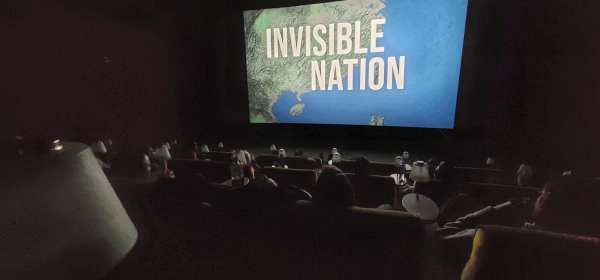
Invisible Nation Documentary is Making Taiwan More Visible

Written by Shawna Yang Ryan and Gerrit van der Wees. During the past weeks, a new documentary about Taiwan, Invisible Nation, has been making the rounds at various film festivals in the United States and Europe, including the International Documentary Film Festival Amsterdam on November 14-18, 2023.  Invisible Nation is the work of Vanessa Hope, who built up the film around the everyday life of President Tsai Ing-wen, in the process creating a fascinating picture of how the low-key President is ably leading Taiwan towards a better future.

Indigenous Taiwan through Critical Lenses: Comparative and Place-Based Perspectives 

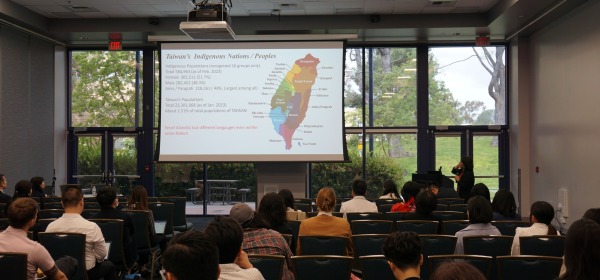
Written by Yi-Yang Cheng, Ssu-Chieh Jessica Fan and Susan Hou. Centring on Indigeneity in Taiwan, the interdisciplinary roundtable “Indigenous Taiwan through Critical Lenses: Comparative and Place-Based Perspectives” conceptualized Taiwan as a grounding point for multiple geographical perspectives. Instead of positioning Taiwan as a boundary object between the East and the West, it prompted a fresh envisioning and repositioning of Taiwan as a liminal space of unbounded and interconnected possibilities. Put differently, the roundtable discussions explored alternative ways of positioning Taiwan in/and the world, including perspectives which might have previously been marginalized or eluded consideration.

Beyond Books: Taiwanese Stories in the World

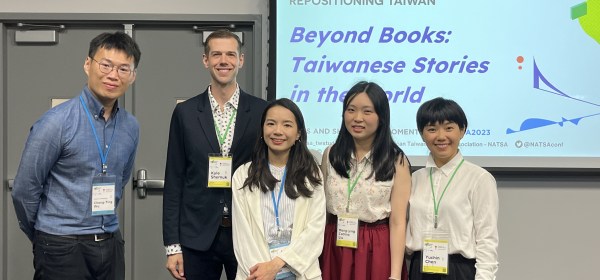
Written by Ssu-Chieh Jessica Fan and Cheng-Ting Wu. In recent years, Taiwan literature has experienced a surge in visibility and recognition within the global cultural community. To explore the border-crossing potential of Taiwanese stories, the planning team of the NATSA 2023 conference organized a special event, creating a lively platform for discussing the circulation and reception of Taiwanese fiction and non-fiction works in the international book market and academia.

Taiwanese American as an Aesthetic/Academic/Activist Concern 

Organized by I-Lin Liu. Taiwanese American is not a given status but a process of becoming. For first and second-generation Taiwanese Americans, the experience of living in a foreign land and becoming a member of an ethnic minority group often creates occasions for rethinking or reconceptualizing the meanings of being Taiwanese or Taiwanese American. This article focuses on the meaning(s) of Taiwanese American identity, community building, and the future of the Taiwanese American identity.

NATSA: Repositioning Taiwan

Written by Chee-Hann Wu. The North American Taiwan Studies Association (NATSA) is a registered nonprofit organization and the largest scholarly association dedicated to Taiwan Studies in the United States and Canada. It was founded in 1994 when Taiwan Studies became a booming field of research that attracted international attention during the 1990s, a period of rapid political, economic, social, and cultural change in Taiwan. The growing academic interest in Taiwan called for a regular and interdisciplinary academic forum. To establish such a forum, the North American Taiwan Studies Association’s constitution was drafted and ratified at the first annual conference at Yale University in June 1994.

In memory of Prof. Ian Inkster

Written by Chun-yi Lee. The deep sorrow of never receiving another book proposal from Ian is everlasting. But I know in my heart that his influence will continue: his thoughts will inspire further contributions to Taiwan-related studies. Thank you, Ian. We learned so much from you when you were with us, both in person and through email communications, and we will keep learning from your writings every time we read your publications. And yes, I always, always give you my positive vibes!

Reflections on the Twentieth Anniversary of the European Association of Taiwan Studies

Written by Dafydd Fell. It was a special moment to open the 2023 European Association of Taiwan Studies (EATS) Conference back at SOAS twenty years after we started planning the first conference. The venue for the opening in June 2023 was even the same as the first 2004 conference in the SOAS University of London’s Khalili Lecture Theatre. It was also wonderful to see many people at this year’s conference who had also been involved in the early history of the association. Reflecting back over the last twenty years, it is remarkable how European Taiwan Studies has developed, and EATS has played a critical role in this Taiwan Studies miracle.

It’s Time for the Ghost Month! 

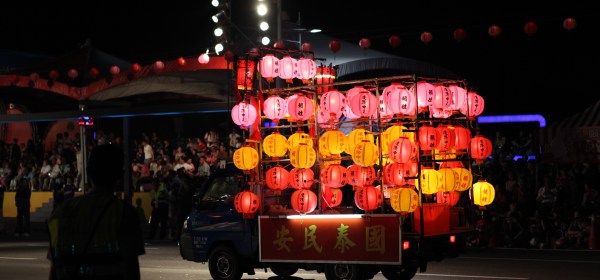
Written by Chee-Hann Wu. Beliefs in the afterlife and in spirits are universal and exist in different cultures and societies. Naturally, ritual practices, ceremonies, festivals, and customs arise, such as Halloween in Western countries and Día de Muertos in Mexico. Similarly, in Taiwan, the year’s seventh month in the lunar calendar is dedicated to ghosts and the deceased. The Gate of the Ghosts opens on the first day of Ghost Month and closes on the last day, during which the spirits enter through the gate and wander the world of the living.

For Molecular Archipelagic Thinking

It is a privilege to present this insightful piece ‘For Molecular Archipelagic Thinking’ from Professor Chun-Mei Chuang, a respected figure in the field of Sociology from Soochow University, Taipei. Professor Chuang’s work is marked by her interests in feminist theories, postcolonial discourse, ecology, and animal studies. In this contribution, she graciously shares her experiences and reflections on teaching sociology in Taiwan, providing a rare glimpse into her unique approach and the broader sociological landscape in Taiwan.Chun-Mei Chuang is a Professor in the Department of Sociology at Soochow University in Taipei, Taiwan. Her research interests include feminist theories, postcolonial discourse, ecology and animal studies.

Unveiling Contemporary Taiwan Identity: What Lesson can we Learn from Dcard’s Responses on the Hong Kong Immigration Wave?

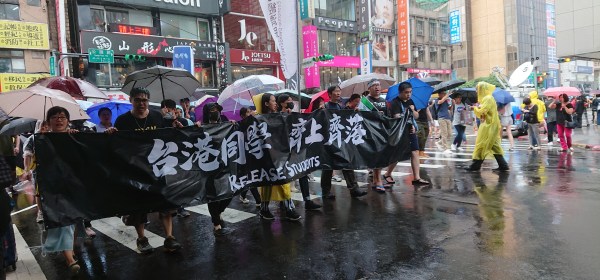
Written by Cheuk Kwan Lau. In January 2023, a BBC news article brought attention to the challenges faced by Hong Kongers who migrated to Taiwan. The news pointed out that Hong Kongers who migrated to Taiwan face institutional obstacles when applying for citizenship. Immigration laws in Taiwan were claimed to be outdated. The migrated Hong Kongers could legally inhabit Taiwan, yet they did not enjoy citizenship and civil rights.  

Instead of exploring the various institutional obstacles they face, this article takes a unique approach by examining the perceptions of the Taiwanese young generation regarding the influx of Hong Kong immigrants. It aims to uncover the contemporary Taiwanese identity constructed by this demographic, previously seen as a strong ally of Hong Kong protestors during the 2019 Anti-Extradition Law Movement.

Has Taiwan Escaped Nostalgia for Authoritarian Times? Taiwan and Regional Comparisons

Written by Brian Hioe. Contemporary Taiwan is often hailed as a beacon of democracy in the region. Namely, Taiwan today holds free and fair elections after transitioning from its authoritarian past, which saw a history of one-party rule by the KMT. In various indexes of democracy, Taiwan usually scores highly regarding freedom of the press, speech, and expression. Part of the reason why Taiwan scores highly in contemporary indexes of democracy may be to differentiate Taiwan from China at a time of rising tensions between Western powers and China, raising questions about whether this proves a way that the Cold War framing of “free China” has subtly made a comeback. The underlying pressure to differentiate Taiwan from China has always been a substrate of Taiwan’s modern politics, whether in the present or in authoritarian times.

1 2 3 35