Cybersecurity and National Security in Taiwan and Japan

Written by Margaret Siu and Tommy Hall. In an era where digital technology permeates every aspect of our lives, national security strategies increasingly hinge on robust cybersecurity measures. This is particularly evident in the approaches of Taiwan and Japan, two democratic governments at the forefront of integrating advanced technological defences against emerging digital threats. The evolving cybersecurity strategies of Taiwan and Japan are not merely reactive measures to emerging threats but are emblematic of broader global trends where digital security is inextricably linked to political stability. Their experiences offer vital insights for other governments grappling with similar challenges, emphasising the importance of agility, technological innovation, and international cooperation in crafting national security strategies for an interconnected digital world.

Computational Propaganda and Democracy in Taiwan: AI’s Impacts on Pre-Existing Challenges

Written by Tommy Hall and Margaret Siu. When generative, artificial intelligence (AI) programmes are used with malicious intent in the realm of politics, the resulting “deepfakes” can be both convincing (at a glance) and extremely damaging to the target’s image. This article will argue that a unified and proactive response is necessary for Taiwan to successfully navigate the gauntlet of challenges created by AI in a democratic political environment.

The Digital Evolution in Taiwan and Japan: Implications for Political Communication

Written by Tommy Hall and Margaret Siu. The digital era has revolutionised political communication, with profound effects in Asian democracies, notably Japan and Taiwan. This exploration delves into the intricacies of how political entities in these countries harness digital platforms. It aims to unpack the varied strategies they employ, the challenges they confront, and the opportunities they seize within the digital realm. Our analysis will not only highlight the distinct tactics and responses shaped by each country’s unique cultural, legal, and historical contexts but also examine the broader implications these digital transformations hold for political engagement and democratic discourse in the region.

Digital Governance Perspectives for Taiwanese and Japanese Civil Society

Written by Tommy Hall and Margaret Siu. In the digital age, politics and technology are more intertwined than ever, especially in East Asia. With nations like Taiwan wrestling with the balance between free speech and foreign interference and Japan pivoting towards advanced tech solutions for national security, the right balance remains elusive, and the stakes perennial. By exploring these critical intersections between online spaces and national politics, this work spotlights the challenges and opportunities that lie ahead for these East Asian democracies, as well as connecting the East Asian experience to the world at large.

Cultural Technology and Cultural Communication Sustainability: What Is the Next Step for the “Cultural Technology Agenda”?

The rapid advancement of digital technology has brought immense convenience to human society, transcending geographical boundaries that national and geographical divisions once imposed. Information, communication, and cultural content, as well as film, television, and audio products, can now circulate across vast distances, expanding the reach and influence of transnational culture. Nations that are actively developing cultural technology and communication systems are faced with multifaceted concerns, including issues related to information security, the preservation of national identity and voice, the cultural rights of their citizens, democratic participation, collective memory, artistic creation, labour security, as well as economic and industrial considerations.


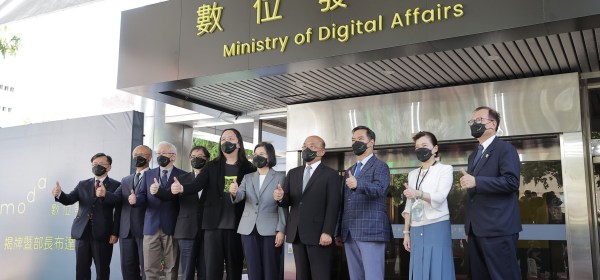
Digital Ministry, Disinformation Regulation, Douyin, and Data Breaches. 2022 in Taiwanese Digital Politics.

Written by Sam Robbins. Recent data breaches in Taiwan have also highlighted the difficulty of increasing Taiwan’s overall cybersecurity. In December, Legislator Chiu Hsien-Chih revealed that the personal data of over 23 million Taiwanese people (effectively the entire population of Taiwan) had been leaked online. This data seems to have come from Taiwan’s household registration system. When the leak was first revealed in October, Taiwan’s interior ministry denied any wrongdoing or that the data came from their database. After investigation, the ministry claimed they could find no record of any breaches or anomalies in their system.

Can g0v International Affairs Really be Open?

Written by chihao. Contributors of g0v started various discussions on international community affairs in late 2018, after the g0v Summit that year and other governance-related conversations some months before that. Like many things in g0v, these efforts to engage with international organisations and people were largely self-initiated. No permission was required since none could be given. However, unlike many things in g0v, there are little to no public records of these activities, such as correspondence, meetings notes, or slide decks. Open collaboration becomes very difficult, if not impossible, without shared documentation of these activities. Also, unlike many things in g0v, some were paid for their role in these international activities. Discrepancies between a paid full-time job and part-time volunteering work further exacerbate the difficulties.

Can g0v Be Replicated Abroad?

Written by Sam Robbins. The best answer is thus that g0v could be replicated abroad, but it should not be. G0v is unique in the specific ways it approaches problems but thoroughly un-unique in being a group of activists dedicated to solving problems. We cannot forget the second part of this when we reflect on the first part. How activists come together to work towards a common goal depends deeply on political contexts. Tech and civil society can collide in a range of different forms. A look at the Association for Progressive Communication (APC) members, a global network of civil society groups promoting equality through information and communications technology, also reveals that many groups are already engaging with digital technology as a liberating tool.

The Bot Fighting Disinformation: The Story of Cofacts 

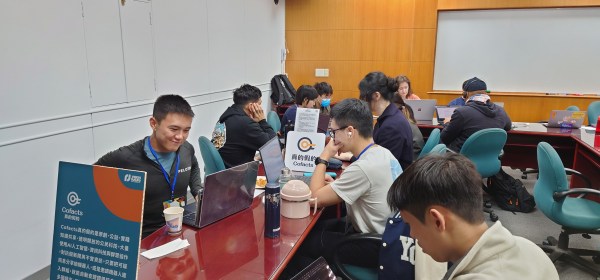
Written by Billion Lee. Disinformation affects everyone, but everyone can become part of the solution. This is a simple idea that powers Cofacts and many other g0v projects. Although Cofacts has had experts contribute and have worked with other organisations, the fact-checking process is open to all. Disinformation breeds distrust and polarisation, but collaborative fact-checking breeds trust and collaboration. When governments get too involved in fighting disinformation, it can look like an infringement on free speech. That is why it is so important for civil society groups to get involved. The process can be slow: disinformation spreads earlier than fact-checking, but just like the tortoise and the hare, our strength lies not in our speed but our innovation and resilience. Cofacts is fighting the long fight, and it is only possible by creating a structure that is open to anyone and for everyone.

1 2 3 4 5 7