Labours of g0v: Rethinking Work from the Perspective of Data Activists

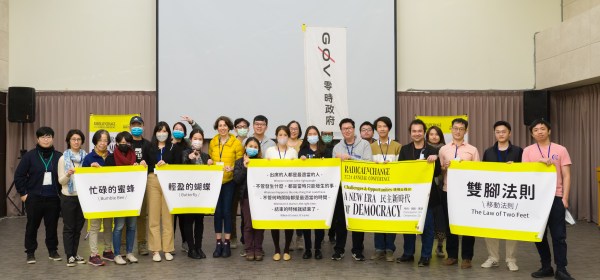
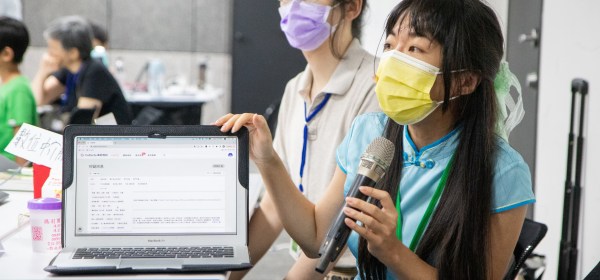
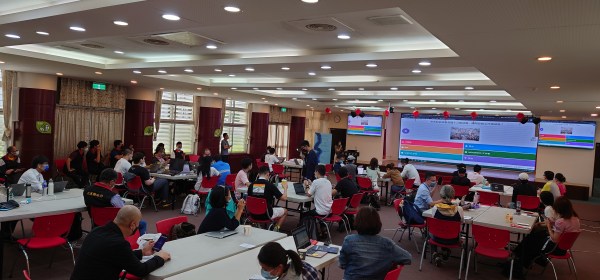
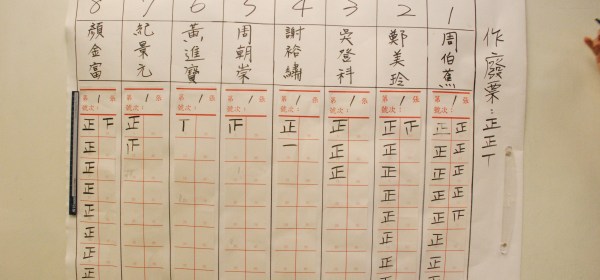
Written by Aaron Su. How does such civic tech activism – whose results have indeed been transformative – proceed amidst limited resources and a wide variety of training and vocations? Beyond the material outputs of g0v, we must also not forget what activists and scholars have had to say about the distribution of infrastructural or emotional labour within grassroots or activist communities. There are members whose caretaking, organizing, and managing help to reproduce the bare conditions for activist work in the first place. Others have further written about the particular costs of serving as a digital activist, noting that such practices often intensify demands on members in ways inflected by class background, gender, and other social factors.

A Hub for Flexibility and Innovation. My Experiences with the g0v Community 

Written by Peter Cui. All projects above were born by the participant under the environment of flexibility, diversity, and vitality. In recent years, we have started a series of works under the project “sch001” to promote the open-source value and g0v society to the students at colleges and senior high schools in Taiwan. I am deeply persuaded that with more younger participants joining the organisation, more possibilities will come true in the next ten years of g0v society. 

OTT in Taiwan: How Global Platforms Meet Local Productions and Politics

Written by Yu-peng Lin and Chang-de Liu. The development of over-the-top (OTT) media services is currently the main concern of Taiwan’s audiovisual industries. An OTT media service is an audiovisual streaming service provided directly to the audience by the Internet. The Taiwanese government wishes to strengthen this industry while also seeking balanced growth for international and local operators. For the latter, how to accelerate the production of their content in the face of global competition is the biggest concern. Furthermore, given the recent success of the Asian market, international operators are interested in co-producing content with Taiwanese companies.

A Sketch of Taiwan’s Digital News Media Landscape in the Twenty-first Century

Written by Ming-yeh T. Rawnsley; Yuan-hui Hu; Victoria Y. Chen; and Lihyun Lin. Crowdfunded journalism is no longer unfamiliar to Taiwanese people who care about the media ecosystem. Although journalism in Taiwan has been challenged by the powerful influences of political and business alliances in the news industry and the constant impact of ever-changing technological advances, crowdfunded journalism has provided a fresh possibility and lent financial assistance to independent media organisations and citizen journalism. All these undoubtedly positively affect the reconstruction of Taiwan’s news and media industry.

Semiconductor Competition: Opportunities for Taiwan

Written by Adhiraaj Anand. The Biden administration has put aside billions of dollars to improve semiconductor manufacturing capabilities in the US, whose global output fell from 37% in 1990 to 12% in 2020. Additionally, the EU Chips Act, proposed in 2022, seeks to make Europe a leader in semiconductor technology and maintain a secure supply of chips by increasing the continent’s market share in the semiconductor industry to 20% by 2030. Japan has similarly unveiled a strategy to promote indigenous semiconductor manufacturing to achieve a 40% global market share in next-generation power semiconductors, which are to be used in emerging technologies such as electric vehicles, by the end of the decade.

Let’s Stop Calling Taiwan a “Digital Democracy” (And Start Telling Better Digital Stories)

Written by Sam Robbins. This is what is at stake with how we tell digital stories: If we focus only on the tech itself and its impressive uses, we risk leaving most citizens feeling like they have no voice on the matter due to a lack of expertise. When we tell stories of civil society collaboration, of how governments are interacting with citizens, and of policies whose ramifications are much greater than the new data they create, we can start to create a space for greater public participation on these subjects.

At the Consumer’s Convenience – What the Convenience Store in Taiwan Offers

Written by En-chi Chang. The convenience store in Taiwan has been part of daily life in Taiwan. To stay competitive, convenience store retailers remain focused on providing customers with convenient offerings. The current trend echoing the international retail development is the digitalisation of products and customer services. Nevertheless, development such as unmanned stores and metaverse is still in the infant stage. It is exciting to observe whether Taiwanese consumers will well receive services such as 7-Eleven’s X-Store and FamilyMart’s O2 Meta and whether other convenience store retailers will follow this development.

The “Fruits” of Open Source: The Story of Open Hack Farm 

Written by Sam Robbins. As alternative food movements continue to develop and food politics has risen higher on the political agenda in Taiwan, there is perhaps still more opportunities for growth and collaboration between those concerned with the future of how food is produced in Taiwan. For Chen, the primary concern is still sustainability and environmentally sensitive agriculture. Open data and open technology is just a means to the broader end of preparing Taiwan for an increasingly unstable climate future. 

Maintaining Taiwan’s Global ICT industry lead by Improving Employee’s Training

Written by Bo-Yi Lee. Employee training is critical in the success of organisations, including productivity, profitability, innovation capabilities and overall competitiveness. Due to the everlasting and intensifying global competition among firms, particularly in the ICT industry, the Taiwanese government has incentivised firms to build formal training systems. This includes establishing a training committee at the corporate level, creating skill development maps and building e-learning databases for employees. Thus, it will help employees catch up with predicament of ever-changing technologies. However, R&D engineers in the Taiwanese ICT industry rely much more on informal training to update their knowledge and skills in related technologies.

Comparing space industry interventions in Taiwan and elsewhere

Written by Nicholas Borroz. Taiwan’s government intervenes to develop its space industry. It is one of several political economies characterised by solid government intervention approaches to guide market actor behaviour. This robust interventionist approach has different strengths and weaknesses. In terms of strengths, Taiwan’s approach can help establish local dominance in niches in global value chains. In addition, it can incentivise the growth of certain business areas that will benefit the economy and coordinate the development of complementary business areas.

Technology is the new Priority in Central and Eastern Europe’s Accelerating Relations with Taiwan

Written by Richard Q. Turcsanyi and David Hutt. On October 20-30, Slovakia, the Czech Republic, and Lithuania will receive a large business delegation from Taiwan led by National Development Council Minister Kung Ming-hsin. This will include the Minister of Science and Technology, Wu Tsung-tsong, and the new Director-General of Taiwan’s National Space Organization (NSPO), Wu Jong-shinn. In the meantime, foreign minister Joseph Wu will also visit Slovakia and the Czech Republic during the same time.

Strategic Focus Areas for Taiwan’s Burgeoning Domestic Space Industry

Written by Jason Wang. While Taiwan’s democratic IP-friendly government, hardware, and engineering talents give the nation a competitive advantage in the global New Space industry, complex challenges still lie ahead. Specifically, how effectively can the Tsai Administration rally a whole-of-government approach to reduce the friction of building a domestic ecosystem that encourages international new space players to stay and grow with Taiwan? Six strategic focus areas will be discussed in the following paragraphs: Infrastructure for new space industry development, Risk-tolerant funding, a.k.a the Taiwan Space Fund, Spectrum and orbital slots, Space situational awareness, Software applications not well as hardware, an education system redesigned to produce multidisciplinary talent and more women.

1 2 3 4 5 6 7