From Musical Garbage Trucks to Garbage Consciousness in Taiwan

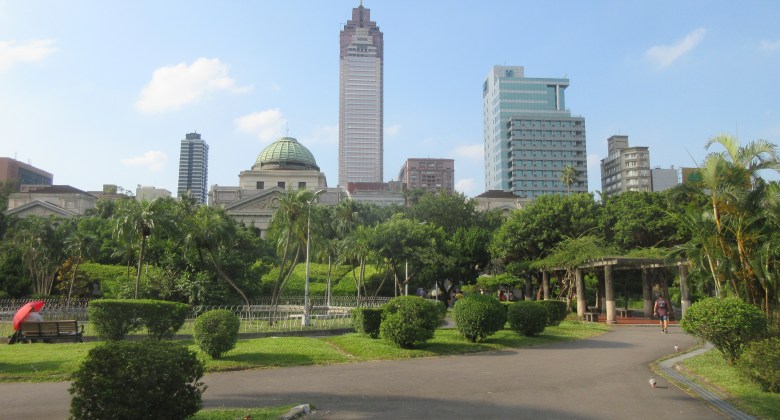
Written by Nancy Guy. Garbage, or rather, thoughts of garbage, are part of daily life in Taiwan. This is illustrated in the practices of individuals and households as they manage the material byproducts of everyday living. It is also reflected in all manner of creative practice. This post introduces the music of garbage trucks, the ‘Maiden’s Prayer’, not only on the music, but to social context with the music and Taiwan’s ‘throwing garbage’ culture.

Beyond Voices of Ethnicity: Post-Global Conditions in Taiwan’s Hakka Popular Music

Written by Hsin-Wen Hsu. Since the 2000s, Taiwan’s Hakka popular music has moved beyond themes of rural nostalgia and ethnic affirmation to engage the complexities of post-global conditions. Musicians respond to ecological precarity, translocal migration, shifting borders, and digitally mediated relationships while experimenting with new linguistic and collaborative forms. Hsu traces how Hakka communities navigate socioeconomic changes and evolving identities. In doing so, Hakka popular music becomes a crucial way of hearing Taiwan’s contemporary entanglements and imagining new modes of communal life.

Finding the Power of Quiet in a Noisy World: Listening to More-than-Human Soundscapes

Written by Laila Chin-Hui Fan. Taiwan joined the global initiative “Listening to Quiet,” reaffirming its leadership in soundscape conservation. From misty wetlands to the celebrated Quiet Trail, citizens practised deep listening as an ecological and philosophical act. These quiet walks are rooted in years of civic advocacy and reveal an emergent environmental ethic in Taiwan, where attentive listening becomes a form of humility, coexistence, and more-than-human care.

Listening for the Songs of Home: Tracing the Unheard Vietnamese Soundscape in Taiwan

Written by Kuo Ta-Hsin. This piece introduces the Vietnamese presence in Taiwan, through different sonic performances, to link Vietnamese students and/or migrants closer to their home. It is just for instance, In the karaoke rooms and Vietnamese eateries of Taichung, memory meets reality. Voices turn into acts of belonging, and to sing is to remain Vietnamese, even far from home.

Singing for the Mountain Lands: A Pivotal Indigenous Music Concert in Taiwan

Written by Eric Scheihagen. The author illustrates the 1984 Singing for the Mountain Lands concert in Taipei, organised shortly after the Haishan Coal Mine Disaster, which killed mostly Amis miners. It details how Indigenous musicians and activists, led by Hu Defu, used the concert to raise funds and publicly address discrimination, harmful stereotypes, and political issues. The event became an important milestone in Taiwan’s growing Indigenous rights movement and helped catalyse later organising efforts, including the formation of the Taiwan Association for Promoting Indigenous Rights.

The 114th Double-Tenth Day on NATO’s Eastern Flank: A Celebration of What Never Was

Written by Chien, Hung-yi. This article reflects on a National Day reception hosted by Taiwan’s representative office in a NATO member state on its eastern flank. Answering the question of what happened in Taiwan 114 years ago highlights two national-historical narratives of Taiwan. The author believes a Taiwan-centred view aligns more closely with lived reality and explains Taiwan’s complicated history to international friends.

Taiwan’s Arctic Imperative: Navigating a New Global Frontier

Written by Aileen A. Espiritu, Marc Lanteigne, and Tse-Kang Leng. This article argues that Taiwan should construct a clear, multifaceted Arctic policy to safeguard its future prosperity and strengthen the country’s international standing. It outlines multiple areas where Taiwan can contribute and benefit, including trade, climate, science, diplomacy, Indigenous communities and geopolitics. An inclusive Arctic policy is not distant curiosity but a strategic aspiration.

Hopeful Reset or Regression? Cheng Li-wun through the eyes of younger Taiwanese

Written by Aleksandrs Gross. This article examines Cheng Li-wun’s leadership through the eyes of the younger generation. Not only did her statements on identity and Taiwan’s future fail to resonate with younger people, but she also failed to address livelihood issues such as high housing prices, inflation and employment pressure, which are seen as the most critical issues for younger Taiwanese.

Cheng Li-wun’s Victory: A New Chair for an Old Party

Written By Paula Perez. This article analyses the promises and positions of Cheng Li-wun. It argues that Cheng offers nothing new in terms of its identity claims and the 1992 Consensus and questions who is the audience Cheng is speaking to. However, she brings something other leadership candidates did not, personifying the redemption of a generation who she claims is misled by de-Sinicised education.

Cheng Li-wun: The Second Coming of Hung Hsiu-chu?

Written by Brian Hioe. This article compares the new KMT party chair Cheng Li-wun to Hung Hsiu-chu. Both made waves on the basis of their deep blue political leanings and hardline stance on advocating for unification. She already faces some internal pushback against her leadership, though it remains to be seen whether Cheng will follow Hung’s trajectory of falling from grace.

How placement in Kew led us to the world: paving the route to our PhD

Written by Ching-yuan (Joy) Hung and Mu-Chen (Jenny) Liu. This article tells the shared journey of two NTU graduate students who interned at the Kew Gardens. Immersed in diverse experiences, including seed imaging, herbarium tours, and a culture of scientific exchange, they found renewed purpose in research, which led both to reimagine their paths toward doctoral studies and global collaboration.

1 2 3 4 134