Taiwan’s Tibetan Buddhist Monk Dilemma and its Unintended Consequences

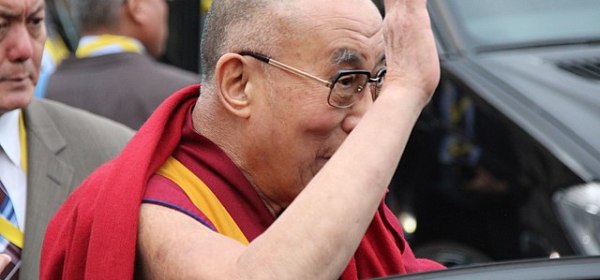
Written by Dolma Tsering. Taiwan is known as the beacon of democracy, and its competitive democratic principles and practices distinguish it from authoritarian China. Advocacy for promoting religious freedom is one of the important tasks undertaken by the government. For instance, as a part of this advocacy, in 2018, President Tsa Ing-Wen announced that Taiwan would donate US$200,000 per year for five years to the United States’ International Religious Freedom Fund as a part of Taiwan’s contribution to advancing global religious freedom. The government, annually in association with the American Institute in Taiwan (AIT), hosts an international forum for religious freedom to establish a more inclusive society in Taiwan. However, on 6th June 2023, more than 112 Tibetan Buddhist centres in Taiwan joined a press conference which called for the government’s unfair treatment of visa restrictions for Tibetan Buddhist monks in Taiwan and therefore demanded an amendment to the existing visa restriction.
How Taiwan uses Buddhist literature for environmental education

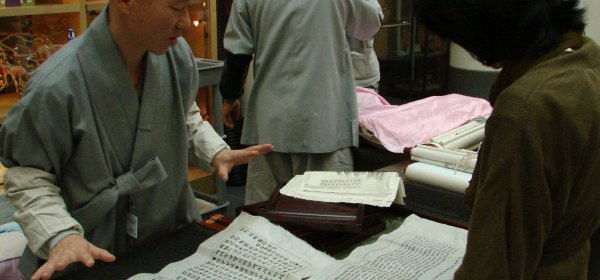
Written by Natasha Heller. Climate change is one of the biggest challenges that the world faces. A United Nations report has cautioned that greenhouse gas emissions due to human activity are at a record high, “with no signs of slowing down.” Many nations are recording weather extremes, higher average temperatures and rising seas. Meanwhile, the first wave of increasing numbers of climate refugees points to how a changing environment will reshape human life.

From “Silent Teacher” to “Virtual Teacher”: Medical Imaging Technology and the Future of Anatomy Classes in Taiwan

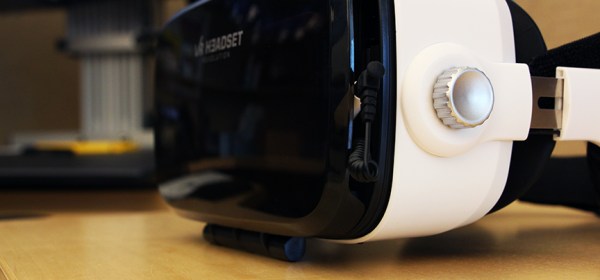
Written by Elsa Sichrovsky. A mixed-reality approach to anatomy courses may be an ideal approach to combining the efficiency of VR technology–and its enhancement of the acquisition of knowledge–with the psychological enrichment and tactile experience of learning from the Silent Teacher. A former medical student brought up an intriguing idea on an online discussion forum: perhaps students could practice anatomy with VR technology before dissecting the Silent Teacher. By doing this, students would approach cadaver dissection already possessing a higher level of anatomical knowledge, and thus fewer unnecessary cuts would be made.

THE MOUNTAIN GOD AND THE MONASTERY – THE PECULIAR CASE OF THE SHANSHEN SHRINE

Written by Wen-Ren Liu. When travelling around Taiwan one will inevitably encounter small temples whose religious affiliation is not immediately evident. The prevalence of such temples reflects an area where Chinese religiosity generally differs from the monotheism prevalent in many other societies – while many Chinese believe in the existence of a realm of invisible, non-material existence, they are less inclined to confine their belief to a specific God. In line with this, many religious sites in Taiwan demonstrate an interesting juxtaposition of spiritual beings and symbols pertaining to different religious/spiritual traditions, the main ones being Buddhism, Taoism (and Folk Taoism), and Confucianism…

BRINGING BUDDHISM TO THE MASSES – LOOKING BACK AT SAN MIN BOOKS’ “NEW TRANSLATION” SERIES OF BUDDHIST CLASSICS

Written by Shang Haifeng.
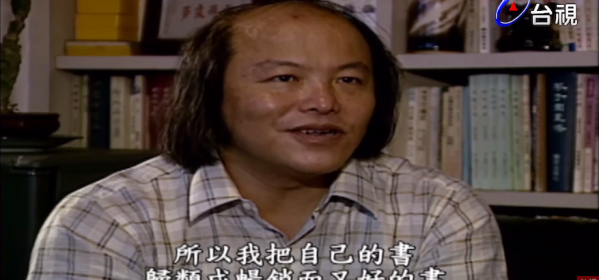
This venerable and influential company began releasing publications on Buddhism as part of its “Series of Annotated Modern Translations of [Chinese] Classics” (古籍今注新譯叢書) as early as the 1960’s. This was at the same time that China’s heritage – and its religious heritage in particular – was suffering sustained attacks during the Cultural Revolution.