The EU-China Summit and the Future of EU-Taiwan Relations: Reconstructing the Normative Agenda

Written by Dominika Remžová. A few days prior to this year’s EU-China summit (the first to take place in person since the COVID-19 pandemic), the Financial Times has published an opinion piece by Anders Fogh Rasmussen, former Secretary-General of NATO, calling for the Union’s stronger support for Taiwan. The article singles out security considerations as the main reason for such a principled stance, which the author acknowledges has been taken up by only a few Central and Eastern European (CEE) leaders. This focus on security issues and small states is noteworthy, as it provides the most fruitful avenue for further strengthening of ties moving forward.

As Two Go Blue, will Green be the Tertius Gaudens of Taiwan’s 2024 Elections?

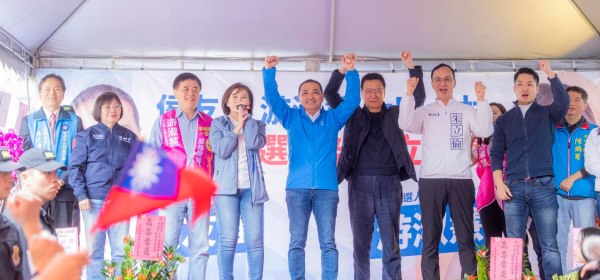
Written by Jasper Roctus. What then transpired in November went completely beyond general expectations. While a desponded Gou could have been expected to go independent or join forces with Ko Wen-je, the former mayor of Taipei (2014–2022) and founder of the third force, “white” (白) Taiwan People’s Party, an outright electoral pact between Hou and Ko seemed out of the question. The idea that Ko, who in the past has been perceived as greener than even the DPP as he, for instance, mingled with student protestors during the 2014 Sunflower Movement and later stumped for deep Green rockstar Freddy Lim, would join forces with the KMT representative of the establishment he claimed to loathe, seemed a contradiction in terms.

Why are the 2024 elections seemingly less competitive than the 2020 elections?

Written by Brian Hioe. Compared to the 2020 elections, it has often been remarked that the 2024 elections have been decidedly less competitive. Certainly, this does seem to be true, in that for most of the election cycle, DPP presidential candidate Lai Ching-te has been ahead. Nevertheless, what are the structural factors at work here, which differentiate the 2024 elections from the 2020 elections? We might take a look.

Colonial Nostalgia and the Delegitimisation of Pro-democracy Forces in Hong Kong and Taiwan

Written by Zeng Ee Liew. The term ‘colonial nostalgia’, or 戀殖 (lian zhi), has appeared more and more since the 2000s in the discourse used by Mainland China to describe the politicians or activists who advocate for democracy or even independence in both Taiwan and Hong Kong. Very often, those democracy or independence activists will be described as ‘traitors’ who still harbour lingering love or affection and pander to the former Western or Japanese colonial power and fail to show full patriotic love to the motherland. The use of such discourse can be seen from the lens of a broader effort by the Chinese government to delegitimise those pro-democracy activists, which will be explored further in this article.

Triangulating the Taiwanese Spirit in Southern California: Colonial Hauntings at the 228 Commemorative Concert

Written by Chun Chia Tai. In February, I saw a text message in a Taiwanese group chat promoting a concert commemorating the 228 massacre caused by the Kuomintang dictatorship in Taiwan on February 28th, 1947. The concert was called The Spiritual Day of Taiwan: 2-28 76th Commemorative Concert and was hosted by two Taiwanese American organisations: the Taiwanese United Foundation and the Taiwan Elite Alliance, since 2007. The performers were mainly Taiwanese. Many of them were not professionals but members of local Taiwanese church choirs. Most of the audience was familiar with the songs being performed; therefore, they sang along with the performers.

Reflecting on the Laguna Woods Shooting Tragedy: One Year Later

Written by Wayne Huang. On May 15, 2022, a fatal shooting occurred at the Irvine Taiwanese Presbyterian Church in Laguna Woods, California. During a lunch reception, the gunman locked the doors and opened fire with approximately a hundred people present. The church has been recognised for its significant role in Taiwan’s democratisation and independence movements since the 1970s. It has led to the suspicion that this historical connection motivated the assailant to travel over a hundred miles from Las Vegas to target the church. The shooting resulted in six individuals being shot, including Dr John Cheng, who lost his life while attempting to disarm the gunman. 

History was Reconfigured at the Time of Discovery: The Life and Afterlife of Chiang Wei-Shui

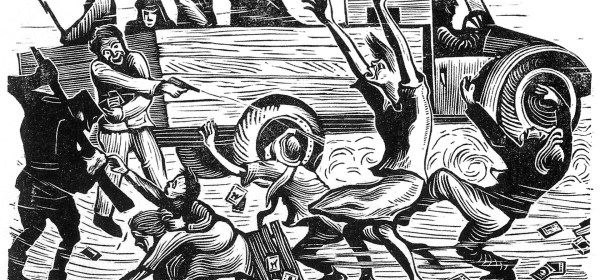
Written by Fang-Long Shih. The life and afterlife of Chiang Wei-Shui (蔣渭水 1891–1931) have echoed what the film Rashomon has denoted: “History was not found at the time of its occurrence, but was reconfigured at the time of discovery” (dir. Akira Kurosawa 1950). In 1921, Chiang Wei-Shui founded Taiwan Cultural Association (TCA, 台灣文化協會), the first culture-based organisation in Taiwan’s history. The TCA was established “to promote Taiwan to a position of freedom, equality and civilisation”. The TCA also had a political aim to “adopt a stance of national self-determination, enacting the enlightenment of the Islanders, and seeking legal extension of civil rights”.

For the UK, Taiwan Could Provide an Alternative to Confucius Institutes

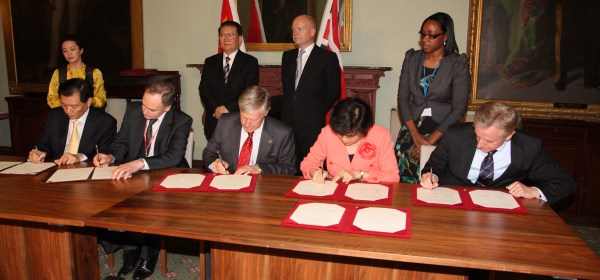
Written by Adrienne Wu and Marshall Reid. For the United Kingdom, 2022 was a year of significant change, particularly in its approach to the People’s Republic of China (PRC). Following years of relatively cordial UK-PRC relations, London followed the example of many other European states by shifting to a far more sceptical, confrontational policy toward Beijing. While this transformation was the product of various factors—from growing concerns regarding China’s human rights abuses to rising awareness of the PRC’s coercive economic policies—it was heavily influenced by domestic political manoeuvring. Nowhere was this more evident than in the competition between Liz Truss and Rishi Sunak to succeed Boris Johnson as prime minister, in which both candidates sought to frame themselves as the most tough-on-China. In a move emblematic of this game of China-sceptic one-upmanship, Sunak made the bold claim that he would close all of the UK’s remaining Confucius Institutes, the PRC’s international Mandarin language learning centres.

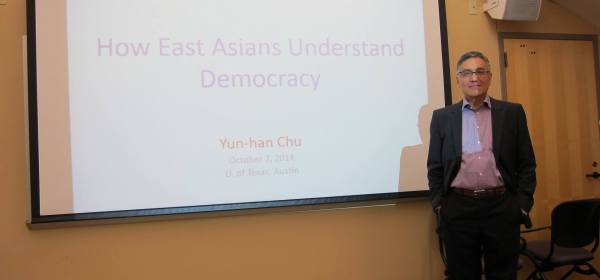
“Kind and Gentle Soul”(「謙謙君子,溫潤如玉」): Remembering My Dear Friend Yun-han Chu (1956-2023)

Written by Tse-min Lin. The news came as a total shock. I had arrived in Taiwan just five days earlier to visit the new Taipei School of Economics and Political Science that Yun-han had helped establish. I knew he was ill and had been hoping to visit him after being unable to do so for five years. That is never going to happen now. Yun-han was a dear friend for 40 years. His passing is a heart-breaking personal loss.

Cross-Strait Relations: De-coding What’s “New” for the New Year?

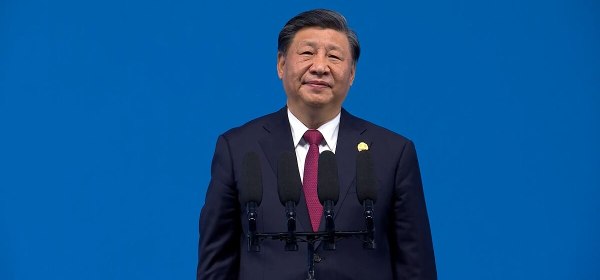
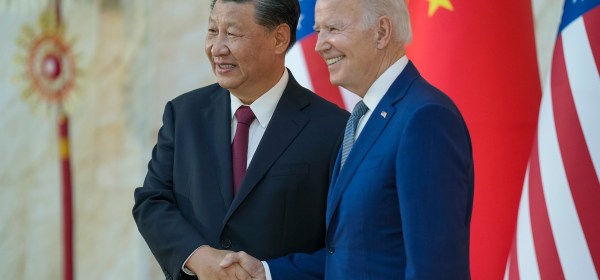
Written by Raian Hossain. Despite such heightened tension in cross-strait relations across 2022, President Xi Jinping and Tsai Ing-wen have delivered their English and Lunar new year speeches, showing signs of certain tolerance and a softer tone toward each other. The message from both sides of the Taiwan Strait is not random but rather driven by political objectives and motives likely to determine the cross-Strait relations in the upcoming years. Although speeches by President Xi Jinping and Tsai Ing-wen cover numerous angles, this article uses some specific lenses of the Politics of Security, the local and presidential election of Taiwan, and pandemic politics while de-coding the Cross-strait relations for the near future.

Xi’s 2022-2023 Remarks Deepen Internal Division in Taiwan

Written by Wei-Hsiu Huang. To sum up, based on the address to the 20th National Congress of CPC and the 2023 Lunar New Year Greetings by Xi Jinping, it is explicit that the Chinese mainland will exercise even more robust sharp power and attempt to break up Taiwan from within. Moreover, the Chinese Mainland, which is always wary of foreign powers interfering in Taiwan’s affairs, could use the same sharp power against democratic states such as the US and Japan. This is because many countries, not just Japan, already have developed strong economic interdependencies with the Chinese mainland, creating routes for China’s sharp power. It is an important issue for democracies: how to prevent dictatorships from using sharp power to exploit freedom of speech and collapse democracies from within.

How might China’s new Taiwan policy pan out?

Written by Huynh Tam Sang. One year after the 2019 eruption of large-scale pro-democracy protests in Hong Kong, China enacted the “national security law” for the special administrative region, cracking down on freedom and democracy there. Under such a situation, Taiwan’s populace disapproved of China’s strategy of occupying and turning the self-governed island into a new colony in the vein of Hong Kong. In light of the widespread criticism of “one country, two systems,” the political framework that Chinese authorities have embraced to pursue peaceful reunification with Taiwan, the Chinese Communist Party’s leader Xi Jinping (習近平) has tasked Wang Huning (王滬寧), the party’s chief of ideology and his mastermind, with finding a replacement arrangement.

1 2 3 4 5 6 15