The Limits of Taiwan’s Bet for the Quad

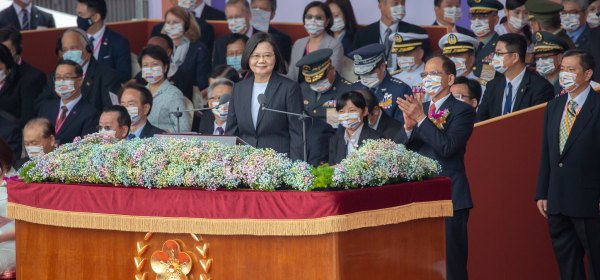
Written by Joshua Bernard B. Espeña. China’s aggressive rise for regional dominance continues to upset the rules-based order. The United States, together with Japan, Australia, and India are seeking to balance the power through the Quadrilateral Security Dialogue (Quad). The Quad met in a face-to-face meeting this October in Tokyo and discussed their common interest to uphold a free and open Indo-Pacific.

A 2020 Vision for Strategic Clarity on Taiwan

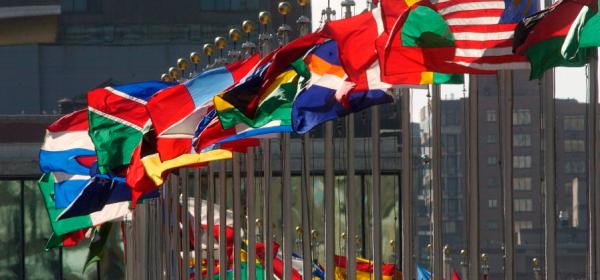
Written by Gerrit van der Wees. As the United Nations General Assembly is preparing to meet in New York for its annual gathering, the international community is facing multiple issues in all parts of the world that need to be resolved. Among all of those issues, there is one burning question: why is a free and democratic Taiwan not part of the gathering? Why is a vibrant democracy being excluded from the international family of nations?

Today Hong Kong, Tomorrow Taiwan”: Taiwan’s Strategic Conundrum

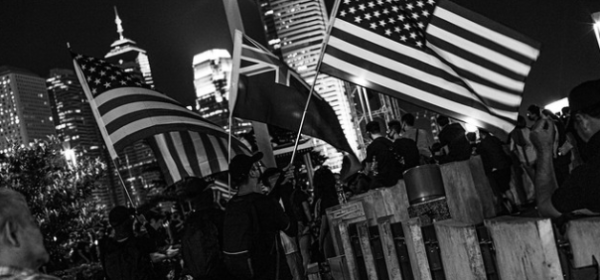
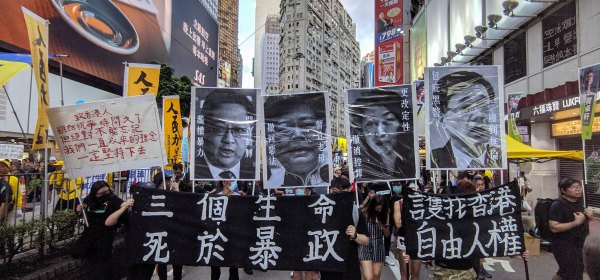
Written by Ferran Perez Mena. During the past year, the Hong Kong protests, along with the newly approved National Security Law, have generated much anxiety in Taiwan. They have been perceived by both the DPP’s political elite and the Taiwanese public as a premonition of what lies ahead for Taiwan. One of the popular slogans of the protests, “Today Hong Kong, Tomorrow Taiwan” (今天的香港,明天的台灣), perfectly epitomises the widespread unease that such political events are producing and the apparent inevitability of Taiwan’s downfall.

The EU and Taiwan – Realpolitik Trumps ‘Values Diplomacy’

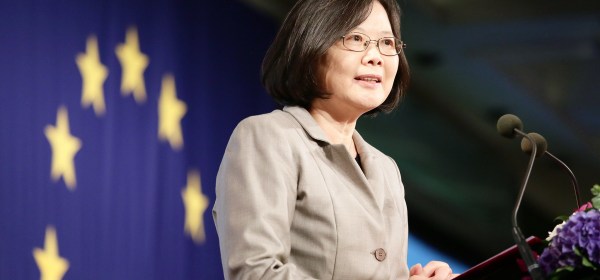
Written by Michael Reilly. The European Union’s relations with China are currently at their lowest level since at least the Tiananmen Square massacre of 1989, if not earlier. Growing disillusion with China’s economic and predatory business policies under Xi Jinping had already led to the EU branding China a ‘systemic rival’ in 2019. Since then, unease has only grown and relations further soured, most recently over China’s crude attempts to use the Coronavirus pandemic for propaganda purposes, followed by its imposition of a draconian National Security Law on Hong Kong in disregard of its obligations under the Sino-British Joint Declaration of 1984.

Taiwan and Europe: An Uneasy History

Written by Ian Inkster. The historical relations of Taiwan with Europe are by no means unproblematic. When free of Chinese imperial power, Taiwan became subject to the western Great Powers and then to an expanding, industrially founded Japanese colonialism and militarism. At this point, relations with Europe were commercially close but politically and culturally distant. Led by Britain, the European involvement in Taiwan was never truly benign. After the war of 1937-45, Europe’s interest in Taiwan was principally as a developing economy that traded in a range of complementary goods and services.

Taiwan and the EU ‘safe list’

Written by Ian Inkster. It will now be well-known to our readers that the European Union has excluded Taiwan from ‘a safe list,’ which allows citizens unhindered travel to-and-fro the Eurozone. It is important to note that there is no obligation for the EU to give full, or even sensible reasons, for this decision. Still, we can nevertheless examine the evidence for ourselves.

Why We Must Press for Full Accounting from China Regarding the Coronavirus

Written by Robert S. Wang. While most people agree we need to probe into the origin of the current Coronavirus pandemic, many continue to urge that we initially focus on containing the pandemic and address the broad issues of cause later on. This is also what China’s President Xi Jinping proposed in his speech, along with the offer of $2 billion in assistance, at the opening of the 73rd World Health Assembly meeting on May 18.

Taiwan’s Rising International Standing amid the COVID-19 Pandemic

Written by T.Y. Wang. With its recent dispute with the director-general of the World Health Organization (WHO), Dr Tedros Adhanom Ghebreyesus, the island country has grabbed international headlines again, which may aid its efforts to join the international health organisation. Responding to a question from a reporter, and without providing any evidence, Tedros claimed that the Taipei government was behind recent death threats and racist online attacks against him.

The U.S. New Approach toward Taiwan

Written by Dean P. Chen. On March 26, 2020, as the United States is under enormous pressure coping with the novel Coronavirus (COVID-19) pandemic sweeping across the globe, President Donald Trump signed into law the Taiwan Allies International Protection and Enhancement Initiative (TAIPEI) Act of 2019. Passed unanimously by the two chambers of U.S. Congress — the Senate in October 2019 and House in March 2020 — the act pushes for enhanced American government support for Taiwan’s international participation. It thus requires the State Department to report to Congress on steps taken to strengthen the island democracy’s diplomatic relations with other partners in the Indo-Pacific region.

Wu Zhuoliu’s Orphan of Asia and the Madness of the Colonial Reality

Written by Makiko Mori. Wu Zhuoliu’s (1900–1976) Orphan of Asia is a renowned work of colonial Taiwanese literature. Surreptitiously written towards the end of Japan’s colonial rule in Taiwan (1895-1945), this semi-autobiographical novel bears a powerful witness to Taiwan’s deeply troubled, albeit legitimately modern, claim for the right to self-determination and self-representation.

Could there be a federal solution for Hong Kong and China?

Written by Walter C. Clemens, Jr. Hong Kongers have earned the right to genuine self-rule. This essay suggests how this could happen within the framework of “One Country, Two Systems.” But Hong Kongers’ demands for freedom go against the tide of repression—not just in Russia, Turkey, and India but especially in China. Claiming that he will restore China’s former glory, President Xi Jinping is becoming the country’s most supreme bully since Mao Zedong.

Hong Kong is a Mess for Beijing; Taiwan Would be a Nightmare

Written by J. Michael Cole. Liberal democratic societies are simply incompatible with the increasingly authoritarian mindset that animates the CCP. The notion that their inhabitants — global, connected and proud of their liberties — would willingly cede their freedoms to Beijing is naive at best. Such illusions are being shattered in Hong Kong as we speak, and the idea that the Taiwanese would be any less committed to preserving their hard-earned democracy is preposterous. It says a lot about the CCP’s appeal that the only way it can quiet down discontent on its peripheries is through pacification.

1 7 8 9 10 11 15