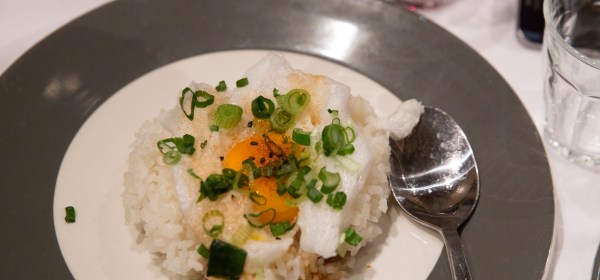
There Is No Such Thing As Creativity or Lack Thereof; There Is Only Fun and Not Enjoyable: An Interview with an Artist Pei-Ying Lin

Written by Yi-Cheng Sun; translated by Yi-Yu Lai. This interview attempts to explore the metaphors of “workshops as classrooms” and “art creation as a learning process” in response to my curiosity about the phenomenon of “workshops, each with its own expression,” especially because artist Pei-Ying Lin frequently employs workshops in her art creation. 

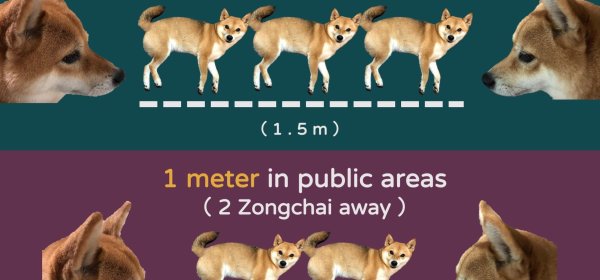
“Governing by Memes”: COVID-19, Conspiracy, and Digital Democracy in Taiwan 

Written by Wen Liu and Hsin-I Sydney Yueh. The COVID-19 pandemic has significantly rearranged our social relations and affective connections. Amid disinformation and virus-origin conspiracy theories circulating across the social landscape, governmental responses to the pandemic have included various public health measures, such as lockdowns and mask mandates, and political measures, such as escalating geopolitical conflicts between the United States and China. Around the world, fear has been one of the most prominent affective responses to the pandemic, as driven by disinformation practices, intensified geopolitics, and our raw psychic fear about the unknown.

2022 Taiwan Theatre Report: Coronavirus, Chaos, Challenges, and Changes

Written by Yi-Ping Wu. How would people of the future think of the theatre of Taiwan in 2022? A year haunted by the Coronavirus pandemic? A year in which the international situation was overshadowed by the Russian-Ukranian war? What are some lessons we learned in the past year? Undeniably, 2022 was a rapidly changing and challenging year for the Taiwanese. As to the field of theatre, 2022, in my perspective, could be recognised as the year of “change” due to the following characteristics. 

Cross-Strait Relations: De-coding What’s “New” for the New Year?

Written by Raian Hossain. Despite such heightened tension in cross-strait relations across 2022, President Xi Jinping and Tsai Ing-wen have delivered their English and Lunar new year speeches, showing signs of certain tolerance and a softer tone toward each other. The message from both sides of the Taiwan Strait is not random but rather driven by political objectives and motives likely to determine the cross-Strait relations in the upcoming years. Although speeches by President Xi Jinping and Tsai Ing-wen cover numerous angles, this article uses some specific lenses of the Politics of Security, the local and presidential election of Taiwan, and pandemic politics while de-coding the Cross-strait relations for the near future.

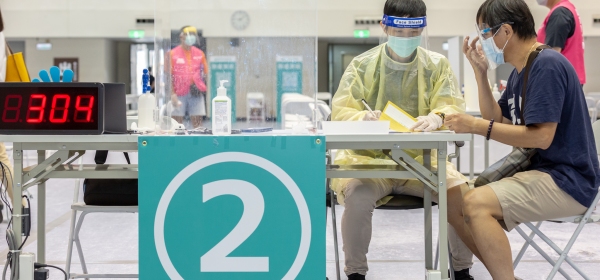
The 2022 Elections in Review: How Taiwan Failed to Adapt Voting for a Pandemic

Written by Kharis Templeman. With its colourful and fiercely contested campaigns, efficient electoral administration, and universal acceptance of the results, Taiwan’s recent local elections were, in most ways, a sign of a vibrant and healthy democracy. But one aspect failed to live up to basic democratic standards: thousands of people were denied the right to vote because they were trapped in mandatory COVID quarantine. After nearly three years of dealing with a global pandemic, Taiwan’s leaders should have been able to find some way to accommodate these citizens, as many other countries around the world have managed to do under much more difficult circumstances. Instead, they ignored the issue, and many Taiwanese were denied the right to vote. Taiwan’s democracy has received much recognition recently for its impressive vitality and resilience. But on voting rights, it is now a laggard. It can and must do better.


The Economic Impact of COVID-19 Outbreaks in Migrant Workers’ (MW) Dormitories in Singapore and Taiwan 

Written by Jackson Teh. In crux, we should note the link between the general public’s health, both physically and mentally, with that of the migrant workers: only when local community cases are stable, and their sentiments positive, are migrant workerss allowed to move around and go to work; only when migrant workerss move around and go to work, can they feel better and hopeful about themselves and the future. Therefore, the mental well-being of both groups in a country must not be seen as isolated variables. 

The Taiwanese Diaspora in Berlin and COVID-19

Written by Jens Damm. With the outbreak and global spread of COVID-19, reports of the stigmatisation of Asian-looking people have been accumulating in Germany and worldwide. Therefore, for a small research project, I chose to conduct qualitative semi-structured interviews with Taiwanese who spent the time of the pandemic in Berlin. I focused on their personal experiences as transnational actors. I asked in particular about personal experiences of discrimination and economic hardships during the pandemic and their evaluation of the different COVID-19 measures in Germany and in Taiwan.

Taiwan’s Covid-19 Surge: From “Zero-Covid” to “Living with Covid” 

Written by Tsung-Mei Cheng. Time will tell how quickly Taiwan can bring the Covid surge under control. However, the fundamentals that worked so well for Taiwan before the surge—preparedness (a national plan), universal health coverage, advanced IT and communications infrastructure, and a cooperating public—should continue to serve Taiwan well in the fight against the current surge. Moreover, it will hopefully also defend us against future variants of the Covid-19 coronavirus to come.  

Taiwan’s Transition from Zero-COVID to Living- with-COVID-Safely

Written by Chunhuei Chi. Taiwan’s repeated successes in controlling domestic outbreaks, including successfully controlling the new outbreak in May of 2021 by mid-July, ironically contributed to Taiwan’s challenge to move into the transitional phase. This success enabled Taiwanese residents to enjoy a normal life with a low tolerance for domestic outbreaks and caused a unique form of vaccine hesitancy, especially among the elderly. When there is little to no risk of infection, many people associate vaccination with risks and few potential benefits.

Resilience, State Capacity and Public Trust in Combating Pandemics, Case of Taiwan (Part I)

Written by Chun-Yi Lee. When it comes to combating pandemics, the public’s trust is crucial to the government’s response. The experience of COVID-19 demonstrates how well a government led its citizens through the pandemic depends on how citizens trust and comply with government regulations. As a result, COVID-19 has challenged not only health management but also governance issues more generally. As Fukuyama indicated, the Covid-19 pandemic was like ‘a bright light shone on existing institutions everywhere’ – the way a government and society reacted to the pandemic exposed the strengths and/or inadequacies within the existing institutions. 

1 2 3 10