Time to Reposition Taiwan within Europe’s Indo-Pacific Vision

Written by Laura Bonsaver. This article proposes that Europe should move beyond threat-centric framings of Taiwan and recognise it as an innovative, democratic, and technologically advanced partner. It recommends de-hyphenating Taiwan from militaristic narratives, normalising its role in Indo-Pacific strategies, and reframing Europe-Taiwan relations as mutually beneficial collaborations rather than dependency or crisis management.

How Czechia Engages Taiwan 

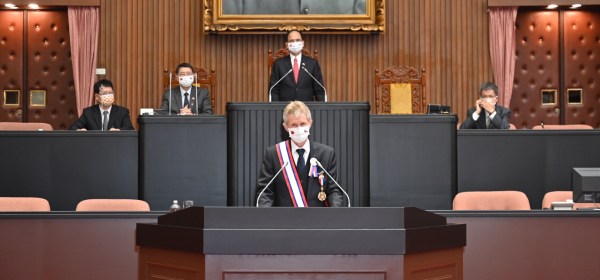
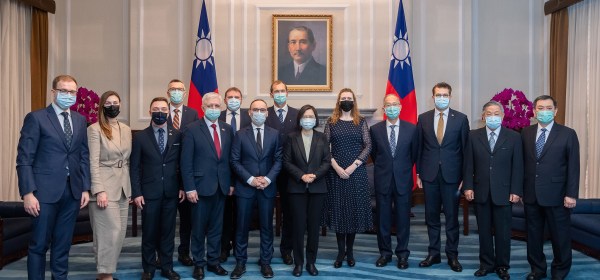
Written by Filip Šebok. While it has been over the past few years that the Czech-Taiwanese relations have grabbed headlines over the world, the two sides’ ties have not come from nowhere. In fact, the recent intensification of cooperation has been built on a very solid foundation jointly forged by the two sides since the early 1990s. Taiwan has become an important investor in the Central European countries already in the 2000s, especially through the investment of electronic manufacturer Foxconn, which has become a major exporter and tax payer in the country.  

Taiwan-Netherlands relations: strong ties with historical weight

Written by Sense Hofstede. Taiwan and the Netherlands share a long history. The island’s central position on the critical trading networks of its time sparked Dutch interests both in the 17th century and today. Dutch-Taiwanese economic ties are strong but also increasingly under intense scrutiny as the chip war heats up. Next to strong trade ties, a 1980s arms sale is the most high-profile of the Netherlands’ maritime ​​​​security involvement with Taiwan. The historical, security and economic ties all touch upon sensitive issues. 

The EU-China Summit and the Future of EU-Taiwan Relations: Reconstructing the Normative Agenda

Written by Dominika Remžová. A few days prior to this year’s EU-China summit (the first to take place in person since the COVID-19 pandemic), the Financial Times has published an opinion piece by Anders Fogh Rasmussen, former Secretary-General of NATO, calling for the Union’s stronger support for Taiwan. The article singles out security considerations as the main reason for such a principled stance, which the author acknowledges has been taken up by only a few Central and Eastern European (CEE) leaders. This focus on security issues and small states is noteworthy, as it provides the most fruitful avenue for further strengthening of ties moving forward.

Hard Cash or Soft Values? Assessing the ‘Lithuanian Model’ of Eastern European Relations with China and Taiwan

Written by Dominika Remžová. Over the last year and a half, Lithuania has been at the forefront of the EU’s improving relations with Taiwan and worsening relations with China. This culminated with Lithuania leaving the 17+1 framework of cooperation between China and 17 (now 16) eastern European countries on the one hand and the opening of the Taiwanese Representative Office in Vilnius on the other. The two events occurred in May and November 2021, respectively, with the latter being particularly controversial, as China argued that the denomination ‘Taiwanese’ breached the EU’s One China policy, which led to the imposition of Chinese economic sanctions on Lithuanian products. However, as Lithuania’s economic relations with China are negligible, at least when compared to western European countries, Beijing made the unprecedented move of targeting EU-wide supply chains that contain Lithuanian products. This effectively escalated the bilateral disagreement to the EU level, with the bloc filing a WTO case against China.

Explaining Cross-Strait Relations with Theories of European Integration

Written by Frédéric Krumbein. The European Union has the densest integration region globally, whereas current trends in cross-strait relations point to a further divide between both sides. Despite noticeable significant differences between the European Union and cross-strait relations, theories of European integration provide a useful framework to analyse the past, present, and future of relations between Taiwan and the Chinese mainland. Four major theories of regional integration that were developed for or applied to the European integration process will be used to analyse cross-strait relations: neofunctionalism, historical institutionalism, liberal intergovernmentalism, and postfunctionalism.

Is the best friend of Taiwan in Europe the Czech Republic?

Written by Richard Q. Turcsanyi. Perhaps in the clearest form, the Czech Republic symbolises contradictory attitudes towards Beijing and Taipei found in former Communist countries in Central and Eastern Europe (CEE). While for part of the society Taiwan symbolises own rejection of Communist past and sympathy towards humanistic ideals, others are not willing to endanger promises of benefits (real or imaginary) of pragmatic developing relations with China.