
Subsidising Birth: Pronatalist Policy and the Rise of Assisted Reproductive Technologies

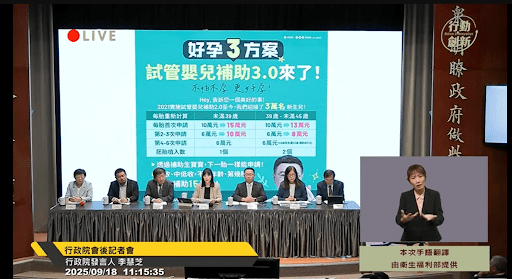
Written by Pei-Chieh Hsu. This article illustrates how state-subsidised assisted reproductive technology has reshaped reproduction in Taiwan, situating Taiwan’s In Vitro Fertilisation (IVF) within global pronatalist regimes, fiscal governance, and demographic anxiety. It analyses policy design, comparative fertility outcomes, and ethnographic IVF experiences to show how subsidies engineered technological dependence while reproducing new social, medical, and moral hierarchies.
Evaluating the impact of Taiwan’s fertility policy

Written by Wen Shan Yang. In 2010 Taiwan’s total fertility rate (TFR, the number of children who would be born per woman during her life time using an estimation based on the current year) of 0.89 was so low that it became a member of a dubious club: the lowest-low fertility countries in the world club. According to this estimate, a woman in Taiwan will have borne less than one child after passing her child-bearing age of 49.