Visualizing Transnational Christianity in Cold War Taiwan: Traces and Possibilities 

Written by Joseph W. Ho. Visual cultures – distilled in materials as granular as individual photographs or as broad as cross-cultural ways of seeing war and peace – mediated relationships between image-makers, subjects, and audiences. In the process, people and images constructed modern imaginations of the present while looking toward uncertain futures existing between nations and Christian groups as well as local and international histories.  

Tibetan Diaspora in Taiwan: Who are They and Why They are Invisible (1)

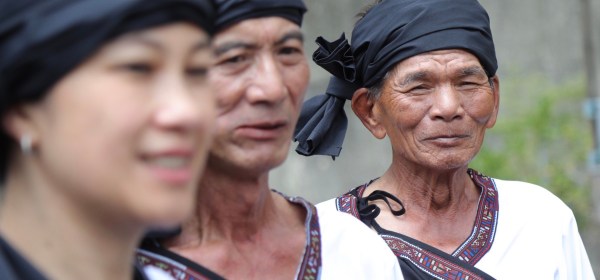
Written by Dolma Tsering. The government’s official website describes Taiwan as a multicultural society. It further stated that in addition to the dominant Han population, Taiwan is home to aboriginals, Malayo-Polynesian and new immigrants that hailed mainly from China and Southeast Asian countries. The Han population constitutes 95 per cent of the total population, followed by new immigrants that constitute 2.6 per cent and the indigenous population with 2.5 per cent. However, what is missing in this description, in particular and generally in the discourse of immigrants and ethnic diversity in Taiwan, is the Tibetan diaspora.

The Transformation of Taiwan-Japan Relations from a Historical Perspective

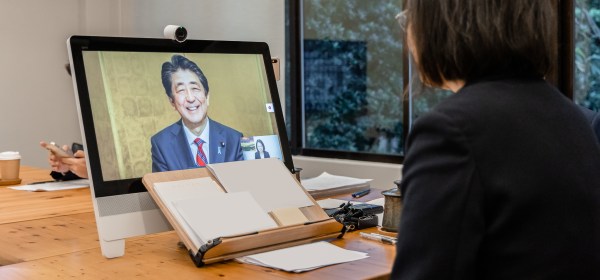
Written by Li-Hsuan Cheng. On July 8th 2022, Abe Shinzo, the longest serving prime minister in postwar Japan, was assassinated while campaigning for an LDP candidate in the coming election for  Upper House. While this tragic incident shocked countries worldwide, few societies like Taiwan showed such strong and wide remorse. Even in Japan, where Mr Abe had enjoyed unprecedentedly high and long support, like most leaders of democratic countries, he could not escape scandals and policy failures that eventually damaged his public support. However, despite some criticisms of Abe’s attitude toward war responsibilities in Taiwan, the mainstream society largely held a very favourable view toward him. One obvious reason is the significant progress in the Japan-Taiwan relation during his terms as prime minister.

Post War Flux: Analysing the Fluctuation of Relationships Between Taiwan-Japan in the Post-war Period

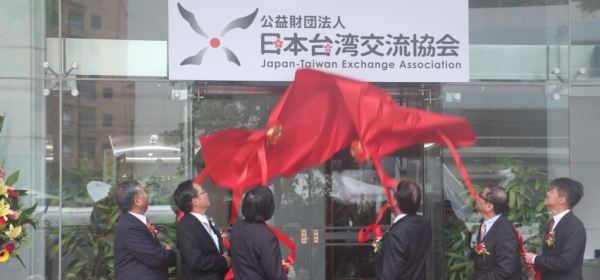
Written by Wei-Hsiu Huang. In addition, more complicated multilateral relations are involved in this issue. They are the relations between Japan and the People’s Republic of China, cross-Strait relations, and the Japan-US Alliance. As for the Japan-US Alliance, Japan is obligated to abide by the Japan-US Security Treaty, and the US insisted on a peaceful resolution of cross-Strait relations. To make it clear in the discussion, I will divide the developing process into three periods: the first period from the post-war period to the normalisation of diplomatic relations between Japan and China, the second from the normalisation of diplomatic relations between Japan and China to the democratisation of Taiwan, and the third one from the 1990s to the present. This essay will proceed with an overview and analysis of the complex relationship between Japan and Taiwan in the post-war period.

A new research agenda for late Qing and Japanese colonial Taiwan’s history: Perspectives from East Asian history and World History

Written by Wen-Kai Lin. With the development of Taiwan’s democratisation in the late 1980s, Taiwan historians have been able to transcend the Chinese nationalist historiography of the past Kuomintang government and carry out historical research with Taiwan’s multi-ethnic groups as the equal subjects of historical interpretation. However, many researchers only focus on Taiwan itself, which inevitably ignores Taiwan’s relationship with East Asian history and world history and narrows the broader temporal and spatial significance of Taiwan research. This article attempts to take the exchange of East Asian knowledge of Taiwan’s modern governance from the late Qing Dynasty to the Japanese colonial period as a new research agenda to reveal that the research on Taiwan history is often not only Taiwan history but also a complex manifestation of wider East Asian history and world history.

Shinzō Abe and Taiwan-Japan Relations

Written by Ko-Hang Liao. On 8 July 2022, former Japanese Prime Minister (PM) Shinzō Abe (安倍晋三) was killed by an assassin’s homemade gun during his midspeech of campaign held in Nara to support a Liberal Democratic Party’s (LDP) candidate for upper house election two days later. As a result, this longest-serving Japanese PM (in office (2012-2020) after a brief first tenure (2006-2007), surpassed the record held by his great uncle Eisaku Satō (佐藤栄作) from 1964 to 1972) is recognised by the public as the most Taiwan-friendly premier, a transformational leader, and the founder of Indo-Pacific strategy. By introducing Abe’s distinct roles, this article looks at Taiwan-Japan relations during and after Abe’s administration, the impact he brought to Japan’s postwar pacifism by rebuilding Japan’s role in global power-politics, his legacy in the post-Abe era, and future relations between two countries.

Taiwan, Japan, and a Turning Point of Cold War Legacies in East Asia

Written by Kuan-Jen Chen. On 8 July 2022, two gunshots not only ended Japan’s former prime minister Abe Shinzo’s life but also convulsed international politics in East Asia. The debates on Kishida Fumio’s diplomatic policy and the power reshuffling within the Liberal Democratic Party (LDP) have had the share of the international spotlight for their inextricable connections with Taiwan and the East Asian region. The amicable relationship between Japan and Taiwan is well-renowned. If you stroll in any city in Japan, it is not hard to find a slogan banner of “Thank you, Taiwan!” to express Japan’s appreciation for Taiwan’s help after the 2011 Tōhoku earthquake and tsunami. Ten years later, when Taiwan underwent the grave hours of the pandemic, Japan, pushed by Abe Shinzo, generously provided vaccines for Taiwan, saving numerous lives. These instances mark that these two countries seemingly have an unbreakable official relationship. However, the fact is that historically and politically speaking, Japan has been maintaining a distant but close relationship with Taiwan.

From Isolated Nation to Island Nation: Searching for Taiwan’s Place in the Wider World 

Written by Fiona Lin and Sam Robbins. Crucially, this isn’t just about establishing a new Taiwanese identity but rather a process of constant reflection for all upon this island on how to have an open and thoughtful form of national identity. I am happy that “Searching for Taiwan Flavour” can be part of this process by using food, drink, nature and business in the foreground. 

Ukraine and Taiwan: Comparison, Interaction, and Demonstration

Written by Yu-Shan Wu. Comparisons have been made between Ukraine and Taiwan, with the ominous implication that Taiwan may become Ukraine in the foreseeable future, i.e., a weak country attacked by its much stronger neighbour. Most of the comparisons are shallow in that they simply draw on the obvious power asymmetry that exists between Russia and Ukraine and between mainland China and Taiwan, as well as the hostile intention of the mighty country toward the lesser power. However, the structural similarities between the two cases run much deeper.

Matsu Migrants in Bade, Taoyuan City

Written by Cheng-Chung Wang. In Taiwan, we rarely see Matsu in the textbooks, maps, or other materials we’ve been exposed to since childhood, let alone how much we know about Matsu people. Some of us may be unaware that there are many descendants of Matsu migrants living around us. Their moving and settling experiences are very attractive stories that deserve to be told. 

Salivating Sales: Ethnic Chinese Malaysians and the Edible Bird’s Nest Industry.

Written by Yu-an Kuo 郭育安, translated by Sam Robbins. Despite being a common food in Taiwan, Taiwan’s climate makes it unsuitable for cultivating edible birds nest. Consumption of edible birds nest in Taiwan can be traced back over 200 years, but this consumption has always relied on imports. The product’s history in Taiwan is tied to the history of Dihua street in Taipei, which developed towards the end of the Qing dynasty. This street became a main sight for the selling of exported “Chinese goods” (華貨)in Taiwan, including Ginseng, Jujubees, louts seeds and shark fins. Official statistics suggest that Taiwan currently imports over 10 tonnes over birds nest each year, with over 90% being imported from Indonesia. However, this number is likely unreliable since the illegal smuggling of birds nest remains a constant problem in Taiwan.

A History of Taiwan’s Apple Farmers

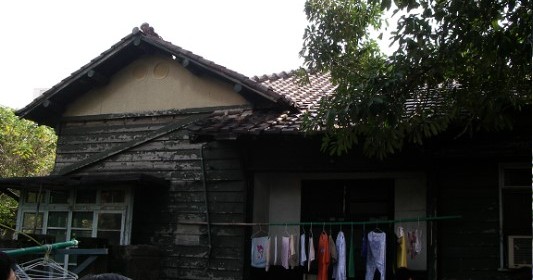
Written by Hui-Tsen Hsiao (蕭慧岑)Translated by Sam Robbins. “They write up a sloppy official document that doesn’t even say anything meaningful, and now everything we’ve worked so hard to have has to go like that. You want us to demolish our own house, we cried and hugged as it happened. You’re a government agency, and you’re willing to let people go through this?” “And after we were forced to demolish our house, the debris from the house was even been set on fire” Ron added. 

1 2 3 4 5 9