Who Are the Victims of Taiwan’s Cultural Budget Disputes? The Invisible Right to Cultural Participation for People with Disabilities

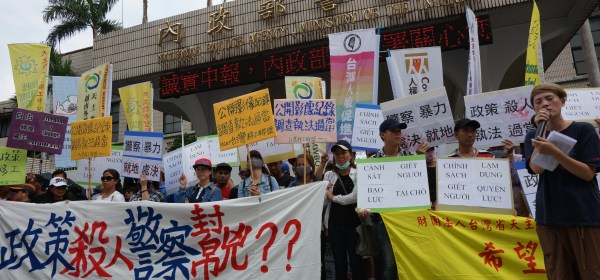
Written by Hsin-Yi Chao. This article discusses cultural equity and the rights of persons with disabilities in Taiwan. It examines cultural equity subsidies since 2016, noting that despite overall budget growth, cultural equity funding remains unstable. The author highlights a case where budget cuts led to the suspension of sign language interpretation services and proposes policy recommendations to strengthen cultural equity implementation.

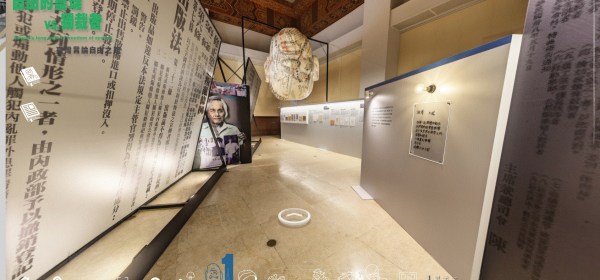
The Death Penalty in Taiwan: An Overview and the Impact of 113-Hsien-Pan-8 

Written by Szu-Yu (Suzy) Chen. This article provides an overview of Taiwan’s legal landscape of the death penalty, focusing on the Constitutional Court’s Judgment 113-Hsien-Pan-8 (2024), which upheld the constitutionality of the death penalty while imposing strict procedural restrictions. It examines the historical context, legal shifts, and the current impact of 113-Hsien-Pan-8, highlighting its influence on Taiwan’s death penalty practices and the ongoing debate.

Building a Regional NGO Hub in Taiwan

Written by Robert Wang. Over the past two years, with the support of AIT and MOFA as well as local NGOs, a Taiwan NGO alliance has successfully initiated a Fellowship Program to provide training for young NGO activists in the region and to create an NGO support network in Asia. It is important that this program be continued and expanded in order to strengthen civil societies and bolster democracies in the region.

How Will 2023 Gains in Transgender Rights Fair after the 2024 Elections?

Written by Yo-Ling Chen. 2023 was a big year for Taiwan’s transgender rights movement. This article traces important legal cases regarding transgender rights in 2023, and explores how the growing public visibility of transgender issues and legal consensus around the need to abolish compulsory surgery for changing one’s legal gender play in the aftermath of the 2024 elections.

Remembering Shih Ming-teh 

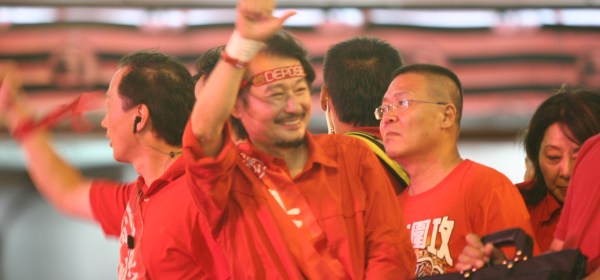
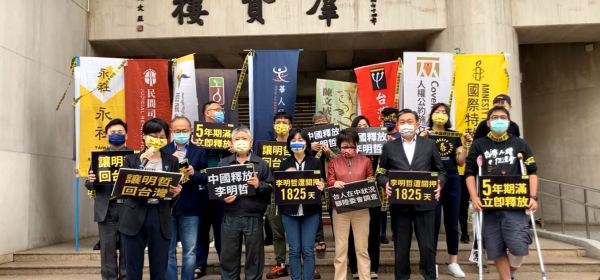
Written by Thomas J. Shattuck. On January 15, 2024, only a few days after the election, longtime democracy and human rights advocate, Nobel Peace Prize nominee, and politician Shih Ming-teh passed away. Given his place in Taiwan’s history and democratic development, it is important to remember him and his legacy. Shih is a widely known figure in Taiwan for his legacy in Taiwan’s democratisation and his role in the Kaohsiung Incident and Tangwai movement. He’s also famous for his role in the anti-corruption protests against then-President Chen Shui-bian in the early 2000s. Shih consistently called for Chen’s resignation and led the “Million Voices Against Corruption-Chen Must Go” campaign. For decades, he held politicians to high standards, and understandably so.  

Small Step from You, A Great Leap for Migrant Workers: Documentary, ‘Civil Society’ and ‘And Miles to Go Before I Sleep’ (2022) 

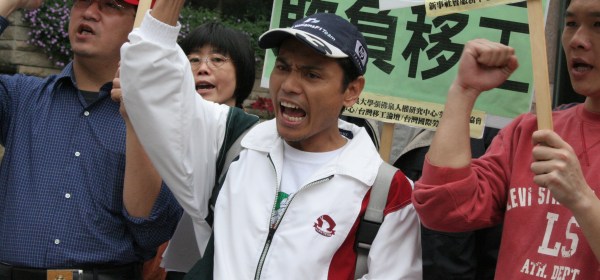
Written by Hsin-Chin Evelyn Hsieh. The award for the best documentary feature at the 59th Golden Horse Awards held in November 2022 in Taipei, Taiwan, went to And Miles to Go Before I Sleep (2022), directed by Tsung-Lung Tsai. At the ceremony, film producer Kim Hong Nguyen, dressed in the Vietnamese traditional garment áo dài, read out a message from Quoc Phi Nguyen’s family expressing their grief and hopes. It was the first time a documentary on migrant workers was presented with the Golden Horse Award, thereby creating a platform for voiceless migrants and drawing attention to the related issues in mainstream society. 

Cross-border Movement of Labour between Taiwan and the Philippines: A Taiwanese NGO Worker’s Perspective

Written by Yi-Yu Lai. Lennon Wong is the director of a shelter for migrant workers in Taiwan. Before joining the shelter in the early 2010s, he was already a labour activist and worked in the Chinese Federation of Labour and the First Commercial Bank Union. Although his prior work was not directly relevant to migrant workers in Taiwan, his engagement with the labour movement may have started with the issue of migrant workers from Southeast Asia. As a result, we may thus understand the cross-border movement of migrant workers between Taiwan and the Philippines through some of his observations.

Sight and Sound: Conversations on Death Penalty between Taiwan and Southeast Asia

Written by Kar-Yen Leong. In an article by Franklin Zimring and David Johnson, we are reminded of the importance of studying the death penalty in Asia as it is the site of “…at least 85 per cent and as many as 95 per cent of the world’s execution.” The authors add that the region is a key battleground as to whether this practice will continue or become a remnant of a less civilised past. This struggle is no more intense than in East and Southeast Asian states, where the death penalty is not only an indelible part of only their legal systems but also their very societies. The decision to retain or abolish the death penalty has become a matter of intense soul-searching among states such as Taiwan, South Korea, Singapore, and Malaysia, navigating landscapes replete with ghosts of colonial and authoritarian pasts. For these countries, the state’s power over life and death is a direct extension of its sovereignty. Giving up this power is to lose that sovereignty, but it also means the loss of a weapon of last resort forged to keep the forces of chaos at bay.

Why Should Taiwan’s Civil Society Raise Its Focus on Southeast Asia and Forge Concrete Collaborations?

Written by Liang Liang. Like most once-colonised countries, Taiwan has experienced a chequered history. However, the unique part of Taiwan, which may not be so similar to the rest of the world, is that the historical remnant has resulted in its awkward (but de facto independent) status, hence making Taiwan a coveted land to China. As a result, Taiwan has been identified as the “canary in the monetary coal mine” globally when China’s sharp power grows unprecedentedly. While Taiwan gradually receives interest from all over the world, including Southeast Asia, “the world” used to signify only China and the United States to the Taiwanese government and society. Located at the crossroads of Northeast and Southeast Asia and frequently using the slogan “The Heart of Asia” in its global tourism advertisements, it had, however, rarely shared the same interests and consciousness with its southern neighbours.


1 2 3 4