The International Community Should Follow the U.S. by Referring to Taiwan’s Missions Abroad as the “Taiwan Representative Office”

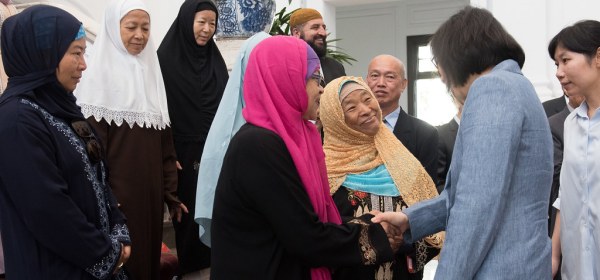
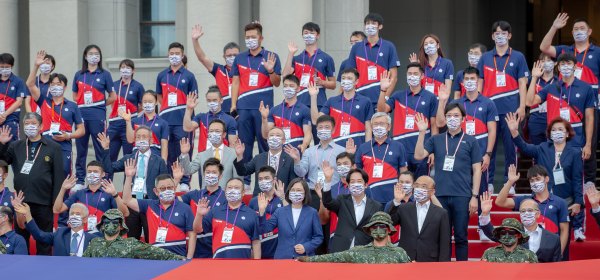
Written by Milo Hsieh. During the Olympics, Taiwan’s “Chinese Taipei” name was on display for two weeks, reminding the world that “Taiwan” remains not to be mentioned at the Olympics. That name, a less than preferred one for the people of Taiwan, was introduced in 1979 due to the Nagoya Resolution. That year, the People’s Republic of China representatives agreed to participate in the 1980 Olympics only if athletes representing Taiwan used the name “Chinese Taipei.” Though the name is today unrepresentative of the country Taiwan has become, it was nevertheless accepted by Taiwan’s Republic of China government at the time.
Freedom Where? The Theme of ‘Escape’ in the Novels of Diasporic Taiwanese Writer Hualing Nieh

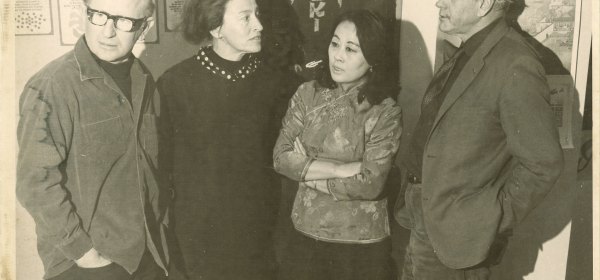
Written by Fang Tang. In the early 1920s, many writers from mainland China migrated to Taiwan because of socio-political upheavals, thus began their unending diasporic ‘escape’ journey. One of these authors, Hualing Nieh, expresses the thoughts of a generation of diasporic writers, illustrating in her work with particular emphasis the theme of ‘escape.’ Born in 1925 in Wuhan, Hubei, China, Nieh experienced the Sino-Japanese War and the Chinese Civil War.

Rethinking Self-Identity and Taiwanese Indigenous Musicians’ Contemporary Presentation on Social Media

Written by GuoTing Lin (Kuing). This work uses digital ethnography to consider how Taiwanese indigenous musicians utilise Facebook as their primary official platform for audience communication. I go about this by analysing cover images, profiles, photos, and feeds on Facebook, which is used to depict the details of the texts, photos, and videos. It thus shows the self-presentation and the communication of Taiwanese indigenous musicians concerning cultural and social issues. Moreover, I argue that indigenous musicians perform their identity through online self-presentation in everyday life.

Taiwanese Identity and Racism in Taiwan

Written by Chieh-chi Hsieh. When the impact of COVID-19 was at its height in Asia this April, the director-general of the World Health Organisation (WHO), Dr Tedros Adhanom Ghebreyesus, publicly accused Taiwan of continuously attacking him with racist slurs for months. Although these accusations have been proven to be false, with the ongoing Black Live Matters campaign taking place, it does give a good opportunity to reflect on whether racism exists in Taiwan. More importantly, how this contributes to the formation of Taiwan’s identity in the contemporary epoch.

Nostalgia and Exile in the Diasporic Literature of Mainland-born Taiwanese

Written by Fang Tang. The word ‘diaspora’ derives from the Greek – dia, ‘through’, and speirein, ‘to scatter’, and was used to refer to the exile of the Jewish people from their homeland, the historic Israel. William Safran extends this concept in modern society to encompass a feeling of alienation, a nostalgic longing for the homeland and the self-consciousness act of defining one’s ethnicity. Over the past several decades, Chinese diasporic literature has generally been concerned with the motifs of nostalgia, homesickness, cultural identity and a sense of belonging.

1 2 3 4