Inherent Powers of Objects: Resonance Across the Online Exhibition 

Written by Zuzule Demalalade & Tien-Li Schneider. When we believe that there is power behind every object, it signifies our departure from mundane perspectives and a return to the cosmic space we share with our ancestors. As Indigenous cultural curators based in Taiwan, our involvement with the Kuroshio Odyssey: Maritime Memories, Culture, and Landscapes (hereafter KO) exhibition project began on an ordinary workday when KO’s curator, Jiun-Yu, returned from the United States to Taiwan and visited our office one afternoon. He mentioned that the Burke Museum had some collections from Taiwan’s Indigenous tribes. Together with Nikal (Margaret), a law doctoral student at the University of Washington with Amis Indigenous roots in Taiwan, they were planning an exhibition on Taiwanese Indigenous artefacts. This sparks the idea of collaboratively establishing an online platform, a digital bridge across the 14-hour time difference between Taiwan’s Indigenous artefacts and the Burke Museum’s exhibits.

Embarking on the Kuroshio Odyssey: A Journey from Taiwan’s East Coast to the U.S. West Coast 

Written by Sra Kacaw (Bo-Jun Chen). While planning the Kuroshio Odyssey exhibition, I had a discussion with Margaret Yun-Pu and Jiun-Yu Liu. Margaret invited Indigenous communities in Taiwan to collaborate, prompting me to search for colleagues who might accompany me. I started by pinpointing the topics we aimed to share through the exhibition. As the Kuroshio Current flows through Eastern Taiwan, what are the ethnic groups living in that area? How can we introduce the marine and material culture to the people in Seattle?  

From A Black Pot to Kuroshio Odyssey 

Written by Jiun-Yu Liu. Kuroshio Odyssey: Maritime Memories, Culture, and Landscapes (follows as KO) is a mini exhibition held at the Burke Museum in Washington State, USA (Oct 14 – Nov 28). KO focuses on two key themes: the diverse Indigenous cultures and the stunning natural landscapes in eastern Taiwan. As a multi-media exhibition, KO showcases material collections from multiple Indigenous communities in eastern Taiwan and includes an immersive element as visitors can access QR codes that provide images and detailed information about the selected pieces. In addition to the onsite exhibition, two Indigenous Taiwanese guest curators working in Taiwan and New Zealand have chosen wonderful artefacts from the Indigenous Peoples Cultural Development Center collection and converted them into an online exhibition to echo and enrich the KO exhibition content.

Wandering Back and Forth in The Sea of Books and Cultural Holdings – In Searching of Indigeneity, Positionality, and Self-identity 

Written by Nikal Kabala’an (Margaret Yun-Pu Tu). This article presents a reflective account from my perspective as one of the curators. It primarily focuses on the “behind the scenes” aspects, adopting an “inside out” approach to share my personal life experiences and the journey of research and curation as a mixed-background Taiwan Indigenous person from the Pangcah/’Amis community and a Ph.D. Candidate studying abroad in the fields of Indigenous Studies, Taiwan Studies, and Law. Supported by the main organisers—the Taiwan Academy in Los Angeles, the Burke Museum, and the Tateuchi East Asia Library (TEAL)—along with the co-organizers and their collaborative and generous sponsorships, I hope to unfold the narratives and open the dialogues driven by a passion for interdisciplinary pursuits. 

Kuroshio Odyssey: Bridging Cultures and Hearts Across Continents 

Written by Ellen Y. Chang. The Taiwan Studies Arts & Culture Program at the University of Washington (UW) proudly presents Kuroshio Odyssey: Maritime Memories, Culture, and Landscapes. This initiative celebrates the rich Indigenous cultures of Taiwan and underscores their profound ties to the Pacific Northwest. It features a multi-sited exhibition at the Burke Museum and the UW Tateuchi East Asia Library, an online display hosted by Taiwan’s Indigenous Peoples Cultural Development Centre, and a series of family-friendly events. With four curators—Zuzule Demalalade, Nikal Kabala’an (Margaret Yun-Pu Tu), Jiun-Yu Liu, and Tien-Li Schneider—representing diverse ethnic backgrounds and possessing unique socio-cultural and institutional expertise, the program embraces a multitude of perspectives. Their partnership extends beyond borders, connecting Taiwan to the Pacific Northwest.

Indigenous Post-Disaster Decision-Making Mechanisms and Negotiation Strategies of Traditional Women Leaders 

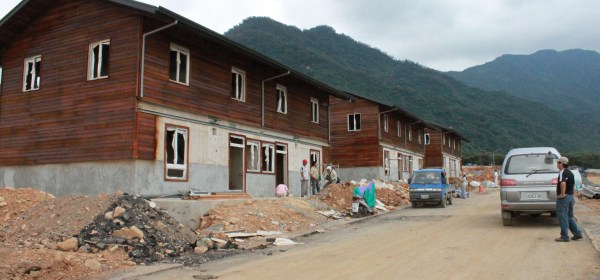
Written by Valagas Gadeljeman; translated by Yu-Chen Chuang. Since Typhoon Morakot, the government and academia have not thoroughly explored why Indigenous knowledge is fading and why Indigenous adaptation is becoming more difficult for Indigenous communities. Why can’t Indigenous people have the same freedom and right to choose where their tribe lives as they once did? What policies and laws have limited their ability to move freely? In short, there’s a lack of Indigenous perspectives in Taiwan’s post-disaster recovery discussions, especially when it comes to the importance of ancestral traditional territories. In this article, I’ll discuss the traditional decision-making processes and negotiation strategies in Indigenous communities, with a focus on Paiwan women leaders’ insights. 

Sustainable Traditional Knowledge: Land Ethics and Disaster Resilience in Cinsbu 

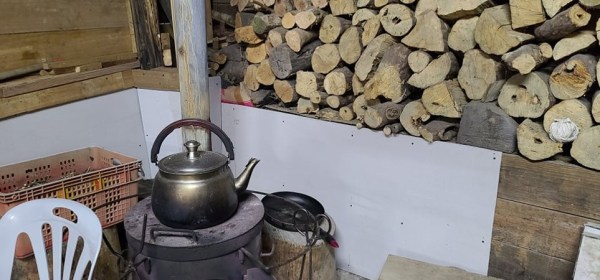
Written by Bayis Atung; translated by Yu-Chen Chuang. In recent years, due to climate change, community members have begun to think more about how to minimise the impact of disasters before they occur. When engaging in farming, we have started to think and take action to incorporate traditional land use knowledge from the past. We continuously experiment and face challenges, ultimately returning to traditional land use and cultivation ethics. We have discovered that this approach can be used to adapt to and address climate change, as it helps Cinsbu adapt to the ever-changing challenges posed by disasters. In this article, I share our land ethics and explain how sustainable land use relates to disaster prevention. Even though the intensity of climate change has increased, the Tayal people have not given up on using the land. Instead, there have been even more changes in how we use the land.

Indigenous Disaster Justice: Reflecting on Typhoon Morakot Recovery 

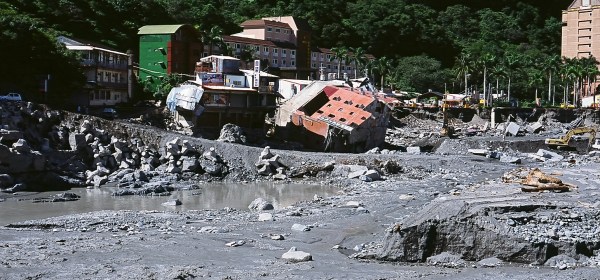
Written by Yi-Te Yu. In the past two decades, Taiwan has endured two major disasters: the 921 Earthquake in 1999 and Typhoon Morakot in 2009. Both events resulted in immense loss of life and property. The Indigenous regions of Taiwan, in particular, have borne the enduring impact that is yet to see a complete recovery. Taking Typhoon Morakot in 2009 as an example, during its onslaught in Taiwan, it unleashed a record-breaking deluge of rain. This led to a large-scale landslide in Mt. Xiandu(獻肚) in Jiaxian District, Kaohsiung, burying the village Xiaolin beneath a deluge of soil and debris. Moreover, this catastrophe also inflicted the mountainous Indigenous communities in the central and southern regions of Taiwan, including Chiayi, Kaohsiung, Pingtung, and Taitung counties, with the onslaught of floods, landslides, and debris flows. In total, it resulted in 678 fatalities and 33 injuries. 

Tracing Disaster Injustice: Indigenous Peoples’ Vulnerability and Resilience in Taiwan 

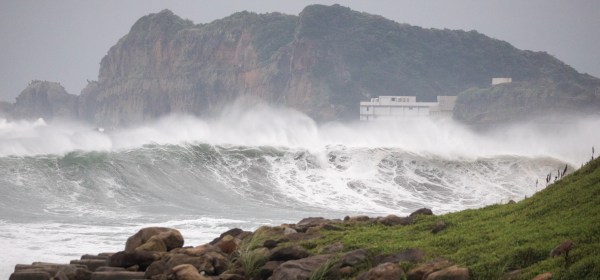
Written by Yu-Chen Chuang. In August 2023, Typhoon Khanun swept across Taiwan, particularly impacting the mountainous regions of central Taiwan. The resultant severe floods and landslides caused significant damage to infrastructure and disrupted the livelihood of local residents. One of the most severely affected areas was Renai Township in Nantou County, which is home to several Indigenous communities. The damages caused by Typhoon Khanun demanded significant labour and financial resources from Indigenous communities to manage the lengthy post-disaster reconstruction. This special issue, titled ‘Indigenous Peoples and Disaster Justice,’ will feature contributions from scholars and practitioners deeply involved in Indigenous-centered disaster management in Taiwan. We hope to foster discussions about the past, present, and future of disaster management, with a particular focus on addressing colonial injustice. 

Reflections on the Identity at Indigenous Popular Music Training Camp in Taiwan 

Written by Kuing, Guo-Ting Lin. In recent years, there have been various Indigenous popular music creation and cultivation programmes in Taiwan. For example, the music training camp “Psiwali School” at the Pasiwali Music Festival in Taiwan with the purpose of discovering Indigenous musicians. Another example is the “MINETJUS Electronic Music Production” Programme, which is held by Dark Paradise Records (派樂黛唱片), an independent record label based in Taipei. This initiative blends electronic music and Indigenous culture to help younger musicians turn cultural marginality into unique cultural assets. Most training camps in Taiwan still rely on government support, aiming to strengthen the unique cultural identity of contemporary Indigenous youth and regard this as a catalyst for promoting ethnic diversity. This article examines the meaning of Taiwan’s Indigenous popular music creation and cultivation programmes.

The Director-Sensei of Shadow Puppetry: An Interview with an Artist-Teacher Yun-Hsuan Kao

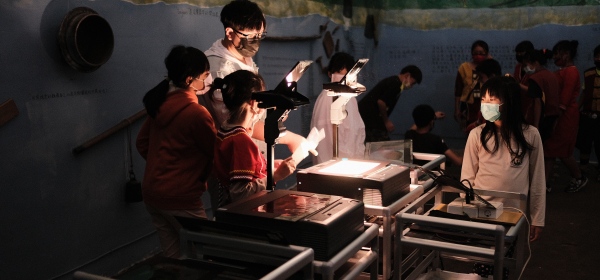
Written by Yi-Cheng Sun; translated by Yi-Yu Lai. The night following the conclusion of the 2022 National Creative Drama Competition, residents of the Ciwidiyan community (Shuilian village) learned that their representative troupe had won the Modern Shadow Puppetry Excellence Award of the Elementary School Division. The community members prepared drinks and delicacies to celebrate, eagerly awaiting the return of the students and teachers from Shuilian Elementary School. The fried chicken cutlets cooked long ago turned cold, and the elders holding congratulatory red envelopes were also a bit weary. Only when the firecrackers along the way burst into loud noises did the delight in the air, with flying paper scraps both inside and outside the houses, seem to repeatedly congratulate: “Finally, it’s here!”

Is Going Green Hurting Indigenous Communities? Reflection from Participating in the United Nations Permanent Forum on Indigenous Issues 

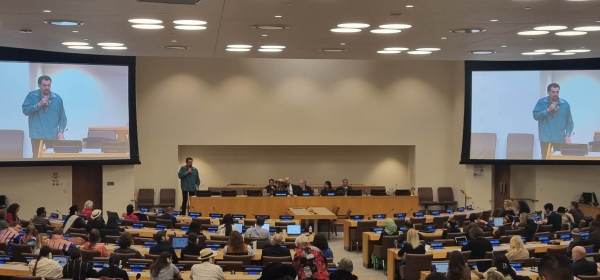
Written by Wasiq Silan. Is going green hurting Indigenous communities? Not necessarily. However, exclusionary conservation measures create a lose-lose outcome for non-Indigenous and Indigenous communities. Indeed, Indigenous peoples’ full and substantial participation is a prerequisite to achieving a sustainable future and halting the rapid loss of global biodiversity. This is true for the Indigenous communities in Taiwan, such as in the case of the solar panel controversy on the Katratripulr Pinuyumayan (Beinan in Mandarin Chinese) people’s traditional territory. Drawing from the experience of the Sámi, my recent participation in the United Nations Permanent Forum on Indigenous Issues (UNPFII) may shed light on this issue.

1 2 3 4 6