How Does Recipients’ Corruption Taint the International Image of Taiwan’s Foreign Aid?

Written by Ernie Ko. Taiwan’s foreign aid, officially known as official development assistance (ODA), has rarely been mentioned as a good practice in the circle of international press and international aid agencies. On the contrary, corruption, inefficiency, non-transparency, and unaccountability are often associated with the recipient countries of Taiwan’s aid. So, the question is, does this negative stereotype unavoidable?

Recognising the ‘Taiwan Issue’: Analysing the Impact of the UK Government’s Integrated Review Refresh

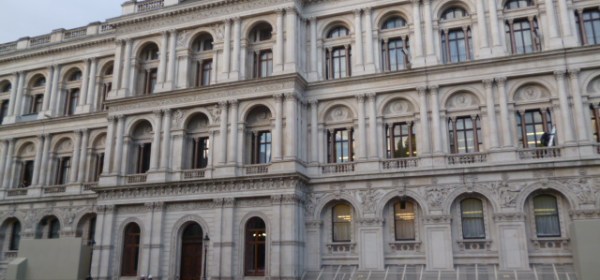
Written by Max Dixon. The British Government’s ‘refreshed’ foreign policy document, released in March 2023, emphasised the increasing parallels drawn between the plight of Ukraine amidst Russian aggression and the threat posed to Taiwan by increasing Chinese assertiveness. The Integrated Review Refresh 2023, the first clear enunciation of British Prime Minister Rishi Sunak’s foreign policy approach, sought to revise the 2021 Integrated Review. The Refresh formally recognises tensions in the Taiwan Strait for the first time in British foreign policy yet addresses Taiwan with a degree of tentativeness that will necessitate greater clarity in the future.

What A 2nd Trump Term Would Mean to Taiwan (and the US)

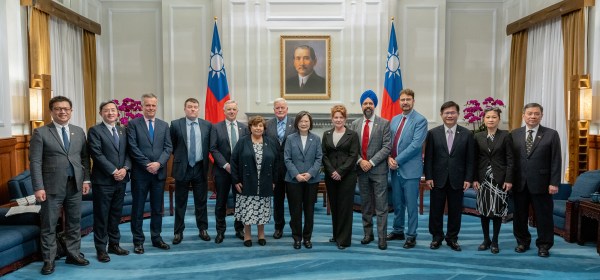
Written by Daniel Jia. Taiwan does not need and must avoid having a Taiwanese version of Donald Trump. However, Taiwan must be ready for a second Trump term unfavourable to Taiwan’s security. The new Trump administration would resume the economic-centred relationship with China as it did in the first term, likely at the cost of Taiwan’s international status and sovereignty. Taiwan cannot change Trump. But Taiwan can and must show the free world its resolve to defend itself like what Ukraine has been doing. With this unwavering resolution, Taiwan would have the chance to rally international support in the event of a China invasion. Then, and only with this determination, could Taiwan bring the US public and Congress to its side and mandate the lukewarm Trump to act as Biden in the current Ukraine-Russia war.

Opportunities abound to ram up UK-Taiwan relations

Written by Huynh Tam Sang and Phan Van Tim. By and large, there are ample opportunities for the UK and Taiwan to deepen their relationship, given Taiwan’s geopolitical importance and rising prominence as a robust democracy and resilient economy. Moreover, should London genuinely devote its time and energy to pushing its “Indo-Pacific Tilt”, engaging with Taiwan would benefit London as it helps the great power establish a firm footprint in the area while demonstrating the country as a responsible stakeholder in the region.

Can g0v International Affairs Really be Open?

Written by chihao. Contributors of g0v started various discussions on international community affairs in late 2018, after the g0v Summit that year and other governance-related conversations some months before that. Like many things in g0v, these efforts to engage with international organisations and people were largely self-initiated. No permission was required since none could be given. However, unlike many things in g0v, there are little to no public records of these activities, such as correspondence, meetings notes, or slide decks. Open collaboration becomes very difficult, if not impossible, without shared documentation of these activities. Also, unlike many things in g0v, some were paid for their role in these international activities. Discrepancies between a paid full-time job and part-time volunteering work further exacerbate the difficulties.

Biden Speaks Again: The End of Strategic Ambiguity?

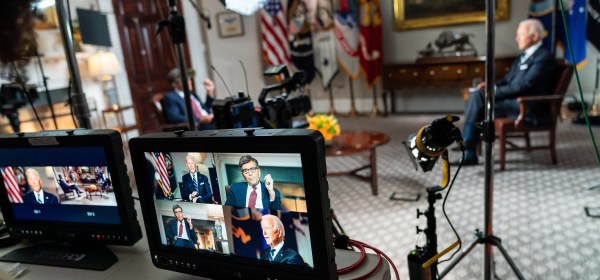
Written by Gerrit van der Wees. The press and think tanks, on their part, need to reassess their understanding of “strategic ambiguity”: they need to come to a clearer understanding of its origins – as reiterated in the quotes from former NSC Director Robert Suettinger’s book – and arrive at the unavoidable conclusion that it does not equate policy. Rather, it is, at best, a mode of operation determining how to calibrate a response. As described above, the policy itself on how to (help) defend Taiwan is laid down clearly in the Taiwan Relations Act.

The Abe Factor and the ‘Special’ bond between Taiwan and Japan

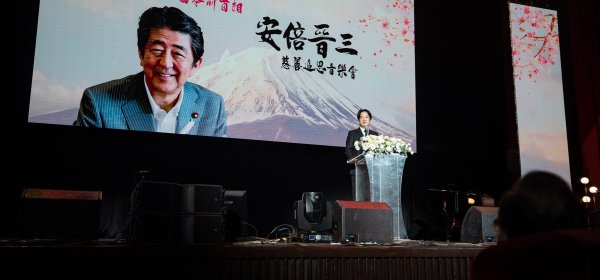
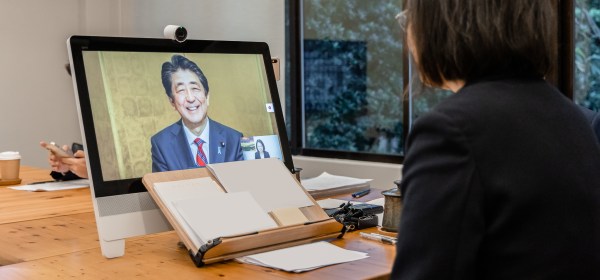
Written by Chieh-chi Hsieh. Abe has widely been regarded as ‘the Prime Minister who is most supportive of Taiwan’. Not only had he been an advocate for legitimatising Taiwan’s status on the international ground on many occasions, but he also made the renowned statement during a video conference with the Taiwan Institute for National Policy Studies in 2021 that ‘if something happens to Taiwan, it means something happens to Japan’. Hence, although the news of Abe’s assassination sent shockwaves worldwide, the political implications of his untimely death on the future trajectory of Taiwan-Japan warrant further investigation.

Post War Flux: Analysing the Fluctuation of Relationships Between Taiwan-Japan in the Post-war Period

Written by Wei-Hsiu Huang. In addition, more complicated multilateral relations are involved in this issue. They are the relations between Japan and the People’s Republic of China, cross-Strait relations, and the Japan-US Alliance. As for the Japan-US Alliance, Japan is obligated to abide by the Japan-US Security Treaty, and the US insisted on a peaceful resolution of cross-Strait relations. To make it clear in the discussion, I will divide the developing process into three periods: the first period from the post-war period to the normalisation of diplomatic relations between Japan and China, the second from the normalisation of diplomatic relations between Japan and China to the democratisation of Taiwan, and the third one from the 1990s to the present. This essay will proceed with an overview and analysis of the complex relationship between Japan and Taiwan in the post-war period.

Shinzō Abe and Taiwan-Japan Relations

Written by Ko-Hang Liao. On 8 July 2022, former Japanese Prime Minister (PM) Shinzō Abe (安倍晋三) was killed by an assassin’s homemade gun during his midspeech of campaign held in Nara to support a Liberal Democratic Party’s (LDP) candidate for upper house election two days later. As a result, this longest-serving Japanese PM (in office (2012-2020) after a brief first tenure (2006-2007), surpassed the record held by his great uncle Eisaku Satō (佐藤栄作) from 1964 to 1972) is recognised by the public as the most Taiwan-friendly premier, a transformational leader, and the founder of Indo-Pacific strategy. By introducing Abe’s distinct roles, this article looks at Taiwan-Japan relations during and after Abe’s administration, the impact he brought to Japan’s postwar pacifism by rebuilding Japan’s role in global power-politics, his legacy in the post-Abe era, and future relations between two countries.

Taiwan, Japan, and a Turning Point of Cold War Legacies in East Asia

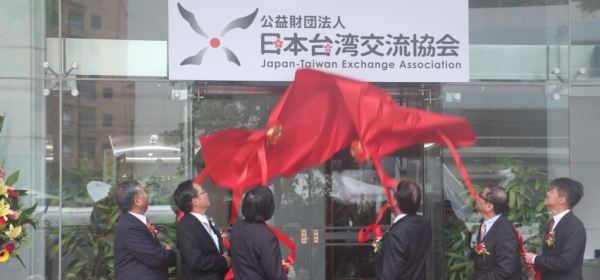
Written by Kuan-Jen Chen. On 8 July 2022, two gunshots not only ended Japan’s former prime minister Abe Shinzo’s life but also convulsed international politics in East Asia. The debates on Kishida Fumio’s diplomatic policy and the power reshuffling within the Liberal Democratic Party (LDP) have had the share of the international spotlight for their inextricable connections with Taiwan and the East Asian region. The amicable relationship between Japan and Taiwan is well-renowned. If you stroll in any city in Japan, it is not hard to find a slogan banner of “Thank you, Taiwan!” to express Japan’s appreciation for Taiwan’s help after the 2011 Tōhoku earthquake and tsunami. Ten years later, when Taiwan underwent the grave hours of the pandemic, Japan, pushed by Abe Shinzo, generously provided vaccines for Taiwan, saving numerous lives. These instances mark that these two countries seemingly have an unbreakable official relationship. However, the fact is that historically and politically speaking, Japan has been maintaining a distant but close relationship with Taiwan.

Truss or Sunak? The next British prime minister and policy toward Taiwan

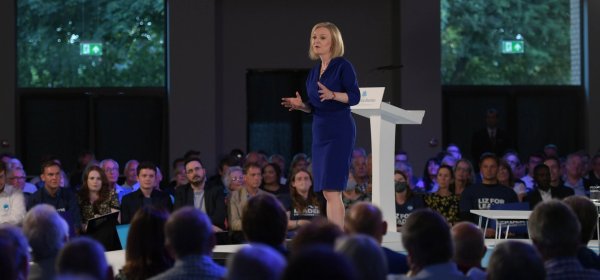
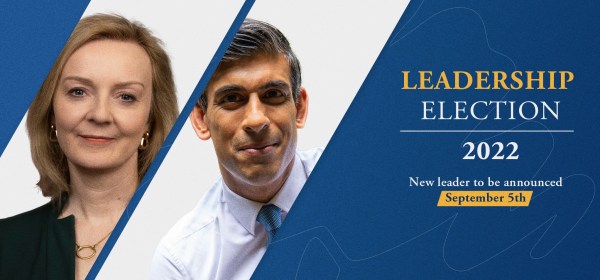
Written by Michael Reilly. It is almost a truism to say that the UK’s policy on Taiwan is dictated by, and subordinate to, its policy towards China. All too frequently, ‘support’ for Taiwan is little more than a reaction to Chinese behaviour or actions, and it is rarely based on the intrinsic merits of engaging with Taiwan for the benefits that doing so will bring. So, Taiwan ought to feel pleased by recent opinion polls, which confidently predict Liz Truss becoming the next British prime minister on 5th September. Among her backers within the Conservative party are some prominent ‘China hawks,’ notably former party leader Sir Iain Duncan-Smith and chair of the House of Commons Select Committee on Foreign Affairs, Tom Tugendhat.

For The Good of Taiwan. Truss, Sunak, or Complete Indifference?

Written by Ian Inkster. The most likely manner in which the choice of Tory candidates might be of interest in Taiwan would be through foreign or economic policy. Unfortunately, though these two areas of government are meant to complement each other in normal times, our days are increasingly abnormal, thus the array of rhetoric, the focus on personalities, the exaggeration of anomalies, and the fixation on trust, veracity, and the lack thereof. And that is just in one party. Look around to your left and see the mirror image. Look across the Channel and see confusion and a reluctance to debate all major socio-economic problems. Look across the greater sea to find headless leadership. Not a charming prospect.

1 2 3 4 5 6