A Routine Election with Mixed Results 

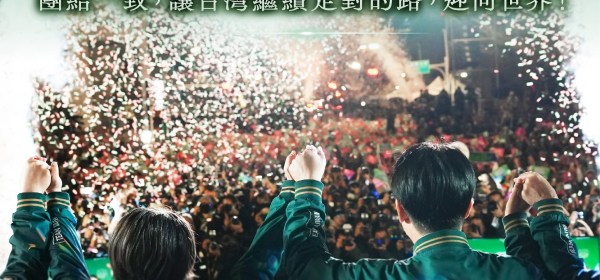
Written by Jonathan Sullivan. Taiwan has concluded its eighth direct election of the Republic of China (ROC) President. It was not a pivotal, watershed or critical election, and it was not a contest between war and peace or the embodiment of democracy vs authoritarianism; it was an entirely normal election. The main issues (China, the economy), turnout (71%), the communications environment (parochial and partisan), the candidates’ micro-scandals (this time round requiring knowledge of esoteric building code and land-use regulation), the boisterous rallies and hustings etc were all familiar and part of the routine functioning of Taiwanese democracy. The Central Election Commission once again organised a flawless election. The nuts and bolts of voting stations in temples and school gyms, accurate and fast analogue counts, volunteers getting people lined up and in and out smoothly, etc, are the little things that add up to a big sum. 

Three Happy Losers and One Winner: Comments on the 2024 Taiwan National Elections

Written by Chia-hung Tsai. Taiwan’s 2024 presidential and legislative elections, held on 13 January, concluded peacefully, revealing key insights into the electorate’s priorities. The results highlight that voters are influenced by both their sense of Taiwanese/Chinese identity, especially in the context of cross-strait relations, and their pragmatic concerns for personal, tangible interests, for instance, low income, high inflation, high unemployment rate and unaffordable housing prices for average middle class in Taiwan. These transcend ideological or identity boundaries. The dual factors set the stage for the critical governance issues and candidate personalities that defined the election.

Election win for the DPP, but a split legislature 

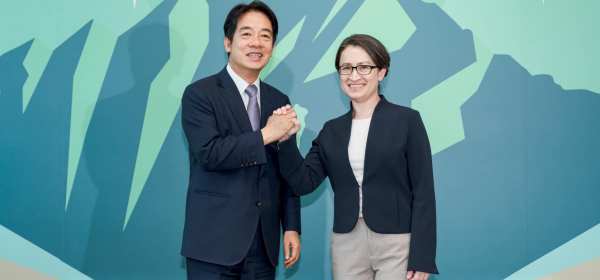
Written by Gerrit van der Wees. After a hard-fought campaign, the DPP candidate “William” Lai Ching-te and his running mate Hsiao Bikhim emerged victorious in Taiwan’s presidential election race with 40.1 % of the vote. They were elected Taiwan’s President and Vice-President respectively. The total turnout was 71.8% of the eligible voters, a bit lower than the 74.9% in the 2020 elections. The main opposition candidate in the three-way race, Messrs. Hou Yu-ih of the Chinese Nationalist Kuomintang Party, and his running mate, pro-China media personality Jaw Shaw-kang, received 33.5% of the vote, while Mr Ko Wen-je of the Taiwan People’s Party (TPP) and his running mate Cynthia Wang, came in a respectable third with 26.5% of the vote.

As Two Go Blue, will Green be the Tertius Gaudens of Taiwan’s 2024 Elections?

Written by Jasper Roctus. What then transpired in November went completely beyond general expectations. While a desponded Gou could have been expected to go independent or join forces with Ko Wen-je, the former mayor of Taipei (2014–2022) and founder of the third force, “white” (白) Taiwan People’s Party, an outright electoral pact between Hou and Ko seemed out of the question. The idea that Ko, who in the past has been perceived as greener than even the DPP as he, for instance, mingled with student protestors during the 2014 Sunflower Movement and later stumped for deep Green rockstar Freddy Lim, would join forces with the KMT representative of the establishment he claimed to loathe, seemed a contradiction in terms.

Why are the 2024 elections seemingly less competitive than the 2020 elections?

Written by Brian Hioe. Compared to the 2020 elections, it has often been remarked that the 2024 elections have been decidedly less competitive. Certainly, this does seem to be true, in that for most of the election cycle, DPP presidential candidate Lai Ching-te has been ahead. Nevertheless, what are the structural factors at work here, which differentiate the 2024 elections from the 2020 elections? We might take a look.

Taiwan’s Presidential Elections in Full Swing

Written by Gerrit van der Wees. Mid-November has thus fundamentally changed the picture of the campaign. The addition of Hsiao Bi-khim as VP candidate has reinvigorated Lai Ching-te’s campaign, while on the Blue-White side, the move to attempt a merger of the tickets had backfired and set bad blood. With Hou Yu-ih and Ko Wen-je running separate campaigns, the differences are now becoming increasingly clear.

The difficulty of being Hou

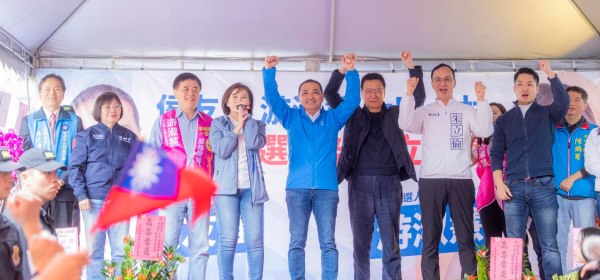
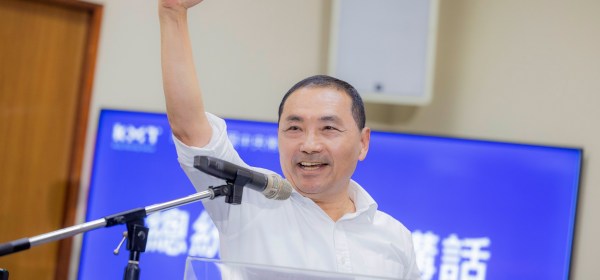
Written by Jonathan Sullivan. The KMT’s stellar showing in local elections last November had many in the party dreaming of a return to power in the January 2024 national elections. As has happened in every previous election following a two-term president in Taiwan, a change of party in power (政黨輪替) looked a likely outcome as the DPP haemorrhaged city mayorships and town council seats. In hypothetical polling match-ups at the time, re-elected Xinbei Mayor Hou You-yi handily beat VP Lai Ching-te. Those two and former Taipei Mayor Ko Wen-je have now been formally nominated by their parties to compete for the ROC presidency.

The Fluidity of the Presidential Field

Written by Jonathan Sullivan. Although the main parties have nominated their Presidential candidates, the composition of the field remains fluid and unsettled. On the DPP side, current VP Lai Ching-te long ago locked down the nomination unopposed, and as a continuity candidate enjoying the benefits of incumbency, his campaigning thus far has been relatively smooth. However, Lai’s responsibility for answering any gripes with government policy over the last eight years and the stubborn ceiling to his poll numbers over the last few months suggest substantial challenges to come. But for now, the main uncertainties and drama are on the opposing side of the fence.

Taiwan’s 2024 presidential election candidates: What will Hou or Lai’s election mean for tensions across the Taiwan Strait?

Written by Corey Lee Bell. Taiwan’s main opposition party, the Beijing-friendly Kuomintang (KMT), recently selected its candidate for the 2024 presidential election. With the main competitors for Taiwan’s top job essentially locked in, each has been interrogated on their policies on cross-strait relations in recent weeks. With tensions high across the Taiwan Strait, and between Beijing and Washington, what each candidate stands for could have profound ramifications for, and perhaps even beyond, the Indo-Pacific region.

KMT’s Lost Opportunity to Reinvent Itself Again for Survival

Written by Chieh-Ting Yeh. If—and it’s a big if—the KMT could reinvent itself again, it could find a way to shed the old rifts between the ideological and the opportunistic camps. It could present a platform that is clear in its stance on major social issues. It could take the lead in reviewing its own past as a perpetrator of human rights abuses, even if just to get the issue off its back. It could convince Taiwan’s voters that its China policy is no longer motivated by the older generation’s national identity crisis but based on a pragmatic approach to protecting Taiwan’s sovereignty and security. It could be hopeful. But looking at how the KMT finally settles on its presidential candidate, the KMT still has a very long way to go—and not very much time.

Will the KMT’s Generational Divide Harm its 2024 Election Prospects?

Written by Andrew LaRocca. Caesar, The Planet of the Apes protagonist who incites a rebellion to usher in a new civilization, was recently drawn into the KMT’s internal debates when Taipei City councillor Hsu Chiao-hsin changed her Facebook profile picture to Caesar amidst her escalating battle with senior legislator Fei Hongtai. In the comments, netizens joked: “How many terms can upper leaders serve? How old are those seniors?” Hsu’s Caesar reference reflected a sentiment expressed by many Taiwanese youths: the KMT and its leaders are out of touch with Taiwan’s younger generations.

The KMT Selects Its Presidential Candidate: Can Uniting All Non-Green Friends Make Taiwan Go Blue in 2024?

Written by Jasper Roctus. The results of the KMT’s ambiguous drafting (徵召) procedure of its presidential nominee, which commenced after its leadership took control of the process, should be announced by May 20. The KMT’s selection committee nevertheless already appears reluctant to accept Terry Gou’s eccentric rhetoric and, most prominently, fears electoral outfall over his close China ties. Gou himself also frequently alludes to his extensive bonds with the Chinese mainland by boasting about the leverage he holds in solving the hostile status quo across the Taiwan Strait. Considering that the KMT is still reeling from the landslide defeat of Han Kuo-yu in 2020, its last maverick businessman presidential nominee, the selection of the softer-spoken Mayor Hou as its candidate for 2024 appears to be a foregone conclusion. By early April, the KMT had allegedly already reached an internal consensus on its candidate – a clear reference to being ready to select Hou.

1 2 3 4 12