Rosettating Between Minoritised Languages: How Taiwanese Readers Respond to Intermediated Translation

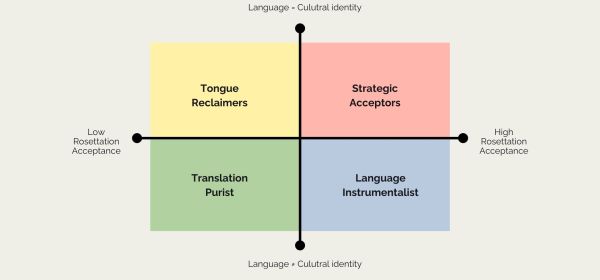
Written by Naomi Sím. The article introduces “rosettation,” a method of translating between minoritised languages like Tâigí and Gaelic via dominant ones. The Tâigael project explores linguistic solidarity, reader responses, and political tensions. Rosettation emerges as both a pragmatic strategy and a literary experiment, which enables new forms of intercultural dialogue despite inherent compromises.
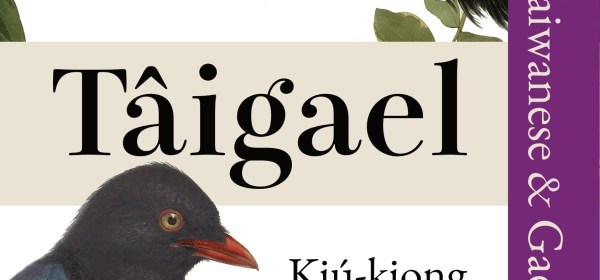
Tâigael: Orchids, Maternal Care, and a New Rosetta Stone

Written by Hannah Stevens and Will Buckingham. The article introduces Tâigael: Stories from Taiwanese & Gaelic, a translation project linking two minoritised languages through English and Mandarin as bridges. Writers reflect on linguistic solidarity, maternal legacies in “mother tongues,” risks of reinforcing hierarchies, and ecological fidelity in translation. Together, their essays highlight translation’s generative, resistant, and collaborative potential.

My PhD Mentor, Tu Laoshi

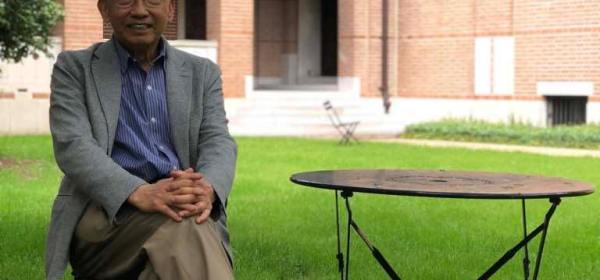
Written by Linshan Jiang. This memorial essay reflects on the author’s time with Professor Tu Kuo-ch’ing, a deeply influential poet, scholar and the founder of the Center for Taiwan Studies at the University of California, Santa Barbara, who passed away earlier this year. His passing left a profound and unexpected void. This essay shares how Professor Tu introduced the author to Taiwanese literature and supported her academic journey.

Teasing Romantic and Literary Appetite: Reading Taiwan Travelogue

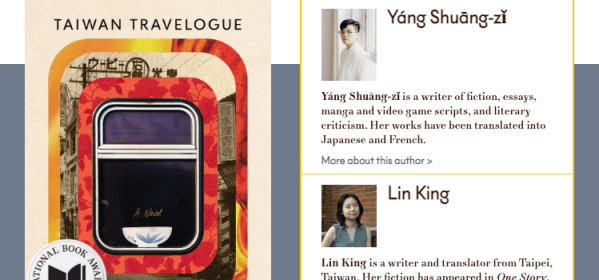
Written by Mu-Hsi Kao Lee. The article explores the experience of reading Taiwan Travelogue as a translated historical yuri novel. Kao Lee reflects on how the narrative, despite its clear genre and straightforward plot, evokes a sense of both satisfaction and longing in the reader. The article highlights the story’s ability to interweave historical and cultural details with the protagonists’ emotional connection, examining themes of desire, identity, and the complexities of relationships within a specific historical context.

Savouring Taiwan’s History and Experience: Reflections on the Taiwan Travelogue and Its Book Talk

Written by Tun-Jung Kuo and Li-Ting Chang. This article reflects on a book talk discussing Taiwan Travelogue, highlighting how the novel uses food to narrate Taiwan’s colonial history, cultural hybridity and female perspectives. Through detailed depictions of cuisine and memory, it challenges historical narratives and deepens understanding of Taiwan’s evolving identity amid Japanese colonial influence and localisation.

Food is politics, and so is travel. 

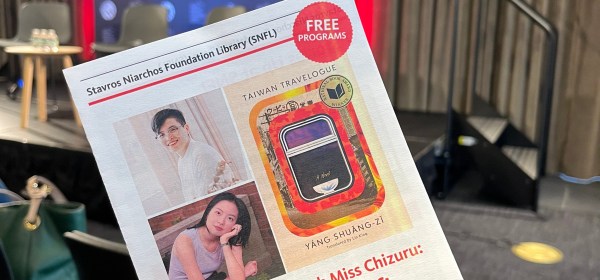
Written by Chee-Hann Wu. This article discusses Taiwan Travelogue and its US book tour earlier this year. It highlights the controversial marketing strategy, the extensive use of footnotes to enrich the historical context, and the categorisation of the novel as queer literature due to the evident, though subtle, romantic undertones between the two female protagonists.

“Mapping Taiwan Teaching” at Trier University: Teaching Taiwan in Script, Speech, and Performance

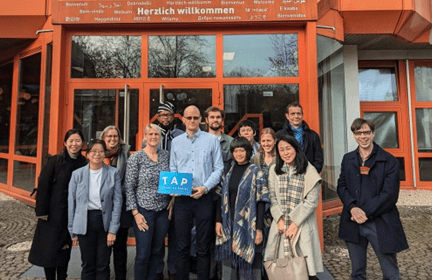
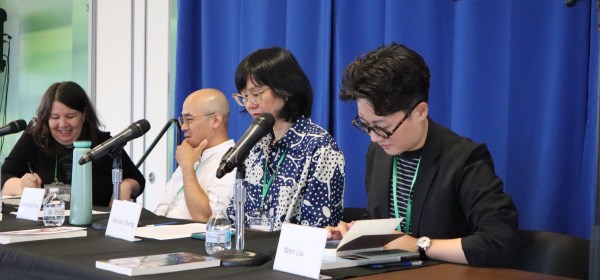
Written by Thomas Fliß. This article introduces the workshop “Mapping Taiwan Teaching – Teaching Taiwan in Script, Speech and Performance” at Trier University, which focused on teaching Taiwan through language, culture, and performance. Scholars and educators explored Taiwan’s geopolitical significance, linguistic diversity, and cultural identity. The event featured interdisciplinary panels on Taiwan’s literature, theatre, and education, highlighting the need for expanded Taiwanese language courses and intercultural learning methods.

On the Road:  A Taiwan Literary Scholar’s Routes’ of Worlding Taiwan Literature 

Written by Wei-ting Liou. This article focuses on the author’s experiences in “worlding” Taiwan literature through their academic work. This includes engaging with translation, examining Taiwanese American literature, and teaching English-taught courses on Taiwan literature and culture. The author believes these approaches can help reshape the conventional understanding of Taiwan literary studies.

Lolita Reimagined: Fang Si-Chi’s Voice in the Story of Sexual Violence

Written by Yixin Xu. This article argues that the novel Fang Si-Chi’s First Love Paradise can be considered a significant contribution to the #MeToo movement and a literary counterpoint to Vladimir Nabokov’s Lolita. It highlights the novel’s unique perspective by focusing on the victim’s experience of sexual abuse and the complexities of her emotional response. The author emphasises how the novel challenges the romanticized portrayal of the predator in Lolita and exposes the devastating reality of sexual violence.

Asian Migrants and Taiwanese Americans: A Dialogue on Identity, Activism, and History

Written by Panchen Lo, Pei-Chen Cheng, and Ssu-chieh Jessica Fan (University of Texas, Austin). This article details a panel discussion at the NATSA conference featuring three scholars who discussed the experiences and identities of Taiwanese Americans. The panel focused on the intersection of Cold War geopolitics, class, and the complicated process of identity formation. It critically examined how historical context, class, and racial narratives have shaped the lives and experiences of Taiwanese Americans.

1 2 3 4