Gender, Remittances, and Taiwan’s Migrant Worker Financial Ecosystem: Beyond the Numbers

Written by Renee Te-Jung Chen. This article looks beyond the numbers of Taiwan’s Small-Amount Remittance Services for Foreign Migrant Workers from a gender perspective. It argues that the milestone of becoming the primary remittance channel obscures the gendered patterns in adopting the new platform. It suggests that the collection of sex-aggregated data is necessary.

Toward Antiracist Taiwan: A Short Fieldnote in Studying Racism through Punk and Metal Musical Performances by Indonesian Migrant Workers 

Written by Mark Hsiang-Yu Feng. Drawing on field notes on punk and metal musical performances by Indonesian migrant workers in Taiwan, this article reveals racism and stereotypes in the music scene. The author calls for a critical examination of multiculturalism to address the structural inequality and racial hierarchy in Taiwanese society.

Envisioning Migrant Worker Policy: Toward Dignity and Well-being 

Written by Hang-Tang Chen; translated by Yu-Chen Chuang. Taiwan needs to refine its migrant worker policies to focus not only on labour contributions but also on the well-being and dignity of the workers. Personal stories of migrant workers in this article reveal the necessity for comprehensive policies that address the physical and mental health needs, acknowledging the humanity behind the workforce.

Taiwan, Be on the Right Side of History on Labour Migration

Written by Bonny Ling. A few months before the presidential elections, I gave a talk in Taipei on the responsible recruitment of migrant workers, where they do not bear the cost of their job recruitment and begin their employment saddled by debt. Afterwards, a participant came up to ask me which presidential candidate I thought would stand the best chance to reform Taiwan’s labour recruitment system towards the Employers Pays Principle, where the costs of recruitment are borne by the employers. I was asked this from time to time in the runup to the January 2024 elections, so this alone did not surprise me. What did was his next statement: “And I will vote for them.” I studied his face to see if he was serious. Not sure. Had I just met my first single-issue voter on migration in Taiwan? Are there more?

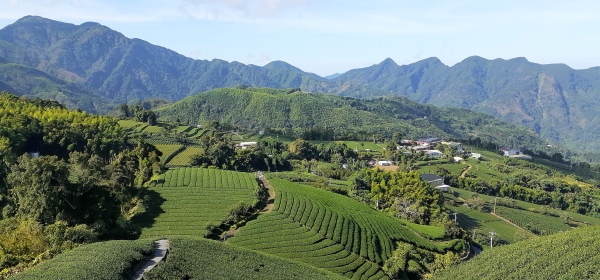
‘They’d rather sit in an air-coned office than work under the scorching sun’: dirty, dangerous and difficult farm labour in rural Taiwan

Written by Isabelle Cockel. Labour migration from Southeast Asia to Taiwan has been indispensable to Taiwan’s economic development in the last three decades. Farm work is one of the most recently opened sectors for migrant labour, and migrant farm workers, regular and irregular, have become a new and crucial source of labour in rural Taiwan. How was the recruitment of farm workers justified by the Council of Agriculture (CoA, currently the Ministry of Culture), the lobbyist for opening the farm labour market, and the Ministry of Labour (MoL), the overseer of migrant labour policy, sheds light on three critical and inter-related issues.

Small Step from You, A Great Leap for Migrant Workers: Documentary, ‘Civil Society’ and ‘And Miles to Go Before I Sleep’ (2022) 

Written by Hsin-Chin Evelyn Hsieh. The award for the best documentary feature at the 59th Golden Horse Awards held in November 2022 in Taipei, Taiwan, went to And Miles to Go Before I Sleep (2022), directed by Tsung-Lung Tsai. At the ceremony, film producer Kim Hong Nguyen, dressed in the Vietnamese traditional garment áo dài, read out a message from Quoc Phi Nguyen’s family expressing their grief and hopes. It was the first time a documentary on migrant workers was presented with the Golden Horse Award, thereby creating a platform for voiceless migrants and drawing attention to the related issues in mainstream society. 

Cross-border Movement of Labour between Taiwan and the Philippines: A Taiwanese NGO Worker’s Perspective

Written by Yi-Yu Lai. Lennon Wong is the director of a shelter for migrant workers in Taiwan. Before joining the shelter in the early 2010s, he was already a labour activist and worked in the Chinese Federation of Labour and the First Commercial Bank Union. Although his prior work was not directly relevant to migrant workers in Taiwan, his engagement with the labour movement may have started with the issue of migrant workers from Southeast Asia. As a result, we may thus understand the cross-border movement of migrant workers between Taiwan and the Philippines through some of his observations.

The Interaction between Taiwan’s Indigenous and Migrant Workers: Lessons from Construction Industry

Written by Hsuan Lo. Translated by Yi-Yu Lai. In Taiwan, a narrative concerning the opposition of migrant and Indigenous workers appears to be a continuing source of contention. In 1997, director Ming-hui Yang released a documentary, “Please Give Us a Job.” One of the film’s impressive scenes depicts an off-duty Indigenous worker sobbing uncontrollably in front of the camera while lamenting the employment difficulties caused by the introduction of migrant workers. In 2016, Chen Ying, a DPP legislator from the Puyuma Indigenous community, brought this issue back into the public eye by highlighting the impact of “illegal migrant workers” on the employment of Indigenous workers. Unfortunately, the notion that “migrant workers take jobs from Indigenous workers” has become deeply ingrained.

The Economic Impact of COVID-19 Outbreaks in Migrant Workers’ (MW) Dormitories in Singapore and Taiwan 

Written by Jackson Teh. In crux, we should note the link between the general public’s health, both physically and mentally, with that of the migrant workers: only when local community cases are stable, and their sentiments positive, are migrant workerss allowed to move around and go to work; only when migrant workerss move around and go to work, can they feel better and hopeful about themselves and the future. Therefore, the mental well-being of both groups in a country must not be seen as isolated variables. 

Falling Through the Cracks of Care: Southeast Asian Migrant Workers Navigating Through Healthcare in Taiwan

Written by Shao-Yun Chang (張韶韻) and Hang-Tang Chen (陳翰堂). Since their labour was first viewed as a supplement to the domestic labour market, Southeast Asian migrants have become indispensable to the manufacturing, agricultural, fishing, and care industries over the last three decades. While the initial foreign population was primarily Thai and Filipino workers, Vietnamese and Indonesian workers are now taking over factory jobs, farm work, and caring for seniors and the disabled. 

1 2 3