Embarking on the Kuroshio Odyssey: A Journey from Taiwan’s East Coast to the U.S. West Coast 

Written by Sra Kacaw (Bo-Jun Chen). While planning the Kuroshio Odyssey exhibition, I had a discussion with Margaret Yun-Pu and Jiun-Yu Liu. Margaret invited Indigenous communities in Taiwan to collaborate, prompting me to search for colleagues who might accompany me. I started by pinpointing the topics we aimed to share through the exhibition. As the Kuroshio Current flows through Eastern Taiwan, what are the ethnic groups living in that area? How can we introduce the marine and material culture to the people in Seattle?  

Staging and Restaging Taiwan at the Centre Pompidou: Taiwanese Art on Display 2020 to Present

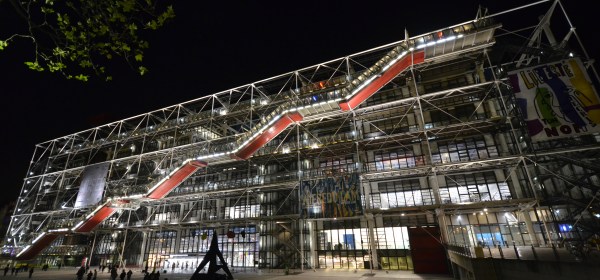
Written by Gabriela-Alexandra Banica. In the third decade of the 21st century, Taiwanese artists and exhibitions have appeared at the Centre Pompidou in Paris and Metz, and this could serve as a compelling case study of Taiwan’s pursuit of international recognition through arts. Through this exploration, this article aims to address the gaps in the current scholarship related to curatorial practices concerning art from contested territories while enriching the field of France-Taiwan curatorial practices. By analysing the current subject of interest, it is hoped that art from more disputed territories can be made accessible to audiences in France, Europe, and around the globe.

Storytelling Behind the Overseas Taiwan Indigenous Collections: Material Cultures as a Means to Connect with International Indigenous Communities

Written by Nikal Kabalan’an (Margaret Yun-Pu Tu). Taiwan’s Indigenous artefacts were taken, bought, brought, or even got stolen and ended up miles away from the Indigenous communities where they were made by the hands of Indigenous ancestors. Some of these Taiwan Indigenous collections were already kept in a foreign museum overseas for almost a hundred years. Some of these museums are devoted to reflecting the devastating colonial history and decolonising the space by, for example, rewriting the narratives, displaying their collections in more inclusive ways, and collaborating with the cultural communities from which these cultural holdings originated. The Burke Museum of Natural History and Culture in Seattle, Washington States, United States, where I am currently leading the review and engagement plan for the Indigenous Taiwan holdings with my colleagues, is one example of decolonising the museums.

Excavating Ancient Knowledge: Climate Action and the Practice of Sustainability

Written by Chung-chun Wang. Since museums are highly and closely related to society and the public with their transformation, the new definition demonstrates that accessibility, inclusiveness, diversity and sustainability are the key aspects that echo the contemporary trends. Therefore, museums usually aim to include these notions in their plans, research, and exhibitions. For example, the emphasis on “environmental education” is widely seen in museums, as it is directly linked with sustainability associated with the current energy and food crises. In this regard, how does archaeology, a discipline considered an old, ancient, and mysterious field with studying prehistories and peoples, respond to the vision of sustainability?

A Possible Blind Spot on Decolonisation in Taiwan’s Museums

Written by Pin-Hua Chou. When it comes to the Universal Exposition held in Paris in 1931, there are many criticisms of imperialism and colonialism appearing in all kinds of articles, both academic and non-academic. But, interestingly, speaking of the Taiwan exposition in commemoration of the first forty years of colonial rule in 1935, all the information in Mandarin that we can find at first glance seems to have a tendency to praise the Japanese government of the time by describing how valuable and grandiose achievements were made in this specific exposition under the rule of the Japanese empire and to belittle the ROC government at the same time. 

Japanese Colonial/Occupational Histories in the National Museums: A Comparison Between Taiwan and Singapore

Written by Pin-Yi Li. In the postcolonial Asian context, national museums reflect the countries’ colonial histories and their transformation, offering the country’s incumbent political elites the opportunity to reinvent or adjust the initial museum discourses framed by the colonisers. For example, respectively built by the Japanese and British colonial governments, both the National Taiwan Museum and the National Museum of Singapore are the oldest public museums in each country.

Displaying Indigenous People’s “Heirlooms” in Museums? Lessons from the Heirloom Exhibition of Pingtung Indigenous Peoples Museum

Written by Drangadrang Kaljuvucing. “The Family Heirlooms of Slop-Dwelling Peoples” exhibition was the fruit of a competition to discover Indigenous heirlooms that still exist in Indigenous communities. It was the Pingtung Indigenous Peoples Museum (PIM) partnering with four other Indigenous museums in Pingtung County, including Wutai Pavilion, Sandimen Pavilion, Laiyi Pavilion, and Shizi Pavilion, to conduct exhibition collection, field surveys, and promotion as part of a project with the Ministry of Culture in Taiwan. The thirteen heirlooms for the exhibition, which included clothing, accessories, paintings, weaves, wood carvings, clay pots, and other living implements, originated from seven Indigenous towns in Pingtung County, except for Chunri Township. While the exhibited pieces were grouped into three categories: “Living Etiquette,” “Decorating Life,” and “Cultural Heritage,” the exhibition highlighted the diversity and uniqueness of the heirlooms revealed by their owners through interview processes.

Serendipity: Matsu Islands, Taiwan & Me

Written by Tammy Yu-Ting Hsieh. It was not until 1949 that the concept of “Matsu” was first established. Before the civil war in China, this group of islands were mostly the seasonal resting stops of fishermen from the south-east shore of China. Residents on the archipelago can clearly see the outline of Fujian, whereas “Taiwan” was an island they hardly knew nor had any relationship with. But suddenly, in 1949, Kuomintang armies arrived at Matsu Islands, and in no time, Matsu became the frontline of the Republic of China, aiming cannons at the opposite bank, a place they used to call “home.” To put it romantically, serendipity is how the “Taiwan-Penghu-Kinmen-Matsu Community” came to be today. And I tend to think that serendipity also guided me, a descendant of Minnan and Hakka from Taoyuan City, to embark on this back-and-forth journey to Matsu since 2020. 

No Island Left Behind: Cross-Strait Relations in China’s National Museums

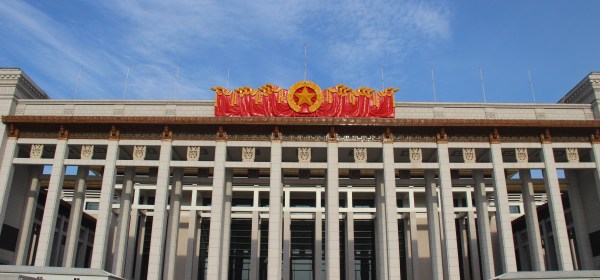
Written by Shih Chang. On October 25th, 2020, an exhibition commemorating the 75th anniversary of the recovery of Taiwan from Japanese colonial rule was held at the National Museum of China. The exhibition is divided into six sections that aim to show the “complete history” of the island of Taiwan from ancient to modern times. The first four sections: “Treasure Island, Taiwan,” “Nine States of Common Sorrow,” “Protecting Sovereignty against Japanese” Sovereign,” “Long Song as a Sword,” “Taiwan fending off the Japanese,” and “Cross-Strait Dreams,” objectively recreates the history of Taiwan’s “return to the motherland” and the development of cross-strait relations.

Taiwan’s Museum Act: Culture’s Value as a Matter of Politics

Written by Susan Shih Chang. On the government’s side, the Museum Act has become a mechanism for exercising power through specific forms of knowledge and expertise; a technology that shapes society’s thoughts and understanding toward culture. On the applicant’s side, although the local government has control in the process of applying for the registration of a private museum, intentions and understanding from the private museum owners and their interaction with the public sector have added a new dimension and layer to the meaning and means of museums.