The History of Comics in Taiwan: 1940s to 1980s

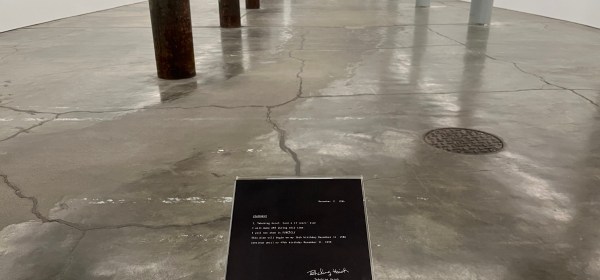
Written by I-Yun Lee. This article is an overview that traces Taiwanese comics from Japanese colonial to post-war Taiwan, the rise of rental comics, and the severe censorship that stifled creators from the 1960s to the 1980s. Shaped by colonial importation, market demand, and state control, Taiwan’s comic history emerges as a story of negotiation and constraint.

Time to Reposition Taiwan within Europe’s Indo-Pacific Vision

Written by Laura Bonsaver. This article proposes that Europe should move beyond threat-centric framings of Taiwan and recognise it as an innovative, democratic, and technologically advanced partner. It recommends de-hyphenating Taiwan from militaristic narratives, normalising its role in Indo-Pacific strategies, and reframing Europe-Taiwan relations as mutually beneficial collaborations rather than dependency or crisis management.

The 114th Double-Tenth Day on NATO’s Eastern Flank: A Celebration of What Never Was

Written by Chien, Hung-yi. This article reflects on a National Day reception hosted by Taiwan’s representative office in a NATO member state on its eastern flank. Answering the question of what happened in Taiwan 114 years ago highlights two national-historical narratives of Taiwan. The author believes a Taiwan-centred view aligns more closely with lived reality and explains Taiwan’s complicated history to international friends.

How placement in Kew led us to the world: paving the route to our PhD

Written by Ching-yuan (Joy) Hung and Mu-Chen (Jenny) Liu. This article tells the shared journey of two NTU graduate students who interned at the Kew Gardens. Immersed in diverse experiences, including seed imaging, herbarium tours, and a culture of scientific exchange, they found renewed purpose in research, which led both to reimagine their paths toward doctoral studies and global collaboration.

At Different Stages, the Same Roots: How Kew Gardens Shaped Our Path in Plant Science 

Written by Ni-Chen Lin and Chih-Wei Hsieh. Two NTU students, Ni-Chen and Chih-Wei, joined Kew’s Millennium Seed Bank through the NTU Overseas Internship Programme. Their experiences, studying seed survival and tree seed diversity, broadened their global perspectives on conservation. Returning to Taiwan, both apply Kew’s collaborative, research-driven values in academic and governmental roles.

Connecting Science and Society: Reflections from the Placement Based on a Citizen Science Initiative at Kew

Written by Ssu-Han (Evelyn) Chiu. This article recounts the author’s 2024 internship at Kew Gardens. Working with Kew’s Science Education Team, the author explored citizen science initiatives, attended the International Botanical Congress, and co-organised a workshop on public engagement, which reshaped the author’s understanding of collaboration, communication, and innovation in global plant science.

Taiwan-India University Cooperation: Emerging Corridors of Academic Exchange and Technological Diplomacy

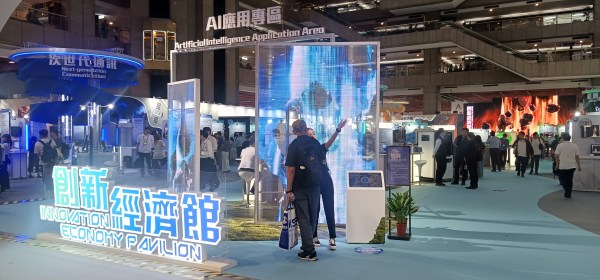
Written by Neeraj Mehra. This article examines the growing educational partnership between Taiwan and India as a strategic soft power tool. Nearly 1,500 Indian students now study in Taiwan, primarily in engineering and technology fields, facilitated by a 2010 MOU and Taiwan’s New Southbound Policy. This collaboration offers complementary benefits: Taiwan’s semiconductor expertise paired with India’s demographic dividend and emerging tech sector. While recent high-level delegations signal strong governmental commitment, challenges remain in administrative barriers, visa processes, and funding stability. The author argues that with proper institutional mechanisms, this partnership could become a major Indo-Pacific academic alliance serving both knowledge diplomacy and technological self-reliance.

Vietnam Kinmen Association (Fuji Temple): A Symbol of Taiwan’s Soft Diplomacy in Saigon before 1975

Written by Meiyuan Kou. This article traces the history of the Kinmen Association (Fuji Temple) in Saigon-Cholon, established in the early 1970s as both a religious hub for Kinmen migrants and a channel of Taiwan’s soft diplomacy in South Vietnam. It examines how this small community institution fostered transnational ties, cultural continuity, and identity preservation across shifting political landscapes before and after 1975.

1 2 3 39