Distant Allies? Explaining U.S. Allies’ (In)action Over the Prospect of a Taiwan Strait Contingency

Written by Carlos Francisco Torres Morales. Using an alliance framework, this commentary argues that Tokyo and Seoul’s reluctance to convey support to Taipei publicly stems from strategic caution, since this could provoke the undesired effects they would seek to deter by extending clear security assurances, but also to retain flexibility in their redefining their stances vis-à-vis Taiwan (and China).

Taiwan in 2024: Geopolitical Uncertainties

Written by Dr Chieh-chi HSIEH. This article argues that the path dependencies of the Taiwanese, US, Japanese, and South Korean governments encountered a change of political leadership in 2024, which created some uncertainties for Taiwan in 2025. They are compounded by the conservative stance of President Lai Ching-te towards President Trump since the latter’s election.

Under The Radar: How Taiwan Compares to Sexism in the East

Written by Zoe Parrott. There is no doubt that, as three examples of major developed East Asian countries, Japan, South Korea, and Hong Kong are able to boast of countless laudable achievements. Furthermore, compared to other countries, all of these nations have impressive Human Development Indexes, ranking higher than the United States. However, there is one aspect of each of these nations that often flies under the radar – the infamous gender inequity these nations are characterised by. For concrete examples, look no further than DJSoda, who was sexually assaulted during her show in Osaka, Johnny Kitagawa, who, for decades, dangled “the price of stardom” as an explanation for his sexual abuse, and the four undergraduates who were sexually harassed and/or raped by their older 28-year-old peer at the Education University of Hong Kong.  However, there seems to be one outlier among its peers – Taiwan, otherwise known as the Republic of China.

Has Taiwan Escaped Nostalgia for Authoritarian Times? Taiwan and Regional Comparisons

Written by Brian Hioe. Contemporary Taiwan is often hailed as a beacon of democracy in the region. Namely, Taiwan today holds free and fair elections after transitioning from its authoritarian past, which saw a history of one-party rule by the KMT. In various indexes of democracy, Taiwan usually scores highly regarding freedom of the press, speech, and expression. Part of the reason why Taiwan scores highly in contemporary indexes of democracy may be to differentiate Taiwan from China at a time of rising tensions between Western powers and China, raising questions about whether this proves a way that the Cold War framing of “free China” has subtly made a comeback. The underlying pressure to differentiate Taiwan from China has always been a substrate of Taiwan’s modern politics, whether in the present or in authoritarian times.

A new research agenda for late Qing and Japanese colonial Taiwan’s history: Perspectives from East Asian history and World History

Written by Wen-Kai Lin. With the development of Taiwan’s democratisation in the late 1980s, Taiwan historians have been able to transcend the Chinese nationalist historiography of the past Kuomintang government and carry out historical research with Taiwan’s multi-ethnic groups as the equal subjects of historical interpretation. However, many researchers only focus on Taiwan itself, which inevitably ignores Taiwan’s relationship with East Asian history and world history and narrows the broader temporal and spatial significance of Taiwan research. This article attempts to take the exchange of East Asian knowledge of Taiwan’s modern governance from the late Qing Dynasty to the Japanese colonial period as a new research agenda to reveal that the research on Taiwan history is often not only Taiwan history but also a complex manifestation of wider East Asian history and world history.

Taiwan, Japan, and a Turning Point of Cold War Legacies in East Asia

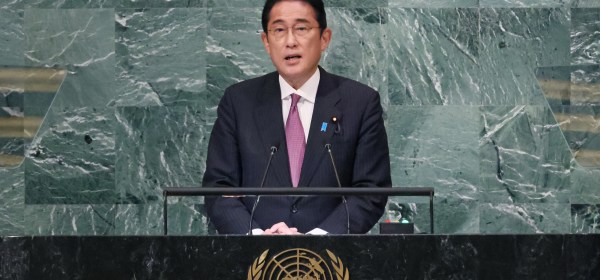
Written by Kuan-Jen Chen. On 8 July 2022, two gunshots not only ended Japan’s former prime minister Abe Shinzo’s life but also convulsed international politics in East Asia. The debates on Kishida Fumio’s diplomatic policy and the power reshuffling within the Liberal Democratic Party (LDP) have had the share of the international spotlight for their inextricable connections with Taiwan and the East Asian region. The amicable relationship between Japan and Taiwan is well-renowned. If you stroll in any city in Japan, it is not hard to find a slogan banner of “Thank you, Taiwan!” to express Japan’s appreciation for Taiwan’s help after the 2011 Tōhoku earthquake and tsunami. Ten years later, when Taiwan underwent the grave hours of the pandemic, Japan, pushed by Abe Shinzo, generously provided vaccines for Taiwan, saving numerous lives. These instances mark that these two countries seemingly have an unbreakable official relationship. However, the fact is that historically and politically speaking, Japan has been maintaining a distant but close relationship with Taiwan.

The New Japanese Prime Minister’s Policy on China and its Implication for Taiwan

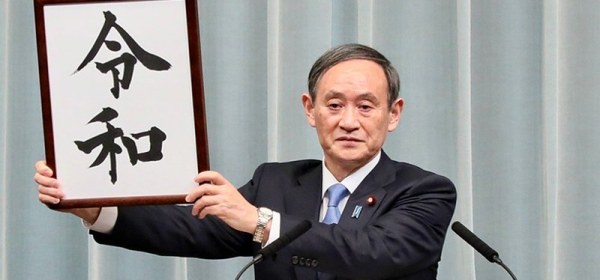
Written by Fumiko Sasaki. After almost eight years, Yoshihide Suga became the Japanese prime minister after Shinzo Abe stepped down. This change happened amid a pandemic and a geopolitical crisis. While states have been preoccupied with Covid-19, China has become more aggressive globally. In light of the US presidential election, the Trump administration has toughened its attitude toward China. In Japan, Taro Kono – the Defence Minister until mid-September – called China a ‘security threat,’ the first time China was officially labelled as such. Suga is reported to be ready to talk to the President of Taiwan. Will Suga be tougher on China?

Covid 19 – Taiwan in East Asia

Written by Ian Inkster. The East Asian capacity for self-help is not an illusion nor irrelevant to our further understanding of the global Covid 19 crisis. More of this later. First, a few statistics that put East Asia in some perspective, derived from my analysis of the figures available on 28-29 March. All figures are problematic and very temporary, but the death/cases ratio seems sturdy in that the numerator is visible, which is more difficult to hide and easier to find than most of the measures being bandied about elsewhere.

Taiwan’s Response to the Coronavirus Challenge of 2020

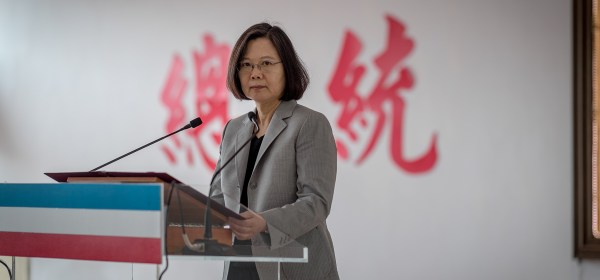
Written by Tsung-Mei Cheng. Taiwan government’s most favoured policy for fighting Covid-19 initially is to prevent it from entering Taiwan in the first place, according to Ming-Liang Lee, former health minister, “Czar of SARS” — commander-in-chief in the debacle against Taiwan’s 2003 SARS epidemic, and now a senior adviser to Taiwan’s President Tsai Ing-wen. To this end, Taiwan implemented strict travel advisories and entry protocols tiered by the risk level of the countries in question.

Brext Conference 2019: Europe and East Asia after Brexit

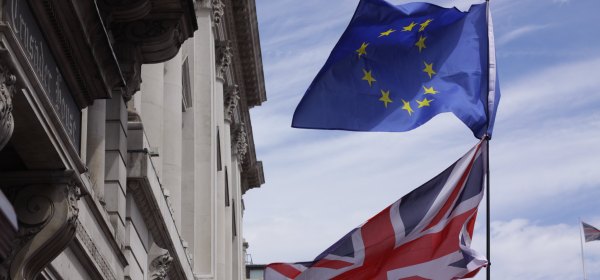
Written by Chun-yi Lee. Does Brexit impact Taiwan? The answer is, yes. Rather than repeat the tired cliché of ‘this is a globalised world’, I will instead ask our readers to think deeper about the interconnectivities of supply chains, the mobility of human talent in the innovation and high education sectors, and cross-regional trading agreements such as the TPP and CPTPP. If one considers all these different elements, Brexit certainly impacts on Taiwan and East Asia as a whole.

1 2