Eighty Years After the Battle of Okinawa, Thousands of Taiwan’s World War II Dead are Still Missing

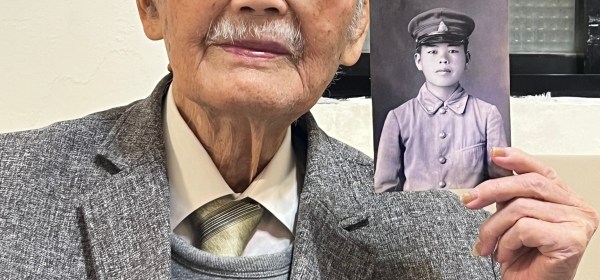
Written by Bryn Thomas. This article interviews one of the thousands of Taiwanese who fought for Japan in the Battle of Okinawa. With at least 1000 Taiwanese troops took part and suffered a casualty rate of over 90% during the battle, the Okinawa Peace Memorial only listed 34 names of Taiwan’s war dead. The postwar political situation in Taiwan made it complex to honour these fallen soldiers.

“From Empire to Republic”: Taiwan, WWII, and Making a History Docuseries

Written by Bryn Thomas. This article takes us behind the scenes in the creation of the From Empire to Republic docuseries of TaiwanPlus News and this special issue. Taiwan’s World War II history made it to the headlines time and again in 2025, including President Lai Ching-te marking the 80th VE day in May to Lai drawing parallels between current Taiwan and the 1930s’ democracies when commemorating the VJ day.

Diplomacy on Rails: Strengthening Taiwan-Japan Relations Through Railway Culture

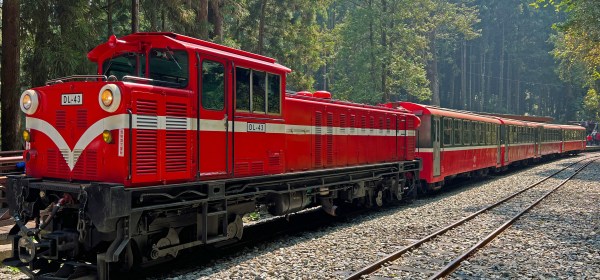
Taiwan and Japan use railway diplomacy to strengthen cultural and technological ties through heritage preservation, tourism, and smart rail innovation. Unlike China’s debt-driven projects, their approach prioritises sustainability and soft power. Expanding collaborations into Southeast Asia and integrating AI-driven rail systems will enhance their influence in the Indo-Pacific region.

A Possible Blind Spot on Decolonisation in Taiwan’s Museums

Written by Pin-Hua Chou. When it comes to the Universal Exposition held in Paris in 1931, there are many criticisms of imperialism and colonialism appearing in all kinds of articles, both academic and non-academic. But, interestingly, speaking of the Taiwan exposition in commemoration of the first forty years of colonial rule in 1935, all the information in Mandarin that we can find at first glance seems to have a tendency to praise the Japanese government of the time by describing how valuable and grandiose achievements were made in this specific exposition under the rule of the Japanese empire and to belittle the ROC government at the same time. 

The Abe Factor and the ‘Special’ bond between Taiwan and Japan

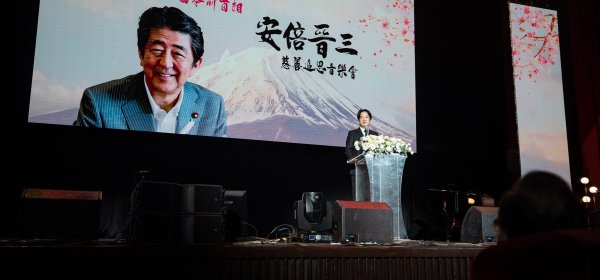
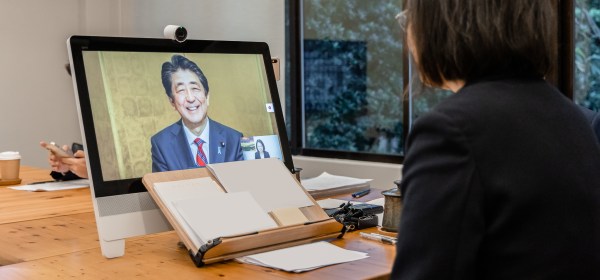
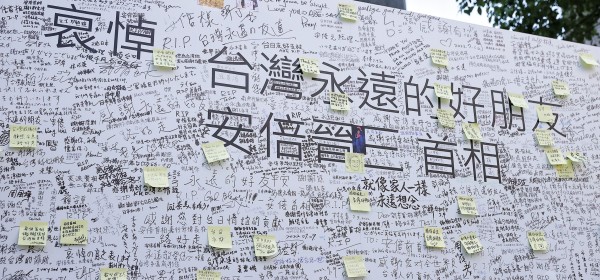
Written by Chieh-chi Hsieh. Abe has widely been regarded as ‘the Prime Minister who is most supportive of Taiwan’. Not only had he been an advocate for legitimatising Taiwan’s status on the international ground on many occasions, but he also made the renowned statement during a video conference with the Taiwan Institute for National Policy Studies in 2021 that ‘if something happens to Taiwan, it means something happens to Japan’. Hence, although the news of Abe’s assassination sent shockwaves worldwide, the political implications of his untimely death on the future trajectory of Taiwan-Japan warrant further investigation.

The Transformation of Taiwan-Japan Relations from a Historical Perspective

Written by Li-Hsuan Cheng. On July 8th 2022, Abe Shinzo, the longest serving prime minister in postwar Japan, was assassinated while campaigning for an LDP candidate in the coming election for  Upper House. While this tragic incident shocked countries worldwide, few societies like Taiwan showed such strong and wide remorse. Even in Japan, where Mr Abe had enjoyed unprecedentedly high and long support, like most leaders of democratic countries, he could not escape scandals and policy failures that eventually damaged his public support. However, despite some criticisms of Abe’s attitude toward war responsibilities in Taiwan, the mainstream society largely held a very favourable view toward him. One obvious reason is the significant progress in the Japan-Taiwan relation during his terms as prime minister.

Post War Flux: Analysing the Fluctuation of Relationships Between Taiwan-Japan in the Post-war Period

Written by Wei-Hsiu Huang. In addition, more complicated multilateral relations are involved in this issue. They are the relations between Japan and the People’s Republic of China, cross-Strait relations, and the Japan-US Alliance. As for the Japan-US Alliance, Japan is obligated to abide by the Japan-US Security Treaty, and the US insisted on a peaceful resolution of cross-Strait relations. To make it clear in the discussion, I will divide the developing process into three periods: the first period from the post-war period to the normalisation of diplomatic relations between Japan and China, the second from the normalisation of diplomatic relations between Japan and China to the democratisation of Taiwan, and the third one from the 1990s to the present. This essay will proceed with an overview and analysis of the complex relationship between Japan and Taiwan in the post-war period.

A new research agenda for late Qing and Japanese colonial Taiwan’s history: Perspectives from East Asian history and World History

Written by Wen-Kai Lin. With the development of Taiwan’s democratisation in the late 1980s, Taiwan historians have been able to transcend the Chinese nationalist historiography of the past Kuomintang government and carry out historical research with Taiwan’s multi-ethnic groups as the equal subjects of historical interpretation. However, many researchers only focus on Taiwan itself, which inevitably ignores Taiwan’s relationship with East Asian history and world history and narrows the broader temporal and spatial significance of Taiwan research. This article attempts to take the exchange of East Asian knowledge of Taiwan’s modern governance from the late Qing Dynasty to the Japanese colonial period as a new research agenda to reveal that the research on Taiwan history is often not only Taiwan history but also a complex manifestation of wider East Asian history and world history.

Shinzō Abe and Taiwan-Japan Relations

Written by Ko-Hang Liao. On 8 July 2022, former Japanese Prime Minister (PM) Shinzō Abe (安倍晋三) was killed by an assassin’s homemade gun during his midspeech of campaign held in Nara to support a Liberal Democratic Party’s (LDP) candidate for upper house election two days later. As a result, this longest-serving Japanese PM (in office (2012-2020) after a brief first tenure (2006-2007), surpassed the record held by his great uncle Eisaku Satō (佐藤栄作) from 1964 to 1972) is recognised by the public as the most Taiwan-friendly premier, a transformational leader, and the founder of Indo-Pacific strategy. By introducing Abe’s distinct roles, this article looks at Taiwan-Japan relations during and after Abe’s administration, the impact he brought to Japan’s postwar pacifism by rebuilding Japan’s role in global power-politics, his legacy in the post-Abe era, and future relations between two countries.

Taiwan, Japan, and a Turning Point of Cold War Legacies in East Asia

Written by Kuan-Jen Chen. On 8 July 2022, two gunshots not only ended Japan’s former prime minister Abe Shinzo’s life but also convulsed international politics in East Asia. The debates on Kishida Fumio’s diplomatic policy and the power reshuffling within the Liberal Democratic Party (LDP) have had the share of the international spotlight for their inextricable connections with Taiwan and the East Asian region. The amicable relationship between Japan and Taiwan is well-renowned. If you stroll in any city in Japan, it is not hard to find a slogan banner of “Thank you, Taiwan!” to express Japan’s appreciation for Taiwan’s help after the 2011 Tōhoku earthquake and tsunami. Ten years later, when Taiwan underwent the grave hours of the pandemic, Japan, pushed by Abe Shinzo, generously provided vaccines for Taiwan, saving numerous lives. These instances mark that these two countries seemingly have an unbreakable official relationship. However, the fact is that historically and politically speaking, Japan has been maintaining a distant but close relationship with Taiwan.

Shinzo Abe: A True Friend of Taiwan? “Post-”colonial Critique on Taiwan’s National Identity Forming

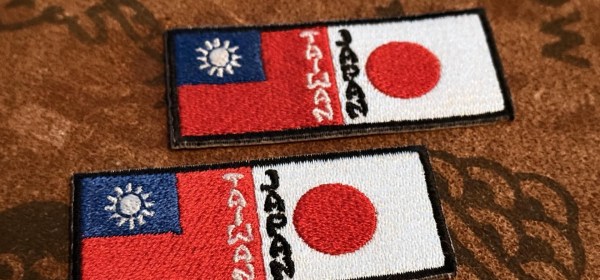
Written by Ti-han Chang. 11:30 am on the 08th of July in Japan, unexpected news of Shinzo Abe 安倍晉三 being shot during his public speech travelled quickly on the international news media. However, the very fact of this happening has profoundly shaken societies in the East Asian region. For Japan, it appears there is a need to reflect deeper on the homogeneous nature of its internal political structure; for other countries in the region, on their indissociable geopolitical dynamics with their close neighbour over the last few decades.

Remembering Chiang Kai-shek in Japanese Media

Written by Robert Hoppens. Just before midnight on April 5, 1975, Chiang Kai-shek (b. 1887), long-time leader of the Chinese Nationalist Party (KMT) and president of the Republic of China (ROC), died at his home in Taipei at the age of 87. Around the world, Chiang’s death occasioned media retrospectives on his long career and speculation about the future of Taiwan, where his government had spent the last quarter-century in exile.

1 2