Roots and Routes in the Malay World and Beyond: Dialogues Between Singapore and Taiwan

Written by Doris Yang. In 2021, five artists/researchers from Singapore, Malaysia, and Taiwan gathered to present their project, The Malay World Project: Roots & Routes, in an online event held by Taipei Performing Arts Center. This event was inspired by a research project asking, ‘Where do the Malays originate?’ Not only did the project study the diaspora of Malay peoples around the Asia-Pacific, but it also created a space for dialogue between Taiwan’s Indigenous people and Malay in Singapore and Malaysia on the issues of identity and belonging. This article compares the advocacy experiences of Malay people in Singapore and Indigenous people in Taiwan. I argue that there is space to foster additional connections and collaborations between the civil societies among these two groups.

Why Should Taiwan’s Civil Society Raise Its Focus on Southeast Asia and Forge Concrete Collaborations?

Written by Liang Liang. Like most once-colonised countries, Taiwan has experienced a chequered history. However, the unique part of Taiwan, which may not be so similar to the rest of the world, is that the historical remnant has resulted in its awkward (but de facto independent) status, hence making Taiwan a coveted land to China. As a result, Taiwan has been identified as the “canary in the monetary coal mine” globally when China’s sharp power grows unprecedentedly. While Taiwan gradually receives interest from all over the world, including Southeast Asia, “the world” used to signify only China and the United States to the Taiwanese government and society. Located at the crossroads of Northeast and Southeast Asia and frequently using the slogan “The Heart of Asia” in its global tourism advertisements, it had, however, rarely shared the same interests and consciousness with its southern neighbours.

The gulf that separates Taiwan and China is getting wider (1)

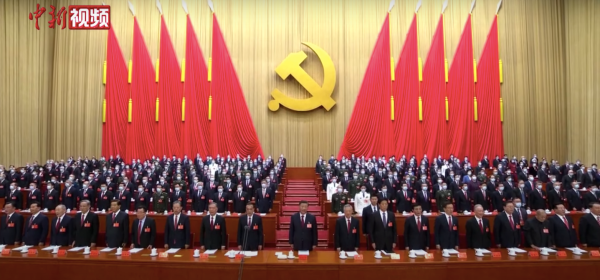
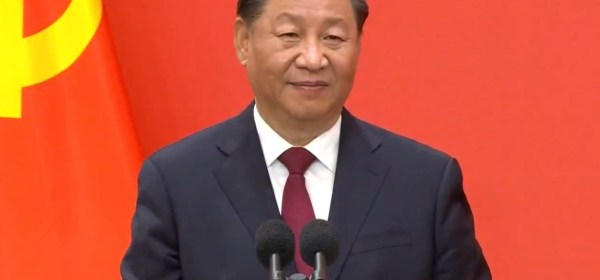
Written by Daniel Jia. The question, then, is why the CCP’s “reunification” agenda faces increasing resistance from Taiwan? The answers are in Xi’s Report and will be even more obvious compared to another speech given by Taiwan’s President Tsai Ing-wen a week earlier at a National Day ceremony on October 10. The following are six takeaways from Xi’s Report that merit a close examination.

Whiteness Intertwines with Taiwaneseness: Taiwanese Heavy Metal Music and its Decolonial Paradox

Written by Mark Hsiang-Yu Feng. It is common to see that many Taiwanese musicians employ Western compositional concepts, theories, and approaches to express Taiwanese identity through music and musical performance. For example, during the 2020 presidential and general election in Taiwan, Legislator Freddy Lim, the vocalist of a renowned Taiwanese metal group called ChthoniC, gave a live concert called Taiwan Victory to congregate voters and solicit votes in front of Taiwan’s Presidential House. Many Taiwanese people showed interest in his performance, as he sang heavy metal songs to gather voters and fight against political infiltration from China. After the concert, The Guardian’s report highlights Lim’s unique career trajectory from a musician to a politician in Taiwan and the creativity of bringing music to the campaign. 

Is Taiwan Ready to Defend Itself against China’s Invasion?

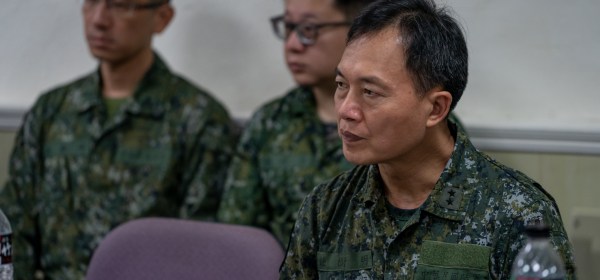
Written by Daniel Jia. Since Tsai Ing-wen of the Democratic Progressive Party (DPP) took office as President of Taiwan in 2016, China is becoming more hostile than ever toward the self-ruled democratic island. As China sees its chance of “reunification” with Taiwan through mutual consent is diminishing, taking Taiwan by force becomes China’s only option. The matter of China’s invasion is evolving from the “if” in the past to the “when” today. And it could happen sooner than any rational calculation would have predicted.

Fair Go for Taiwan: Perspectives from Taiwanese diaspora in Australia

Written by Mei-Fen Kuo. A recent exhibition mounted by Australia’s government office in Taiwan––“40 years, 40 stories”––highlights the importance of people-to-people ties linking Taiwan and Australia since the office opened in Taipei in 1981. These are timely stories. In an exhibition of its own, Beijing recently lobbed missiles over Taiwan’s people’s heads to show that its territorial claims to Taiwan will not be slighted. Australia does not challenge those claims, but it does maintain close relations with people in Taiwan through trade, education, technology, and cultural exchanges, which have flourished despite the lack of official recognition.

INDIA-TAIWAN RELATIONS: RIGHT TIME TO MOVE AHEAD

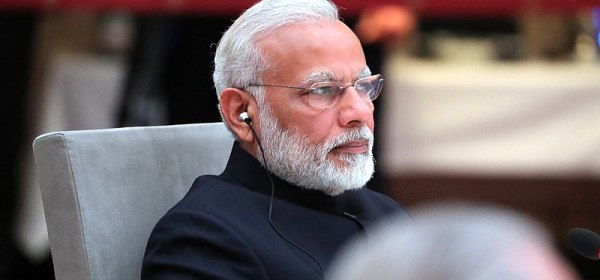
Written by Jasinder Singh Sodhi. Relations between India and Taiwan have improved significantly over the last two decades, even though the two nations do not have formal diplomatic ties. This is because India officially recognises China as part of its One-China Policy. In the political field, India and Taiwan are both grappling with the Chinese standoff in the Himalayas and Taiwan Strait, respectively. Therefore, reinforcing India-Taiwan relations can stand up to the expansionist plans of China since China is incapable of launching a two-front war on India and Taiwan simultaneously. Thus, the stronger relations India and Taiwan have, the better results it will have for mutual national interest and national security.

Pelosi’s Taiwan Visit: More Symptom than Cause of the Trouble in US-China Relations

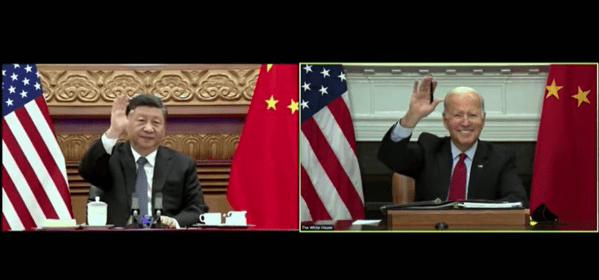
Written by Jacques deLisle. The August 2022 visit to Taiwan by United States House Speaker Nancy Pelosi has been characterized as “reckless” and even risking war or, at least, a dangerous military incident between the US and China. On the other hand, Pelosi’s trip has been celebrated for standing up to Chinese bullying or even a political victory born of an unforced error by Xi Jinping’s overreaching. Such dire or triumphalist views risk overlooking the broader and deeper meanings of Pelosi’s brief sojourn in Taipei: It is more a symptom than a cause of a deeply troubled and increasingly troubling US-China relationship; its most significant consequences are likely more complex and indirect.

Taiwan Studies: An experience from India

Written by Manoj Kumar Panigrahi. The government and academicians must work upon a little academic knowledge of Taiwan in India. To begin with, Taiwan Studies can make space for itself within existing programmes or research centres in Northeast Asia or East Asia. Once it gains a stronghold, it can take off as a separate entity. I am optimistic about collaborating with other Taiwan Studies programmes worldwide to enhance India’s new front of research. The primary and most important goal now thus is to initiate and cultivate interest in Taiwan in India. Whether the interest in Taiwan is coming independently or clubbing it with other studies should not matter at the current stage. The debate of whether it shall be clubbed with “China studies” or be called “Sinitic” study can be taken up later.

Taiwan Studies and Sinology: A Curriculum Perspective

Written by Henning Klöter. The contributions by Perkuhn and Chien, Wang and Achen and again Chien mention some successful examples of Taiwan studies centres and associations in the US, the UK and mainland Europe. The core of Wang’s and Achen’s argument is that all of them can and should do without sinology. So far, so good. But if we look at the sustainability of Taiwan studies, we need to look beyond centres and associations and ask how the field can attract new cohorts of students and what they expect to learn. In other words, we need to discuss how the study of Taiwan should be integrated into existing curricula or whether Taiwan needs a curriculum in its own right.

A Reflection on ‘Taiwan Studies’ as a Discipline in and of Itself

Written by Niki Alsford. To conclude, Taiwan Studies exists as an academic discipline because those who engage with it—whether in the continental or oceanic stories—care deeply about it. Debates surrounding its positionality will continue in an almost cyclical context because the anxieties academics have about the future of the field are shaped by the very concerns that we are all facing in a continued onslaught on languages, humanities, and social sciences at academic institutes across the globe. The future-proofing of the discipline rests in encouraging our students to engage with and think about Taiwan. After all, it is a brilliant island to study.

1 18 19 20 21 22 40