
Written by Bayis Atung; translated by Yu-Chen Chuang
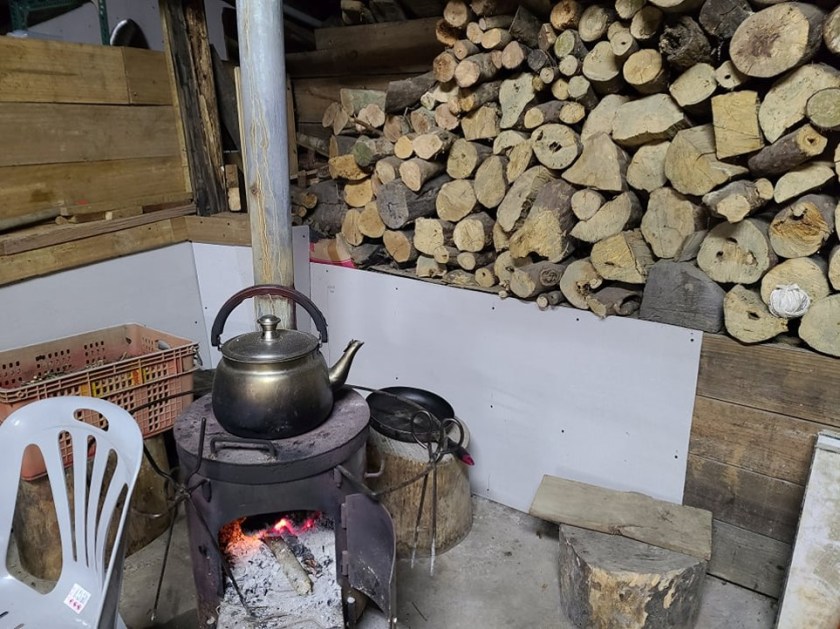
Image credit: Wood storage in Cinsbu. Photo courtesy of Bayis Atung.
Cinsbu, meaning the tribe where the first rays of the sun shine upon at dawn in the Atayal language, is located at the central position of Taiwan’s major mountain range. In Taiwan’s administrative divisions, Cinsbu is located in Siouluan Village, Jianshih Township, Hsinchu County. Approximately 99% of the population in Cinsbu belongs to the Tayal Indigenous group, while the remaining 1% comprises people from other ethnic backgrounds through intermarriage. The primary economic activities in Cinsbu mainly focus on farming and cultivating high-altitude vegetables and fruits. Guesthouses and tourism are secondary sources of income, supplementing their livelihood during fallow periods in agriculture. In recent years, the community has shifted from pure agriculture to various industries such as guesthouses, camping sites, restaurants, snacks, and tourism—including church visits, giant trees, tribal tours, hiking trails, studios, and organic farms. In terms of religious beliefs, Christianity and Catholicism are the predominant faiths in the community.
The church, school, association, and family play central roles in community organisations. Among these, the family and the church are particularly important in influencing Cinsbu’s perspectives on agricultural transformation and ecological conservation. In recent years, due to climate change, community members have begun to think more about how to minimise the impact of disasters before they occur. When engaging in farming, we have started to think and take action to incorporate traditional land use knowledge from the past. We continuously experiment and face challenges, ultimately returning to traditional land use and cultivation ethics. We have discovered that this approach can be used to adapt to and address climate change, as it helps Cinsbu adapt to the ever-changing challenges posed by disasters.
The relations between Atayal and Lands: Discussing Disaster from an Agricultural Perspective
When the Indigenous people face climate change and disasters, we will definitely bring up the issue of land ethics for discussion together. In this article, I share our land ethics and explain how sustainable land use relates to disaster prevention. Even though the intensity of climate change has increased, the Atayal people have not given up on using the land. Instead, there have been even more changes in how we use the land.
We have been following a traditional approach to land cultivation, including rotational cultivation, seed preservation, wood storage, stone stacking, and climate observation. Among these traditional land practices, rotational cultivation exemplifies our land ethic and commitment to preserving the land’s fertility. This land ethic contributes to the ongoing soil conservation efforts in our community. By practising it, we also aim to harmoniously balance our agricultural production and disaster prevention goals. As Figure 1 shows, the rotational cultivation system is divided into three stages: new cultivation land (ngaqaw), old cultivation land (nqumi), and fallow/rotational land (guqi). Regardless of the type of farming method, we all follow this rotational pattern. The following section will explain the implications of each cultivation stage.

First, new cultivation land (ngaqaw) refers to land that has never been cultivated before. Since the livelihood and food source of the family depends on crops, concerns arise when there is insufficient food or living space, prompting the need to expand into new cultivation land. The primary cultivation method is slash-and-burn farming, as it turns the burnt weeds into nutrients for the soil, making it very fertile and rich in nitrogen, phosphorus, and potassium. Millet (Trakis) is typically planted during this phase, as it comes in various varieties, doesn’t require a lot of water, and can thrive in the cold mountain climate. After harvesting, the millet is stored in granaries for seed preservation.
Second, old cultivation land (nqumi) refers to land that has been cultivated for approximately two years or more. The soil is highly nutritious and of excellent quality, making it suitable for growing various vegetables and fruits. Most of the crops grown during this stage are for economic purposes. Examples of root crops grown here include sweet potatoes (Ngahi), taro (Sehuy), and yams (Saku).
Third, fallow/rotational cultivation land (guqi) refers to land allowed to return to its natural state, with weeds and native trees growing. Sometimes, landowners may also plant tree species, such as Japanese alder (Ibox), that disperse seeds by wind. As these tree species grow naturally on fallow land, they contribute to restoring forest patterns. After two to three years or longer, when the land is needed for cultivation again, the presence of certain tree species can indicate whether it has been previously cultivated, and it can then be re-cultivated. The practice of “guqi,” which means “reserving previously cultivated land,” emerged because of land limitations. The idea is to allow guqi land to replenish its nutrients, become fertile again, and then resume cultivation. When the Japanese arrived, they referred to this as the “rotational cultivation system.” In earlier times, we did not usually re-cultivate land that we had previously worked on. We even didn’t mind if others decided to cultivate it (guqi) again. The Tayal people only began practising rotational cultivation after we settled in various mountainous areas as the cultivable new land became limited.
This rotational cultivation system continues to be passed down and used in the Cinsbu. Younger generations return to engage in farming and start learning the system. The rotational cultivation system keeps contributing to restoring the land’s fertility and vigour. Previously, this rotational cultivation—also commonly known as slash-and-burn—was a widespread farming practise among Indigenous communities in Taiwan. However, the introduction of private land ownership and land use regulations in mountainous areas has made this traditional farming method less common. Nowadays, as many communities lack available land for cultivation, the rotational cultivation system might seem distant. In this context of land-use limitations, Cinsbu’s farmers are striving to adopt traditional farming techniques, demonstrating that farming practices and soil conservation can coexist. Within this Tayal rotational cultivation system, one can see the wisdom of the Tayal people. It incorporates both soil conservation and disaster prevention in the practice of rotational cultivation. Integrating soil conservation and disaster prevention is also evident in other practices, such as seed preservation, wood storage, and ongoing climate monitoring.
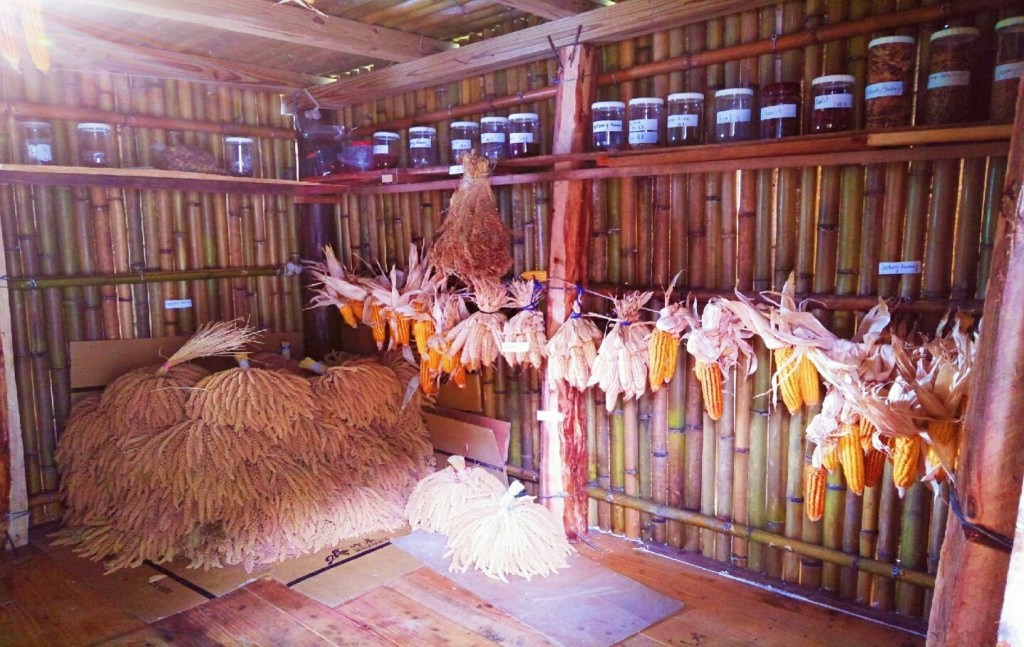
We use granaries, cellars, or soil as storage places for seeds (see Figure 2). Through seed preservation, we ensure that we have seeds to use in the following year, and community members can also share and exchange them. Wood Stacking and Storage is also a crucial practice for disaster prevention. When the maple leaves start turning red, it’s time to prepare and saw wood for storage. Wood storage typically occurs throughout the year, but there is usually a higher volume of wood storage when winter is approaching.
Assessing and Responding to Disasters
In the face of climate change, Indigenous people continue to rely on their traditional knowledge of weather and plant patterns for observations. When the evening sky turns red, it indicates that strong winds, typhoons, or heavy rain are approaching shortly (see Figure 3). The maturation of Senaw, a type of plant, signals the imminent arrival of the typhoon season. Additionally, an increase in monkey activity is noted during this time.

When facing a disaster, we report the situation to community members, the fire department, and government authorities. We also mobilise the community youth to go to the disaster site. The primary objective is to rescue those in the most critical danger. When heavy machinery is available, it clears debris and facilitates rescue efforts. After a disaster, our initial actions involve patrolling the disaster area, clearing roads and fields, and ensuring the main roads are accessible. The primary objective is to restore our homeland, which is the foundation for our recovery efforts.
We observe vitality in the ecological changes after a disaster. During various species’ growth periods, it’s possible to determine whether this landslide or debris flow will continue or can be mitigated. Through the presence of certain plants, it’s possible to see that the landslide area may no longer be subject to further collapses during a certain period.
Cinsbu’s Sustainable Traditional Knowledge
In the face of the ever-elusive climate in the aftermath of disasters, Indigenous communities continue to confront climate change through faith and action. The core spirit of Indigenous disaster prevention and climate change adaptation is rooted in the belief that the land is not only a mother but also life and home. Within the Atayal Indigenous knowledge of land use, we integrated our understanding of climate change, land utilisation duration, and planting seasons. For instance, digging trenches and ensuring water flow diversion is necessary for cultivation. On the eve before a typhoon arrives, we prepare our farmland by placing fallen trees around the fields and creating drainage channels to direct water downstream, which helps mitigate the impact of the typhoon.
Ecological and societal benefits inherently go hand in hand. We enhance the land’s vitality and overall resilience by employing multifunctional land use and sustainable resource management. The interconnected ecological and societal benefits are evident in Cinsbu’s multifunctional agricultural approach, which integrates agricultural production, sustainable land use, and disaster prevention. Ultimately, sustainable traditional knowledge is central to our multifunctional agricultural strategy.
Bayis Atung is a member of Cinsbu. She loves the beautiful environment and fresh air in Cinsbu. Most importantly, she cherishes how the Atayal people’s “Gaga”—which they refer to as “norms” or “standards”—exists in every detail of life in Cinsbu.
This article was published as part of a special issue on Indigenous Peoples and Disaster Justice in Taiwan.
 Taiwan Insight