
By Taiwan Association of Cultural Policy Studies.
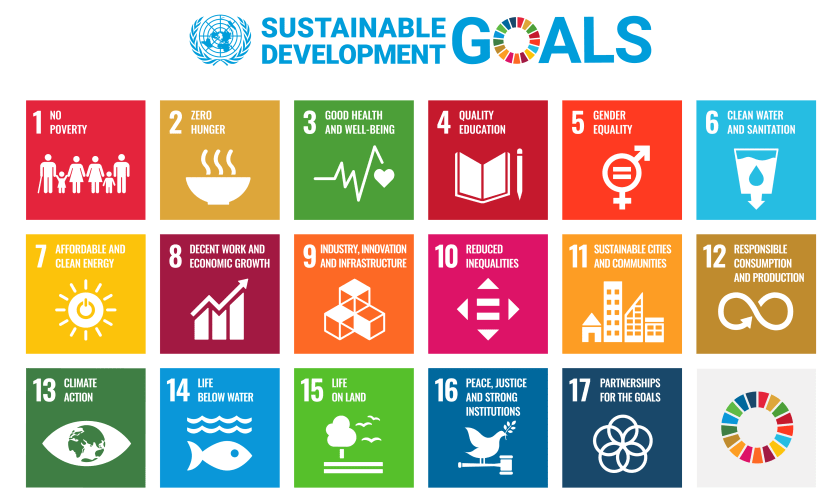
Image credit: Sustainable Development Goals.svg by United Nations / Wikimedia: Public Domain.
This article is a part of the special issue that presents five cultural policy strategies emerging from the four expert forums co-convened by the Taiwan Association of Cultural Policy Studies (TACPS) and the Foundation for Future Generations, Taiwan. Through the collective efforts of scholars, practitioners, and professionals in various fields, it is hoped that the ideas will allow Taiwan’s future leaders to better understand and address the pressing issues in current cultural policies, especially in their political agendas for the upcoming elections, and provide insights for the next generations of citizens. In this article, two cultural policy strategies with critical approaches are presented and explained in dialogue with Taiwan’s unique sociocultural landscape and development of democracy.
Cultural Sustainability and Democratic Governance
In the context of sustainable development, culture is seen as an important component of development, along with the economy, society and the environment, which are all interrelated. For the development of a country, it is necessary to go beyond the economic perspective and adopt a cultural approach, incorporating cultural policies as a key element of the development strategy. This also implies the re-democratisation of culture in all policies and actions. To actively participate in cultural activities and give their voices in determining development goals and means of development. The bottom-up approach, with the idea of people as the subject, will promote the shaping of public culture on the one hand and the practice of cultural democracy on the other.
In view of the public governance of culture, we propose the following strategic recommendations for cultural public governance:
To enhance the effectiveness of cultural policy, central and local governments must enforce evaluation mechanisms for their policy implementation. This includes the incorporation of cultural impact assessments and the reconstruction of cultural statistics and indicators. Moreover, there is a need to bolster the participatory mechanism for policy formulation.
Another key aspect of improving cultural policy is the adoption of evidence-based resource allocation and adherence to the arm’s length principle. This approach involves constructing a cultural resource integration platform for intermediary organisations, such as administrative corporations and government-endowed foundations, cultural parks and more. These diverse platforms play a vital role in bridging the gap between central and local governments, all with the common goal of aligning with the Sustainable Development Goals (SDGs).
In addition, the governance structure should revolve around the cultural life circle (also known as the cultural living perimeter or cultural life circuit) and regional cultural ecology. This approach prioritises the accessibility of local cultural facilities, venues, and activities. The implementation of a professional arts manager system can further promote social inclusion, cultural equality, and participation within these communities.
There is also a need to continue restructuring cultural organisations and assessing staffing levels at both the central and local government levels. This restructuring process can facilitate the promotion of cultural professionals and talent exchanges between the public and private sectors. Developing a comprehensive personnel system for cultural professionals in cultural institutions is essential for long-term success.
The establishment of a National Cultural Policy Research Centre is recommended to enhance research and international connections. This centre can amass policy research capacity, ensuring that the latest research and insights inform cultural policies. Additionally, creating a dedicated international cultural exchange corporation or enhancing the functions of an existing foundation can strengthen connections with international think tanks and cultural institutions abroad, fostering valuable global collaborations.
Sustainability of Cultural Economy and Value Cycle
Culture enables sustainable development. Taking this argument a step further, we can say that culture is not just synonymous with sustainable development; it is also a prerequisite for pursuing social change when embraced as a foundation for sustainable development. Cultural sustainability policies should be pursued on the basis of UNESCO’s four key global theme indicators for 2030, namely environment and resilience, prosperity and livelihoods, knowledge and skills, and inclusion and participation. The 2022 UNESCO World Conference on Cultural Policies and Sustainable Development declared “culture as a global public good”, and the concept has since become a clear international trend. We propose the following five policy strategies to align Taiwan’s cultural sustainability policy with the global goals of cultural sustainable development and tailor it to local conditions.
It is important to treat culture as Taiwan’s public good and to ensure the government’s interface role in the cultural and economic network ecosystem and in regulating cultural, financial markets and investments. Likewise, adopting development strategies such as introducing private investment, enriching the quality of mass popular culture content, incubating cultural industries, and regulating the market will also benefit cultural sustainability.
In order to contribute to a sustainable ecology for businesses of various sizes, the government must formulate a development strategy for medium, small and micro-cultural industries. Through the cultural governance strategic framework, we can better understand the cultural development status of various industries and more practically support the development of medium, small and micro cultural industries. In addition, Environmental, Social, and Governance (ESG) should be introduced to cultural enterprises, and a cultural impact assessment system for enterprises should be established, through which the development of cultural content industries, community regeneration, and regionally distinctive cultural industries can be firmly supported through sponsorship or investment.
In addition to infrastructure and policy changes to support cultural development, human resources are also central to sustaining the industry. More emphasis needs to be placed on nurturing cultural and creative talent, as argued above. By investing in and facilitating talent development in the cultural and creative industries, it is possible to contribute to the development and expansion of international markets.
Finally, cultural sustainability cannot be achieved without the engagement of community-based civil organisations, social enterprises and cooperative economies. The government should encourage community organisations to collaborate on civic technology to demonstrate the advanced development of digital democracy in Taiwan.
In sum, to contribute to a sustainable cultural economy and ecology, the role of cultural intermediaries has become more important than before, as it allows for fostering better connections between local communities, cultural organisations and governments of different levels. In addition, a more rigid system for cultural talent cultivation is needed. Such a system will not only help Taiwan promote its talents to the international market but also provide substantial support to professionals in the cultural industry by connecting them to resources available and further allowing a more sustainable ecology for cultural production.
The special issue “The Sustainability of Culture and Democratic Governance in Taiwan” is a critical report that outlines the five strategies for sustainable cultural policy. The report is compiled and organised by Dr Jerry C. Y. Liu (Graduate School of Arts Management and Cultural Policy, National Taiwan University of Arts), Dr Fang-Jay Rong (Department of Environmental and Cultural Resources, National Tsing Hua University), Dr Chih-hung Wang (Graduate Institute of Building and Planning, National Taiwan University), Dr Li-Jung Wang (Department of Hakka Language and Social Science, National Central University), and Dr Chieh-Hsiang Wu (Department of Arts in the National Changhua University of Education; Director of TACPS). The articles in this special issue are edited by Chee-Hann Wu with slight modifications made to enhance the readability for readers of Taiwan Insight.
This article was published as part of a special issue on Cultural Sustainability and Democratic Governance in Taiwan.
 Taiwan Insight